The U.S. Department of Justice yesterday announced updates on
two separate cases involving cyberattacks—a Swiss hacktivist and a
Russian hacker who planned to plant malware in the Tesla
company.
A Swiss hacker who was involved in the intrusion of cloud-based
surveillance firm Verkada and exposed camera footage from its
customers was charged by the U.S. Department of Justice (DoJ) on
Thursday with conspiracy, wire fraud, and identity theft.
Till Kottmann (aka “deletescape” and “tillie crimew”), 21, of
Lucerne, Switzerland, and his co-conspirators were accused of
hacking
dozens[1] of companies and
government agencies since 2019 by targeting their “git” and other
source code repositories and posting the proprietary data of more
than 100 entities on a website called git[.]rip, according to the
indictment.
Kottmann is alleged to have cloned the source code and other
confidential files containing hard-coded administrative credentials
and access keys, using them to infiltrate the internal
infrastructure of victims further and copy additional records and
intellectual property. Additionally, the prosecutors said the U.S.
Federal Bureau of Investigation (FBI) seized the domain that was
used to publish hacked data online.
The defendant’s long list of victims includes Nissan, Intel,
Mercedes-Benz, and many others, including the Verkada breach that
happened earlier this month, thereby gaining access to more than
150,000 of the company’s cameras installed in various locations
ranging from Tesla warehouses to gyms, psychiatric hospitals, and
health clinics.
Kottmann, who calls the hacktivist collective “Advanced
Persistent Threat 69420,” told Bloomberg[2]
the breach “exposes just how broadly we’re being surveilled, and
how little care is put into at least securing the platforms used to
do so, pursuing nothing but profit,” while attempting to justify
their actions as part of a “fight for freedom of information and
against intellectual property.”
Then last Friday, Swiss authorities raided Kottmann’s apartment[3] and seized the hacker’s
electronic devices at the behest of U.S. authorities.
“Stealing credentials and data, and publishing source code and
proprietary and sensitive information on the web is not protected
speech — it is theft and fraud,” said[4]
Acting U.S. Attorney Tessa M. Gorman. “These actions can increase
vulnerabilities for everyone from large corporations to individual
consumers. Wrapping oneself in an allegedly altruistic motive does
not remove the criminal stench from such intrusion, theft, and
fraud.”
It’s not immediately clear if U.S. prosecutors intend to
extradite Kottmann, who still remains at large in Lucerne.
Russian National Pleads Guilty for Tesla Hacking Plot
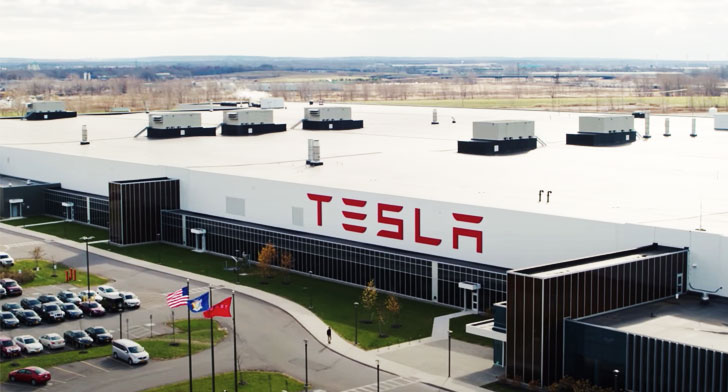
In other related news, a Russian national pleaded guilty to
offering a Tesla employee $1 million to plant ransomware at the
electric carmaker’s Gigafactory plant in Nevada.
According to court documents, the suspect, Egor Igorevich
Kriuchkov, 27, traveled to the U.S. in July on a tourist visa and
made contact with a Russian-speaking employee in an attempt to
install malware into the company’s computer network with the goal
of exfiltrating data and holding it for ransom.
But the extortion scheme[5]
fell apart after the employee in question alerted the company of
the incident, which then involved the FBI into the matter.
“This was a serious attack,” CEO Elon Musk said[6]
in an August 2020 tweet.
Kriuchkov, who previously denied any wrongdoing[7]
in September before a federal magistrate judge, on Thursday pleaded
guilty to one count of conspiracy to cause damage to a protected
computer intentionally. Kriuchkov is scheduled to be sentenced on
May 10.
“This case highlights our office’s commitment to protecting
trade secrets and other confidential information belonging to U.S.
businesses — which is becoming even more important each day as
Nevada evolves into a center for technological innovation,”
said[8]
Acting U.S. Attorney Christopher Chiou for the District of Nevada.
“Along with our law enforcement partners, we will continue to
prioritize stopping cybercriminals from harming American companies
and consumers.”
References
- ^
hacking dozens
(geekprank.com) - ^
Bloomberg
(www.bloomberg.com) - ^
raided
Kottmann’s apartment (www.bloomberg.com) - ^
said
(www.justice.gov) - ^
extortion scheme
(www.teslarati.com) - ^
said
(twitter.com) - ^
denied
any wrongdoing (apnews.com) - ^
said
(www.justice.gov)