companies’ daily operations, and the rapid adoption of web apps has
allowed businesses to continue operating with limited productivity
hiccups, even as global coronavirus restrictions have forced much
of the world to work from home.
But at the same time, even major
corporations[1] have fallen prey to
hackers. How can you maintain the integrity of your IT resources
and data while still taking advantage of the benefits of software
as a service (SaaS)?
While cybersecurity is a broad and complicated topic, let’s
consider a hypothetical SaaS scenario and examine some of the
risks.
Imagine that one of your employees is writing a sensitive
report. It could have financial or medical data in it. It could
have information on a revolutionary new design. Whatever it is, the
report needs to be kept confidential.
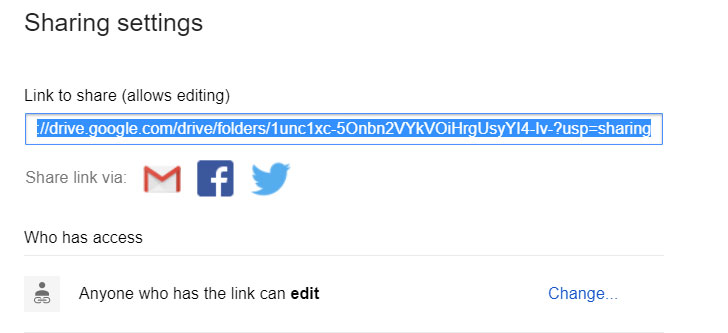
What would happen if your employee writes the report in Google
Docs? Let’s assume that this decision wasn’t run past the IT
department. The employee just did it out of habit because Google
Docs is what he or she had been using for years to share documents
easily with coworkers.
What are some of the risks facing your company?
The problem of unsanctioned applications
A key problem that you may face is simply being unaware that the
report is in Google Docs. When your IT department doesn’t know
about the SaaS applications that your team uses, they can’t
evaluate whether they are safe.
These apps are, therefore, considered shadow
IT, tech used without the permission or knowledge of the IT
department. The issue, of course, is not about Google.
[2]
The same problem could occur with a Word document synced through
Dropbox or with any number of other legitimate SaaS applications
that store data in the cloud. The problem is the lack of
visibility.
Shadow IT can be a severe problem, but it often exists because
employees lack the right tools. As Harvard Business
Review[3] noted, shutting down
shadow IT “may at times be an appropriate response, but we have
also seen IT adopt an open-minded approach and successfully work
with the rogue unit to help secure data, standardize APIs, and
ultimately assemble solutions that combine internal and external
services. In general, we lean towards the latter approach.”
Sometimes the right approach is to secure the applications and
make sure that they are used responsibly.
How to improve your SaaS security
What can you do to improve the sanctioning processes, compliance,
and security of your SaaS applications? Aside from doing your due
diligence in researching service providers, here are some
suggestions.
Passwords are low-hanging fruit. Make sure that everyone in your
company has and uses a proper password manager like LastPass[4]
or 1Password[5]. You may want to
consider requiring hardware security keys like the ones from
Yubico[6]. Google has had great
success in preventing phishing attacks simply by requiring
employees to use physical security keys for two-factor
authentication.
You may also benefit from using a SaaS management tool,
especially if you use a large number of software services or have a
problem with shadow IT.
Torii[7], a SaaS management
platform, can help you discover and evaluate all of the cloud-based
applications used within your organization.
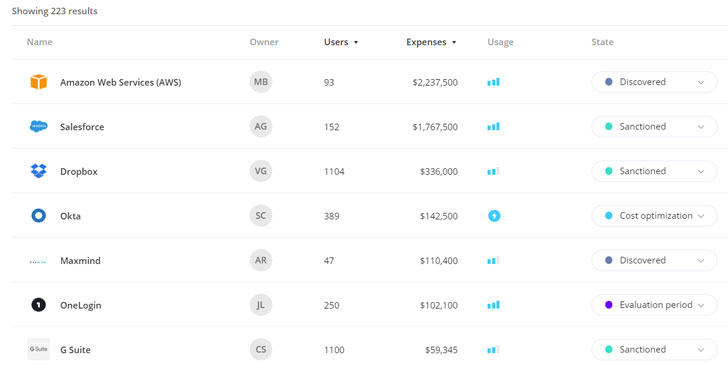
As you add more services, keeping track of what your employees
are using, where your money is going, and details like when
contracts are up for renewal can help you maintain the security of
those services and make sure that you are not overspending or
duplicating capabilities.
Torii can help you save money by eliminating waste, but perhaps
more importantly, it can give you comprehensive and dynamic
visibility of how your organization uses SaaS applications. You can
also use it to set up triggered actions for “autonomous SaaS
management,” like sending a questionnaire to team members who have
adopted new apps.
Two sides of SaaS security
You do, of course, need to evaluate SaaS applications—even officially
sanctioned ones[8]—from both an internal
perspective and an external view. You need to look at not only your
own security practices but also the security practices of the
service you are using.
Extremely sensitive data probably should not leave your network,
but all personally identifiable information (PII) needs to be
handled properly, or you’ll risk regulatory compliance issues.
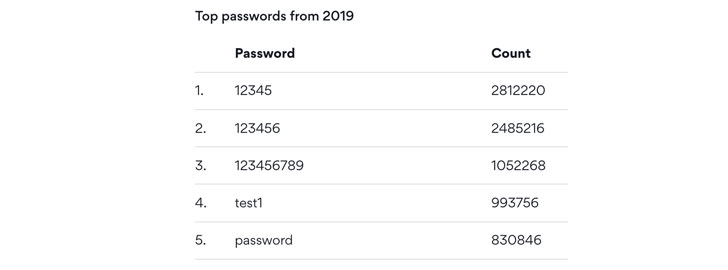
On the internal side, IT departments routinely face problems
with bad passwords. Even after years of news reports about serious
data breaches, “123456” was still one of the most commonly used
passwords[9] in 2019.
And, according to Yubico[10], a manufacturer of
hardware authentication keys, more than two-thirds of employees
share passwords and application access with colleagues, while more
than half also use the same passwords for both personal and
business accounts.
Another potential issue is simply the amount of information that
users tend to share with SaaS applications. Many people share
calendars and address books readily, and while doing so may be
convenient, it also gives that application extra data, data that it
may not need for your purposes and data that may be confidential.
As with all data, when it comes to SaaS applications, you need to
ask where that information is going, how it will be stored, and
what the service provider will do with it.
On the external side, even when a SaaS service has seemingly
good policies governing its use of your data, code vulnerabilities
may still compromise the software. The 2017 Equifax
breach[11], for example, was
perpetrated by hackers who exploited a bug in Apache Struts, an
open-source web application framework. While a patch for the bug
was available, Equifax had not installed it. Without a timely
update, Equifax left itself vulnerable to a known problem. As a
result, confidential information on about 150 million Americans was
lost.
Taking charge of your security
Security is a moving target, and mitigating risk is a never-ending
task. While you can never eliminate risk entirely, you can at least
reduce it. With basic security steps and careful evaluation of your
company’s SaaS usage, you can reduce your attack surface and better
secure your data.
References
- ^
even major corporations
(thehackernews.com) - ^
considered shadow IT
(thenextweb.com) - ^
Harvard Business Review
(hbr.org) - ^
LastPass
(www.lastpass.com) - ^
1Password
(1password.com) - ^
Yubico
(www.yubico.com) - ^
Torii
(toriihq.com) - ^
even officially sanctioned ones
(thehackernews.com) - ^
most commonly used passwords
(www.ncsc.gov.uk) - ^
Yubico
(www.yubico.com) - ^
2017 Equifax breach
(thehackernews.com)
Read more http://feedproxy.google.com/~r/TheHackersNews/~3/tz7IyHHIGXE/saas-cybersecurity.html