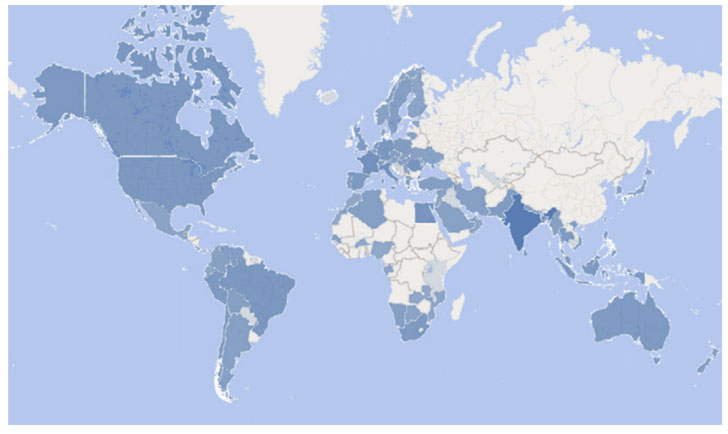
Cybersecurity researchers on Tuesday lifted the lid on a
previously undocumented malware strain dubbed “MosaicLoader”
that singles out individuals searching for cracked software as part
of a global campaign.
“The attackers behind MosaicLoader created a piece of malware
that can deliver any payload on the system, making it potentially
profitable as a delivery service,” Bitdefender researchers said in
a report[1]
shared with The Hacker News. “The malware arrives on target systems
by posing as cracked installers. It downloads a malware sprayer
that obtains a list of URLs from the C2 server and downloads the
payloads from the received links.”

The malware has been so named because of its sophisticated
internal structure that’s orchestrated to prevent
reverse-engineering and evade analysis.
Attacks involving MosaicLoader rely on a well-established tactic
for malware delivery called search engine optimization (SEO)
poisoning, wherein cybercriminals purchase ad slots in search
engine results to boost their malicious links as top results when
users search for terms related to pirated software.
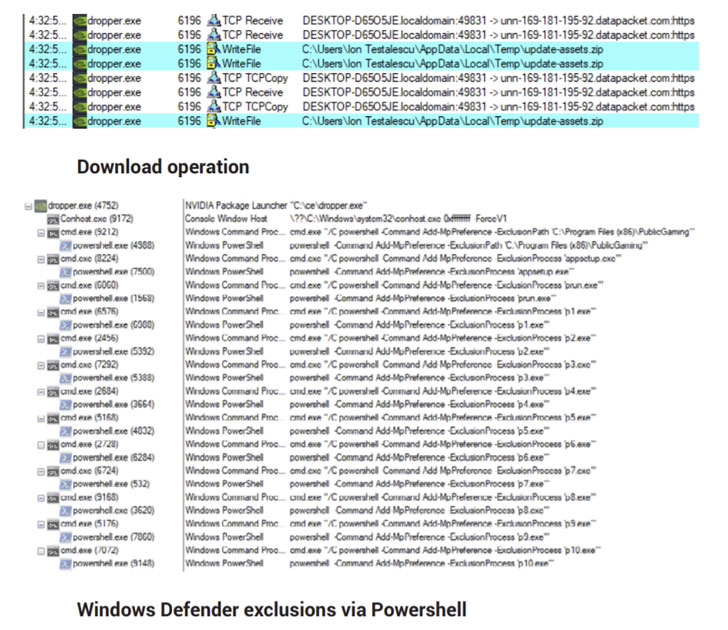
Upon a successful infection, the initial Delphi-based dropper —
which masquerades as a software installer — acts as an entry point
to fetch next-stage payloads from a remote server and also add
local exclusions in Windows
Defender[2] for the two downloaded
executables in an attempt to thwart antivirus scanning.
It’s worth pointing out that such Windows Defender exclusions
can be found in the registry keys listed below:
- File and folder exclusions –
HKEY_LOCAL_MACHINE\SOFTWARE\Microsoft\Windows
Defender\Exclusions\Paths - File type exclusions –
HKEY_LOCAL_MACHINE\SOFTWARE\Microsoft\Windows
Defender\Exclusions\Extensions - Process exclusions –
HKEY_LOCAL_MACHINE\SOFTWARE\Microsoft\Windows
Defender\Exclusions\Processes
One of the binaries, “appsetup.exe,” is conceived to achieve
persistence on the system, whereas the second executable,
“prun.exe,” functions as a downloader for a sprayer module that can
retrieve and deploy a variety of threats from a list of URLs,
ranging from cookie stealers to cryptocurrency miners, and even
more advanced implants like Glupteba[3].
“prun.exe” is also notable for its barrage of obfuscation and
anti-reverse techniques that involve separating code chunks with
random filler bytes, with the execution flow designed to “jump over
these parts and only execute the small, meaningful chunks.”
Given MosaicLoader’s wide-ranging capabilities, compromised
systems can be co-opted into a botnet that the threat actor can
then exploit to propagate multiple and evolving sets of
sophisticated malware, including both publicly available and
customized malware, to obtain, expand, and maintain unauthorized
access to victim computers and networks.
“The best way to defend against MosaicLoader is to avoid
downloading cracked software from any source,” the researchers
said. “Besides being against the law, cybercriminals look to target
and exploit users searching for illegal software,” adding it’s
essential to “check the source domain of every download to make
sure that the files are legitimate.”