
under intense scrutiny over users’ privacy, censoring politically
controversial content and on national-security grounds—but it’s not
over yet, as the security of billions of TikTok users would be now
under question.
The famous Chinese viral video-sharing app contained potentially
dangerous vulnerabilities that could have allowed remote attackers
to hijack any user account just by knowing the mobile number of
targeted victims.
In a report privately shared with The Hacker News, cybersecurity
security researchers at Check Point revealed that chaining multiple
vulnerabilities allowed them to remotely execute malicious code and
perform unwanted actions on behalf of the victims without their
consent.
The reported vulnerabilities include low severity issues
like SMS link spoofing, open redirection, and cross-site
scripting (XSS) that when combined could allow a remote attacker to
perform high impact attacks, including:
- delete any videos from victims’ TikTok profile,
- upload unauthorized videos to victims’ TikTok profile,
- make private “hidden” videos public,
- reveal personal information saved on the account, such as
private addresses and emails.
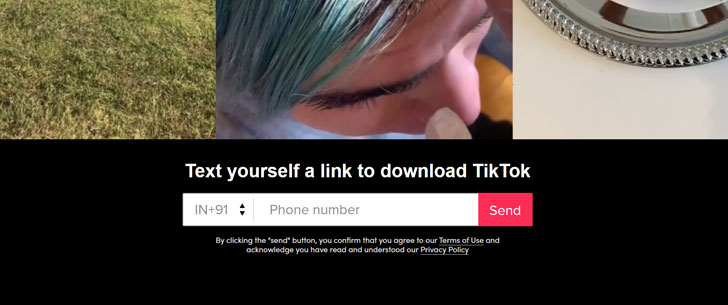
The attack leverages an insecure SMS system that the TikTok offers
on its website to let users send a message to their phone number
with a link to download the video-sharing application.
According to researchers, an attacker can send an SMS message to
any phone number on behalf of TikTok with a modified download URL
to a malicious page designed to execute code on a targeted device
with already installed TikTok app.

issues, the attack could allow hackers to execute JavaScript code
on behalf of victims as soon as they click the link sent by the
TikTok server over SMS, as shown in the video demonstration Check
Point shared with The Hacker News.
The technique is commonly known as cross-site request forgery
attack, wherein attackers trick authenticated users into executing
an unwanted action.
“With the lack of anti-Cross-Site request forgery mechanism, we
realized that we could execute JavaScript code and perform actions
on behalf of the victim, without his/her consent,” the researchers
said in a blog
post[1] published today.
“Redirecting the user to a malicious website will execute
JavaScript code and make requests to Tiktok with the victims’
cookies.”
Check Point responsibly reported these vulnerabilities to
ByteDance, the developer of TikTok, in late November 2019, who then
released a patched version of its mobile app within a month to
protect its users from hackers.
If you are not running the latest version of TikTok available on
official app stores for Android and iOS, you’re advised to update
it as soon as possible.
Read more http://feedproxy.google.com/~r/TheHackersNews/~3/oFxt48B8hO8/hack-tiktok-account.html