A proof-of-concept (PoC) code demonstrating a newly disclosed
digital signature bypass vulnerability in Java has been shared
online.
The high-severity flaw[1]
in question, CVE-2022-21449[2]
(CVSS score: 7.5), impacts the following version of Java SE and
Oracle GraalVM Enterprise Edition –
- Oracle Java SE: 7u331, 8u321, 11.0.14, 17.0.2, 18
- Oracle GraalVM Enterprise Edition: 20.3.5, 21.3.1,
22.0.0.2
The issue resides in Java’s implementation of the Elliptic Curve
Digital Signature Algorithm (ECDSA[3]), a cryptographic mechanism[4]
to digitally sign[5]
messages and data for verifying the authenticity and the integrity
of the contents.
In a nutshell, the cryptographic blunder — dubbed Psychic
Signatures in Java — makes it possible to present a totally blank
signature, which would still be perceived as valid by the
vulnerable implementation.
Successful exploitation of the flaw could permit an attacker to
forge signatures and bypass authentication measures put in
place.
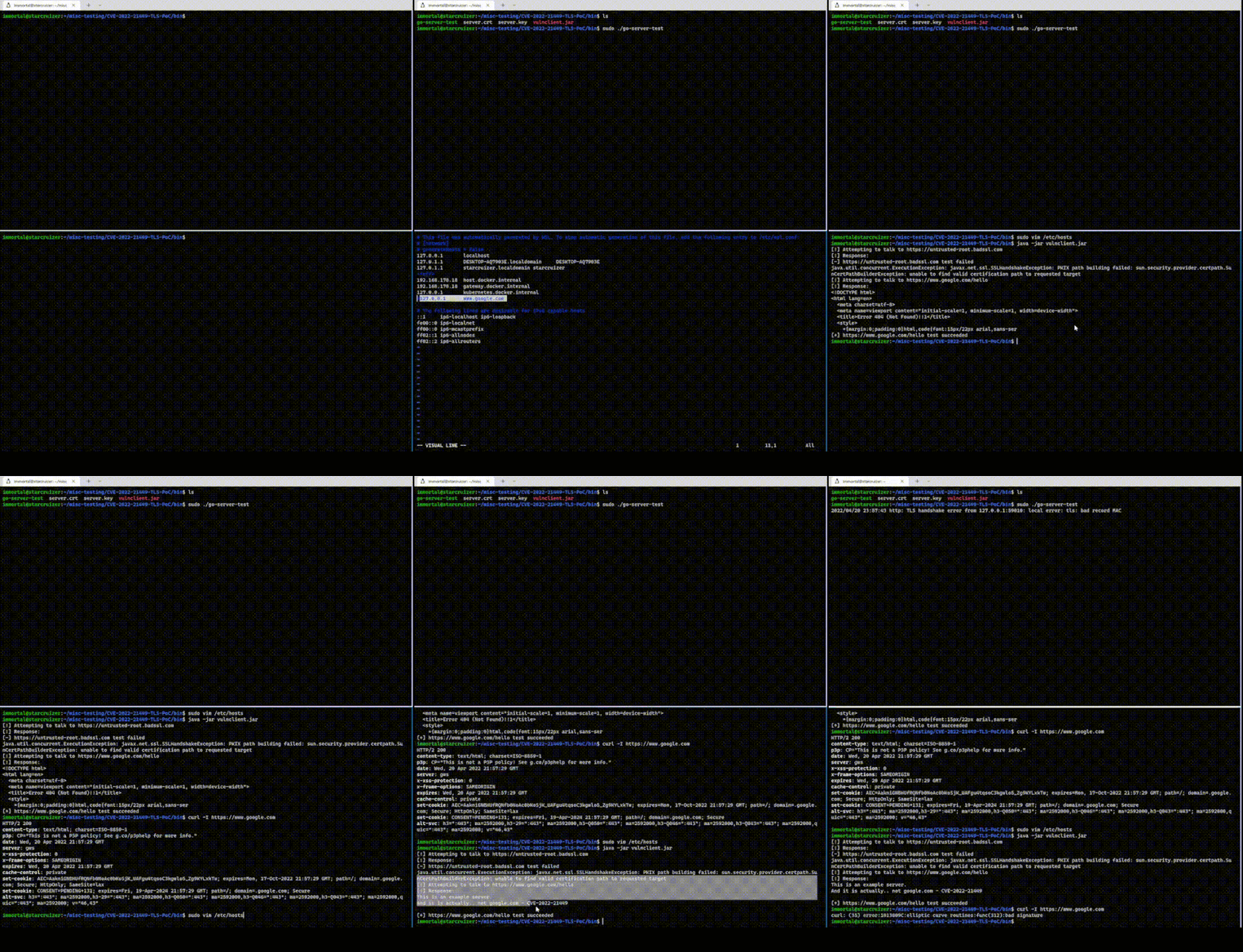
The PoC, published by security researcher, Khaled Nassar
involves[6]
a vulnerable client and a malicious TLS server, the former of which
accepts an invalid signature from the server, effectively allowing
the TLS handshake[7]
to continue unimpeded.
“It’s hard to overstate the severity of this bug,” ForgeRock
researcher Neil Madden, who discovered and reported the flaw on
November 11, 2021, said[8].
“If you are using ECDSA signatures for any of these security
mechanisms, then an attacker can trivially and completely bypass
them if your server is running any Java 15, 16, 17, or 18
version.”
The issue has since been addressed by Oracle as part of its
quarterly April 2022 Critical Patch Update (CPU) released[9]
on April 19, 2022.
In light of the release of the PoC, organizations that use Java
15, Java 16, Java 17, or Java 18 in their environments are
recommended to prioritize the patches to mitigate active
exploitation.
References
- ^
high-severity flaw
(openjdk.java.net) - ^
CVE-2022-21449
(nvd.nist.gov) - ^
ECDSA
(en.wikipedia.org) - ^
cryptographic mechanism
(blog.cloudflare.com) - ^
digitally sign
(en.wikipedia.org) - ^
involves
(github.com) - ^
TLS
handshake (www.cloudflare.com) - ^
said
(neilmadden.blog) - ^
released
(www.oracle.com)
Read more https://thehackernews.com/2022/04/researcher-releases-poc-for-recent-java.html