Enterprise applications used to live securely in data centers
and office employees connected to internal networks using
company-managed laptops or desktops. And data was encircled by a
walled perimeter to keep everything safe.
All that changed in the last 18 months. Businesses and employees
had to adapt quickly to cloud technology and remote work. The cloud
gave businesses the agility to respond faster to change and the
scale to accommodate rapid growth. Remote work boosted productivity
by letting employees access cloud data from anywhere on any
device.
This is not business as usual. The data center and the perimeter
security are no longer the center of the universe. Now remote
workers, personal mobile devices, applications, and data are in the
middle.
Although employees, applications, and data have left the
building, IT security teams still shoulder the responsibility for
protecting confidential data and ensuring compliance with strict
privacy regulations. The risk of not doing so can be costly.
Register[1]
for this upcoming webinar to learn how to reduce risk with
integrated endpoint-to-cloud security.
Data security and access turned upside
down
It’s impossible to see risk when you don’t know what you’re up
against. Employees now access data in your cloud from everywhere
using personal devices and local Wi-Fi networks you can’t see or
manage. Whatever visibility you had is gone. Left unresolved,
little – if anything – is under your control.
Currently, security from endpoints to the cloud involves
multiple standalone tools that solve specific problems. But beware:
Sometimes, juggling dozens of security tools –each unaware that the
other exists – increases the risk of exposure.
Some organizations rely on virtual private networks (VPNs for
remote workforce access. While they connect employees to cloud
applications and data from anywhere, VPNs can assume every user and
device is trustworthy (they are not). So, use caution with VPNs.
They can leave your infrastructure and everything connected to it
extremely vulnerable.
Mired in the momentum of mediocrity, the traditional security
approach only offers a fraction of what’s needed to ensure
endpoint-to-cloud security. It doesn’t give you visibility or
insight into the security posture of your users and endpoints or
cloud applications. And it can’t enforce zero trust, a staple of
modern security.
Minimize business risk
With data going where it’s needed, organizations can minimize
risk by regaining the same visibility, insights, and access
controls they had with a perimeter. To do so, you need a
cloud-delivered solution that provides strong data and privacy
protections from endpoints to the cloud.
Lookout[2]
recommends considering these three factors to minimize risk:
- Complete visibility –The first step to
securing your data is knowing what’s going on. This requires
visibility into the risk levels of users, devices, applications,
and data. Visibility also plays a key role in ensuring compliance
with data privacy regulations. - Unified insights –Your security infrastructure
should be integrated into one unified platform to manage policies,
detect cyberthreats and perform conclusive incident investigations.
This will give you actionable insights from endpoints to the
cloud. - Secure access to empower productivity – To
protect data without impeding productivity, it’s critical to
enforce Zero rust access that has the intelligence to understand
and adapt to continuous changes in users, devices, locations,
applications, and data.
Data protection from endpoint to cloud
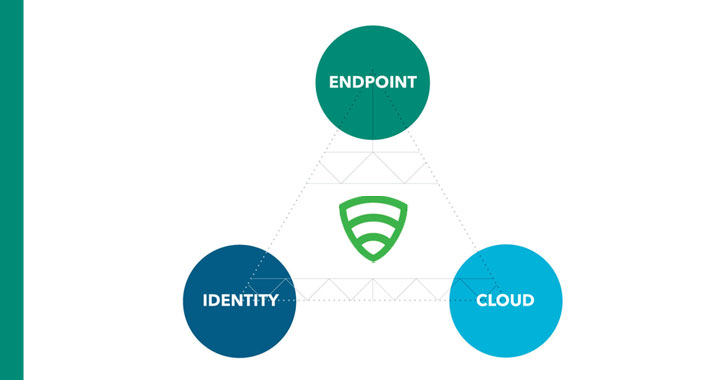
To achieve endpoint-to-cloud visibility, insights, and access
control, organizations require perimeter-like security capabilities
delivered from the cloud. In 2019, Gartner introduced the Secure Access Service Edge (SASE)[3], a framework that
addresses these challenges and calls for rolling multiple security
solutions into one unified architecture.
Since then, throngs of vendors have integrated various security
tools into their SASE products. Some offer cloud security but no
endpoint security or continuous risk assessment. Others have basic
access controls but don’t analyze user behaviors, detect malware on
the fly or identify compliance gaps. And many don’t include
advanced data protections that encrypt confidential data, emails,
or files and enforce strict data-sharing rules.
Every vendor’s interpretation of SASE should be carefully vetted
to ensure that they integrate and adequately address every critical
aspect of how your organization now operates with remote or hybrid
work permanently in place. This modern security approach, with SASE
and Zero Trust as cornerstones, will protect data from endpoints to
the cloud by providing all-important visibility into devices,
users, networks, access privileges, and cloud applications.
Register[4]
for this upcoming webinar to learn how Lookout delivers
comprehensive endpoint-to-cloud security from one unified
platform.
References
Read more http://feedproxy.google.com/~r/TheHackersNews/~3/zQELgH89Kf4/reduce-business-risk-by-fixing-3.html