As ransomware attacks against critical infrastructure skyrocket,
new research shows that threat actors behind such disruptions are
increasingly shifting from using email messages as an intrusion
route to purchasing access from cybercriminal enterprises that have
already infiltrated major targets.
“Ransomware operators often buy access from independent
cybercriminal groups who infiltrate major targets and then sell
access to the ransomware actors for a slice of the ill-gotten
gains,” researchers from Proofpoint said in a write-up[1]
shared with The Hacker News.
“Cybercriminal threat groups already distributing banking
malware or other trojans may also become part of a ransomware
affiliate network.”
Besides angling for a piece of the illegal profits, the email
and cloud security firm said it is currently tracking at least 10
different threat actors who play the role of “initial access
facilitators” to supply affiliates and other cybercrime groups with
an entry point to deploy data theft and encryption operations.
Initial access brokers are known to infiltrate the networks via
first-stage malware payloads such as The Trick, Dridex, Qbot,
IcedID, BazaLoader, or Buer Loader, with most campaigns detected in
the first half of 2021 leveraging banking trojans as ransomware
loaders.
The brokers — which were identified by tracking the backdoor
access advertised on hacking forums — include TA800[2], TA577, TA569[3], TA551[4]
(Shathak), TA570[5], TA547[6], TA544[7]
(Bamboo Spider), TA571, TA574[8], and TA575[9], with overlaps observed
between various threat actors, malware, and ransomware
deployments.
For example, both TA577 and TA551 have been found to use IcedID
as an initial access payload to deliver Egregor, Maze, and REvil
ransomware, while TA800 has employed BazaLoader to deploy Ryuk on
targeted systems.
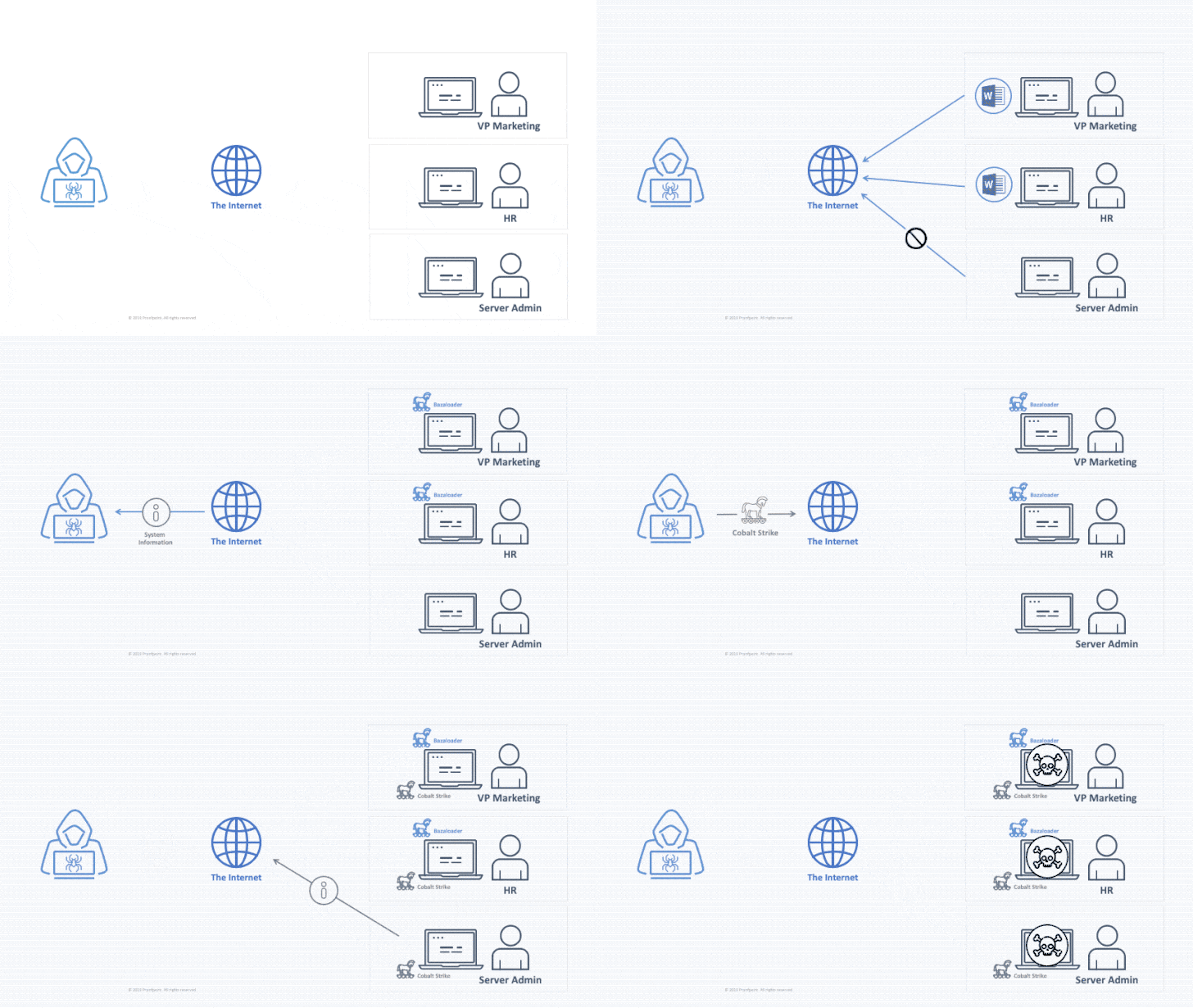
In a hypothetical attack chain, a threat actor could send an
email with a malware-infected Office document, which, when opened,
drops the first-stage payload to maintain persistent backdoor
access. This access can then be sold to a second threat actor, who
exploits it to deploy a Cobalt Strike beacon to pivot across the
broader network and deploy the ransomware laterally.

That said, attacks that rely on email messages to directly
distribute ransomware in the form of malicious attachments or
embedded hyperlinks continue to remain a threat, albeit at lower
volumes. Proofpoint noted that it identified 54 ransomware
campaigns distributing a little over one million messages over the
past year.
“Short dwell times, high payouts, and collaboration across
cybercriminal ecosystems have led to a perfect storm of cybercrime[10] that the world’s
governments are taking seriously,” the researchers concluded. “It
is possible with new disruptive efforts[11] focused on the threat
and growing investments in cyber defense across supply chains,
ransomware attacks will decrease in frequency and efficacy.”
References
- ^
write-up
(www.proofpoint.com) - ^
TA800
(www.proofpoint.com) - ^
TA569
(www.proofpoint.com) - ^
TA551
(unit42.paloaltonetworks.com) - ^
TA570
(www.proofpoint.com) - ^
TA547
(www.proofpoint.com) - ^
TA544
(www.proofpoint.com) - ^
TA574
(www.proofpoint.com) - ^
TA575
(www.proofpoint.com) - ^
perfect storm of cybercrime
(thehackernews.com) - ^
disruptive efforts
(thehackernews.com)