A “highly operational, destructive, and sophisticated
nation-state activity group” with ties to North Korea has been
weaponizing open source software in their social engineering
campaigns aimed at companies around the world since June 2022.
Microsoft’s threat intelligence teams, alongside LinkedIn Threat
Prevention and Defense, attributed the intrusions with high
confidence to Zinc, which is also tracked under
the names Labyrinth Chollima.
Attacks targeted employees in organizations across multiple
industries, including media, defense and aerospace, and IT services
in the U.S., the U.K., India, and Russia.
The tech giant said[1]
it observed Zinc leveraging a “wide range of open-source software
including PuTTY, KiTTY, TightVNC, Sumatra PDF Reader, and
muPDF/Subliminal Recording software installer for these
attacks.”
According to CrowdStrike[2], Zinc “has been active
since 2009 in operations aimed at collecting political, military,
and economic intelligence on North Korea’s foreign adversaries and
conducting currency generation campaigns.”
The latest findings dovetail with a recent report from
Google-owned Mandiant, which uncovered[3]
the adversary’s use of PuTTY via fraudulent job lures shared with
potential targets on LinkedIn as part of a campaign dubbed Operation Dream Job[4].
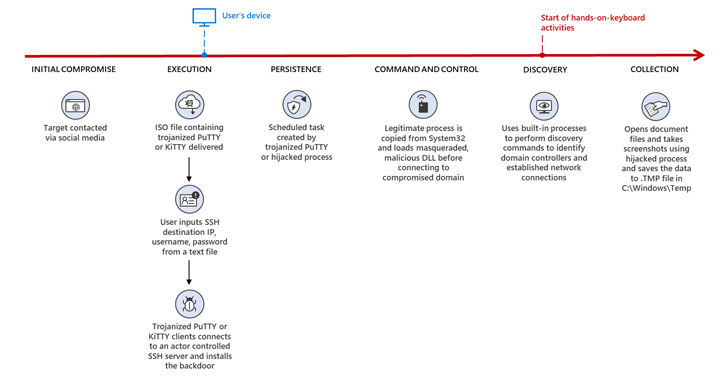
This involves establishing initial connections with individuals
by posing as recruitment professionals as a trust-building
exercise, before moving the conversation to WhatsApp, where a
tailored lure document or seemingly benign software is shared,
effectively activating the infection sequence.
A successful compromise is followed by the threat actor moving
laterally across the network and exfiltrating collected information
of interest by deploying a backdoor called ZetaNile (aka
BLINDINGCAN OR AIRDRY).
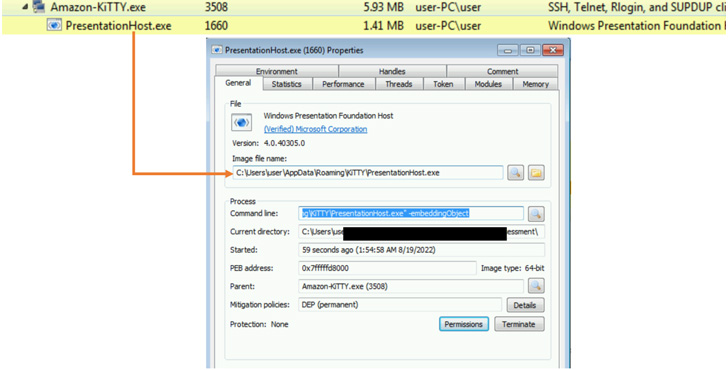
But in a bid to evade security defenses and avoid raising red
flags, the implant is downloaded only when the victim uses the SSH
clients to connect to a particular IP address through the
credentials specified in a separate text file.
Likewise, attacks employing the trojanized version of TightVNC
Viewer are configured to install the backdoor only when the user
selects a particular remote host from the options provided.
“Zinc attacks appear to be motivated by traditional
cyberespionage, theft of personal and corporate data, financial
gain, and corporate network destruction,” the company said.
“Zinc attacks bear many hallmarks of state-sponsored activities,
such as heightened operational security, sophisticated malware that
evolves over time, and politically motivated targeting.”
References
- ^
said
(www.microsoft.com) - ^
CrowdStrike
(adversary.crowdstrike.com) - ^
uncovered
(thehackernews.com) - ^
Operation Dream Job
(thehackernews.com)
Read more https://thehackernews.com/2022/09/north-korean-hackers-weaponizing-open.html