
An “insidious” new SMS smishing malware has been found targeting
Android mobile users in the U.S. and Canada as part of a new
campaign that uses SMS text message lures related to COVID-19
regulations and vaccine information in an attempt to steal personal
and financial data.
Proofpoint’s messaging security subsidiary Cloudmark coined the
emerging malware “TangleBot.”
“The malware has been given the moniker TangleBot because of its
many levels of obfuscation and control over a myriad of entangled
device functions, including contacts, SMS and phone capabilities,
call logs, internet access, and camera and microphone,” the
researchers said[1]. Besides capabilities to
obtain sensitive information, the malware is engineered to control
device interaction with banking or financial apps using overlay
screens and plunder account credentials from financial activities
initiated on the phones.
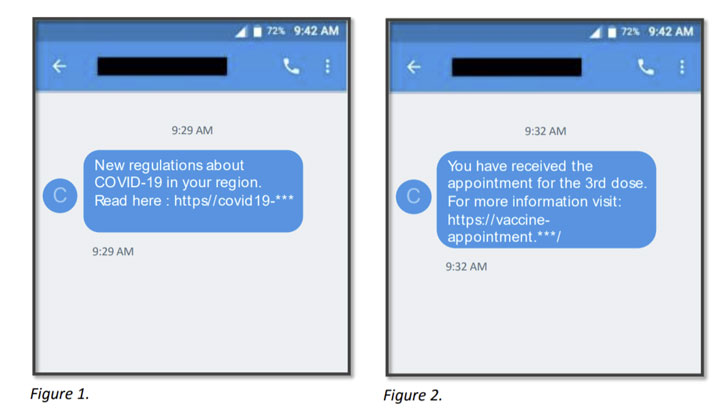
The attacks themselves originate from SMS messages that claim to
be “new regulations about COVID-19” or confirmation for an
“appointment for the 3rd [vaccine] dose,” urging users to click on
an accompanying link that, when visited, notifies the victim that
their Adobe Flash player is out-of-date and must be updated. Opting
to update the software results in the installation of the TangleBot
malware on the Android device.
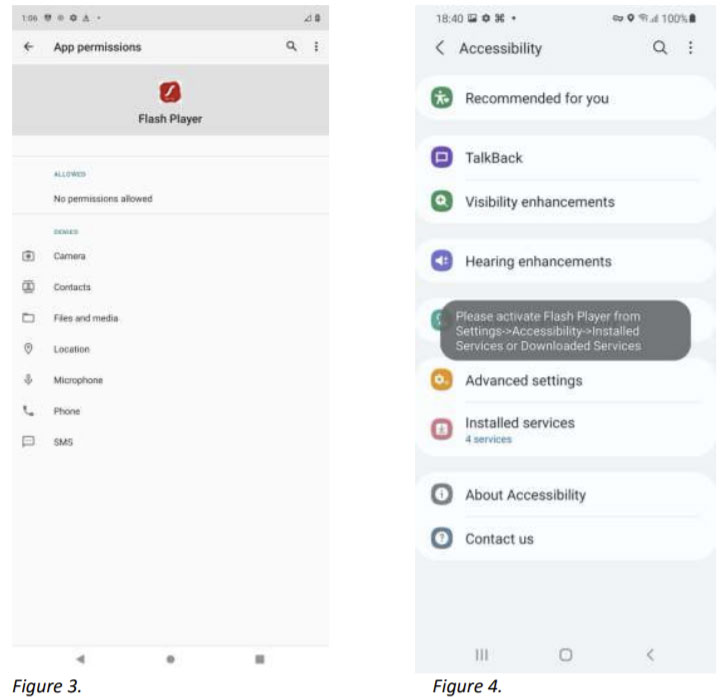
In the next phase, TangleBot is granted wide-ranging permissions
to access contacts, SMS, call logs, internet, camera and
microphone, and GPS, enabling the operators to intercept phone
calls; send and receive text messages, record the camera, screen,
or microphone audio or stream them directly to the attacker,
turning it into full-fledged spyware.
“Harvesting of personal information and credentials in this
manner is extremely troublesome for mobile users because there is a
growing market on the dark web for detailed personal and account
data,” the researchers said. “Even if the user discovers the
TangleBot malware and it is able to remove it, the attacker may not
use the stolen information for some period of time, rendering the
victim oblivious of the theft.”
Read more http://feedproxy.google.com/~r/TheHackersNews/~3/onZZ-BuixwQ/new-android-malware-targeting-us.html