
A software package available from the official NPM repository
has been revealed to be actually a front for a tool that’s designed
to steal saved passwords from the Chrome web browser.
The package in question, named “nodejs_net_server[1]” and downloaded over
1,283 times since February 2019, was last updated seven months ago
(version 1.1.2), with its corresponding repository leading to
non-existent locations hosted on GitHub.
“It isn’t malicious by itself, but it can be when put into the
malicious use context,” ReversingLabs researcher Karlo Zanki
said[2]
in an analysis shared with The Hacker News. “For instance, this
package uses it to perform malicious password stealing and
credential exfiltration. Even though this off-the-shelf password
recovery tool comes with a graphical user interface, malware
authors like to use it as it can also be run from the command
line.”
While the first version of the package was published just to
test the process of publishing an NPM package, the developer, who
went by the name of “chrunlee”, made revisions to implement a
remote shell functionality which was improvised over several
subsequent versions.
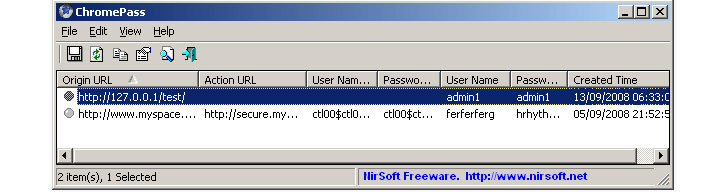
This was followed by the addition of a script that downloaded
the ChromePass[3]
password-stealing tool hosted on their personal website
(“hxxps://chrunlee.cn/a.exe”), only to modify it three weeks later
to run TeamViewer remote access software.
Interestingly, the author also abused the configuration options
of NPM packages specified in the “package.json” file, specifically
the “bin[4]” field that’s used to
install JavaScript executables, to deploy a legitimate package
named “jstest,” a cross-platform JavaScript test framework,
exploiting it to launch a service via command line that’s capable
of receiving an array of commands, including file lookup, file
upload, shell command execution, and screen and camera
recording.
ReversingLabs said it reported the rogue package to NPM’s
security team twice, once on July 2 and again on July 15, but noted
that no action has been taken to date to take it down. We have
reached out to NPM for further clarification, and we’ll update the
story once we hear back.
If anything, the development once again exposes the gaps in
relying on third-party code hosted on public package repositories
as software
supply chain attacks[5]
become a popular tactic for threat actors to abuse the trust in
interconnected IT software to stage increasingly sophisticated
security breaches.
“Growing popularity of software package repositories and their
ease of use make them a perfect target,” Zanki said. “When
developers reuse existing libraries to implement the needed
functionality faster and easier, they rarely make in-depth security
assessments before including them into their project.”
“This omission is a result of the overwhelming nature, and the
vast quantity, of potential security issues found in third-party
code. Hence in general, packages are quickly installed to validate
whether they solve the problem and, if they don’t, move on to the
alternative. This is a dangerous practice, and it can lead to
incidental installation of malicious software,” Zanki added.
References
- ^
nodejs_net_server
(www.npmjs.com) - ^
said
(blog.secure.software) - ^
ChromePass
(www.nirsoft.net) - ^
bin
(docs.npmjs.com) - ^
software supply chain attacks
(thehackernews.com)