Cybersecurity researchers are warning about a new malware that’s
striking online gambling companies in China via a watering hole
attack to deploy either Cobalt Strike beacons or a previously
undocumented Python-based backdoor called BIOPASS RAT that
takes advantage of Open Broadcaster Software (OBS) Studio’s
live-streaming app to capture the screen of its victims to
attackers.
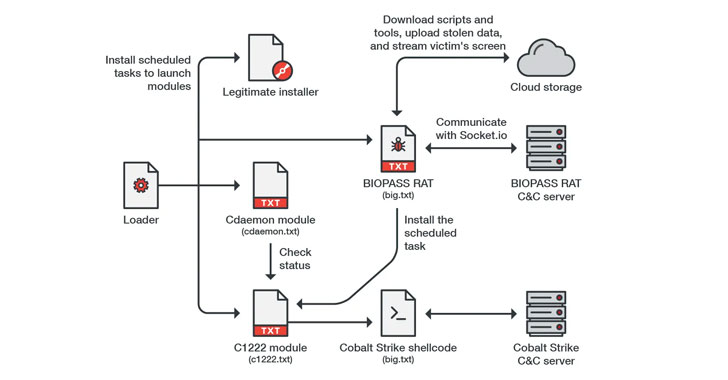
The attack involves deceiving gaming website visitors into
downloading a malware loader camouflaged as a legitimate installer
for popular-but-deprecated apps such as Adobe Flash Player or
Microsoft Silverlight, only for the loader to act as a conduit for
fetching next-stage payloads.
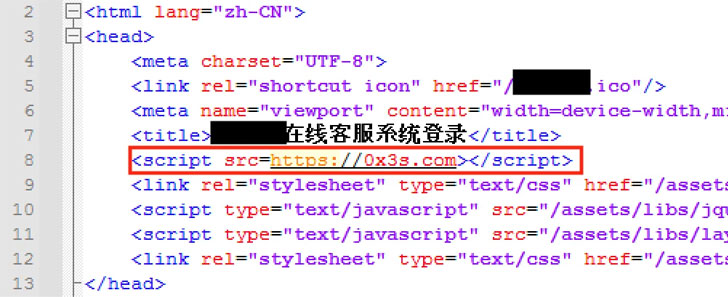
Specifically, the websites’ online support chat pages are
booby-trapped with malicious JavaScript code, which is used to
deliver the malware to the victims.
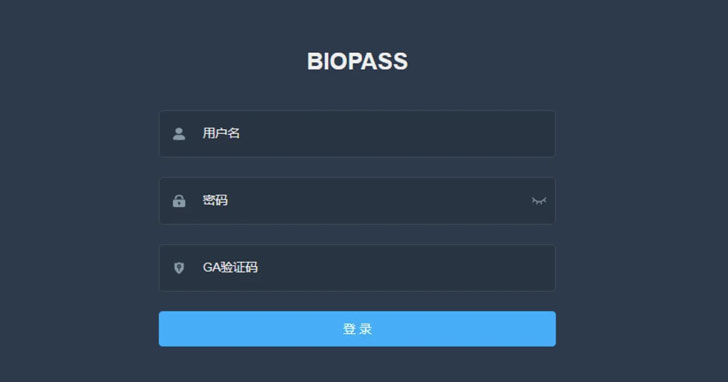
“BIOPASS RAT possesses basic features found in other malware,
such as file system assessment, remote desktop access, file
exfiltration, and shell command execution,” Trend Micro researchers
noted[1]
in an analysis published Friday. “It also has the ability to
compromise the private information of its victims by stealing web
browser and instant messaging client data.”
OBS Studio is an open-source software for video recording and
live streaming, enabling users to stream to Twitch, YouTube, and
other platforms.
Besides featuring an array of capabilities that run the typical
spyware gamut, BIOPASS is equipped to establish live streaming to a
cloud service under the attacker’s control via Real-Time Messaging
Protocol (RTMP[2]), in addition to
communicating with the command-and-control (C2) server using the
Socket.IO[3] protocol.
The malware, which is said to be under active development, is
also notable for its focus on stealing private data from web
browsers and instant messaging apps chiefly popular in Mainland
China, including QQ Browser, 2345 Explorer, Sogou Explorer, and 360
Safe Browser, WeChat, QQ, and Aliwangwang.
It isn’t clear exactly as to who is behind this malware strain,
but Trend Micro researchers said they found overlaps between
BIOPASS and that of TTPs often associated with the Winnti Group
(aka APT41[4]), a sophisticated
Chinese hacking group specialized in cyber espionage attacks, based
on the use of stolen certificates and a Cobalt Strike binary that
was previously attributed[5]
to the threat actor.
What’s more, the same Cobalt Strike binary has also been
connected to a cyber attack targeting MonPass[6], a major certification
authority (CA) in Mongolia, earlier this year wherein its installer
software was tampered with to install Cobalt Strike beacon payloads
on infected systems.
“BIOPASS RAT is a sophisticated type of malware that is
implemented as Python scripts,” the researchers said. “Given that
the malware loader was delivered as an executable disguised as a
legitimate update installer on a compromised website, […] it is
recommended to download apps only from trusted sources and official
websites to avoid being compromised.”
References
Read more http://feedproxy.google.com/~r/TheHackersNews/~3/lUhuWFPTb1Y/hackers-spread-biopass-malware-via.html