Dec 06, 2022Ravie Lakshmanan
Cybersecurity researchers have shed light on a darknet
marketplace called InTheBox that’s designed to
specifically cater to mobile malware operators.
The actor behind the criminal storefront, believed to be
available since at least January 2020, has been offering over 400
custom web injects grouped by geography that can be purchased by
other adversaries looking to mount attacks of their own.
“The automation allows other bad actors to create orders to
receive the most up to date web injects for further implementation
into mobile malware,” Resecurity said[1].
“InTheBox may be called the largest and probably the only one in
its marketplace category providing high-quality web injects for
popular types of mobile malware.”
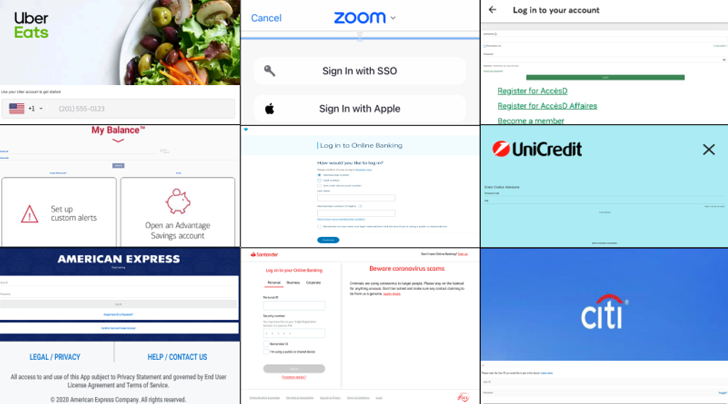
Web injects are packages[2]
used in financial malware that leverage the
adversary-in-the-browser (AitB) attack vector to serve malicious
HTML or JavaScript code in the form of an overlay screen when
victims launch a banking, crypto, payments, e-commerce, email, or
social media app.
These pages typically resemble a legitimate bank login web page
and prompt unwitting users to input confidential data such as
credentials, payment card data, Social Security numbers (SSN), card
verification value (CVV) that’s then used to compromise the bank
account and conduct fraud.
InTheBox is accessible over the Tor anonymity network and
advertises a variety of web inject templates for sale, with the
listing accessible only after a customer is vetted by the
administrator and the account is activated.
The web injects can be either purchased for $100 a month or as
an “unlim” tier that enables the buyer to generate an unlimited
number of injects during the subscription period. Costs for the
unlim plan vary anywhere between $2,475 and $5,888 depending on the
supported trojans.
Some of the Android banking trojans that are supported through
the service include Alien[3], Cerberus[4], ERMAC[5]
(and its successor MetaDroid[6]), Hydra[7], and Octo[8], the California-based
cybersecurity company said.
“The majority of high-demand injects is related to payment
services including digital banking and cryptocurrency exchangers,”
the researchers said. “During November 2022, the actor arranged a
significant update of close to 144 injects improving their visual
design.”
The development comes as Cyble disclosed a new
malware-as-a-service (MaaS) operation named DuckLogs[9]
that’s marketed for $69.99 for a lifetime access, giving threat
actors the ability to harvest sensitive information, hijack
cryptocurrency transactions, and remotely commandeer the
machines.
Found this article interesting? Follow us on Twitter [10] and LinkedIn[11] to read more exclusive
content we post.
References
- ^
said
(resecurity.com) - ^
packages
(www.recordedfuture.com) - ^
Alien
(thehackernews.com) - ^
Cerberus
(thehackernews.com) - ^
ERMAC
(thehackernews.com) - ^
MetaDroid
(twitter.com) - ^
Hydra
(thehackernews.com) - ^
Octo
(thehackernews.com) - ^
DuckLogs
(blog.cyble.com) - ^
Twitter
(twitter.com) - ^
LinkedIn
(www.linkedin.com)
Read more https://thehackernews.com/2022/12/darknets-largest-mobile-malware.html