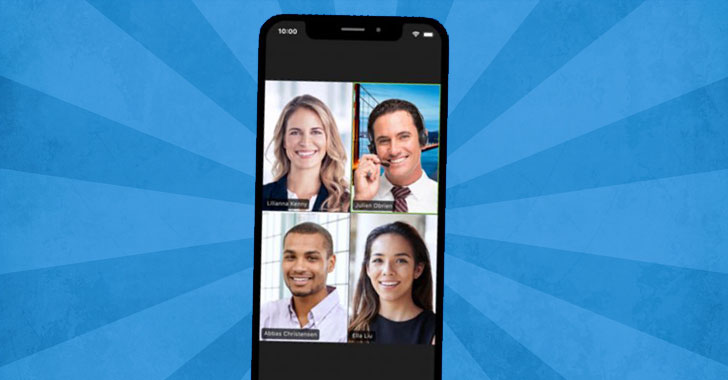
A severe security vulnerability in a popular video calling
software development kit (SDK) could have allowed an attacker to
spy on ongoing private video and audio calls.
That’s according to new research published[1]
by the McAfee Advanced Threat Research (ATR) team today, which
found the aforementioned flaw in Agora.io’s SDK used by several
social apps such as eHarmony, Plenty of Fish, MeetMe, and Skout;
healthcare apps like Talkspace, Practo, and Dr. First’s Backline;
and in the Android app that’s paired with “temi” personal
robot.
California-based Agora is a video, voice, and live interactive
streaming platform, allowing developers to embed voice and video
chat, real-time recording, interactive live streaming, and
real-time messaging into their apps. The company’s SDKs are
estimated to be embedded into mobile, web, and desktop applications
across more than 1.7 billion devices globally.
McAfee disclosed the flaw (CVE-2020-25605) to Agora.io on April
20, 2020, following which the company released a new SDK on
December 17, 2020, to remediate the threat posed by the
vulnerability.
The security weakness, which is the consequence of incomplete
encryption, could have been leveraged by bad actors to launch
man-in-the-middle attacks and intercept communications between two
parties.
“Agora’s SDK implementation did not allow applications to
securely configure the setup of video/audio encryption, thereby
leaving a potential for hackers to snoop on them,” the researchers
said.
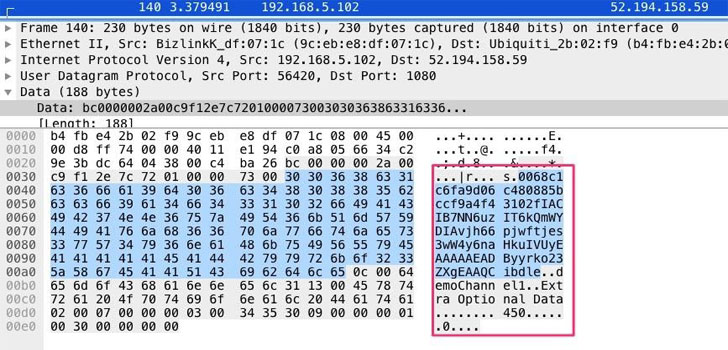
Specifically, the function responsible for connecting an
end-user to a call passed parameters such as App ID and
authentication token parameter in plaintext, thereby allowing an
attacker to abuse this shortcoming to sniff network traffic so as
to gather call information and subsequently launch their own Agora
video application to dial into calls without the attendees’
knowledge stealthily.
Although there’s no evidence that the vulnerability was
exploited in the wild, the development once again underscores the
need for securing applications to safeguard user privacy.
“In the world of online dating, a breach of security or the
ability to spy on calls could lead to blackmail or harassment by an
attacker,” the researchers concluded. “Other Agora developer
applications with smaller customer bases, such as the temi robot,
are used in numerous industries such as hospitals, where the
ability to spy on conversations could lead to the leak of sensitive
medical information.”
It’s highly recommended that developers using Agora SDK upgrade to the latest version[2] to mitigate the
risk.
References
- ^
published
(www.mcafee.com) - ^
upgrade
to the latest version (docs.agora.io)
Read more http://feedproxy.google.com/~r/TheHackersNews/~3/ZPUVDvxR8ps/agora-sdk-bug-left-several-video.html