watering hole attacks against the Kurdish community in Syria and
Turkey for surveillance and intelligence exfiltration purposes.
The advanced persistent threat behind the operation, called
StrongPity[1], has retooled with new
tactics to control compromised machines, cybersecurity firm
Bitdefender said in a
report[2] shared with The Hacker
News.
“Using watering hole tactics to selectively infect victims and
deploying a three-tier C&C infrastructure to thwart forensic
investigations, the APT group leveraged Trojanized popular tools,
such as archivers, file recovery applications, remote connections
applications, utilities, and even security software, to cover a
wide range of options that targeted victims might be seeking,” the
researchers said.
With the timestamps of the analyzed malware samples used in the
campaign coinciding with the Turkish offensive into north-eastern
Syria (codenamed Operation Peace
Spring) last October, Bitdefender said the attacks could have
been politically motivated.
Using Tainted Installers to Drop Malware
StrongPity (or Promethium) was
first publicly reported on in October 2016
after attacks against users in Belgium and Italy that used watering
holes to deliver malicious versions of WinRAR and TrueCrypt file
encryption software.
Since then, the APT has been linked to a 2018
operation[6] that abused Türk
Telekom’s network to redirect hundreds of users in Turkey and Syria
to malicious StrongPity versions of authentic software.
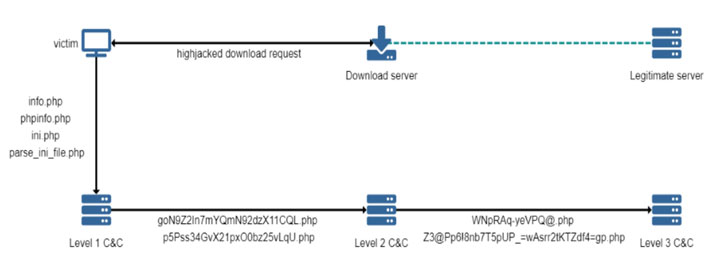
application on the official website, a watering hole attack or an
HTTP redirect is carried out to compromise the systems.
Last July, AT&T Alien Labs found evidence of a fresh spyware
campaign[7] that exploited
trojanized versions of WinBox router management software and WinRAR
file archiver to install StrongPity and communicate with the
adversary infrastructure.
The new attack method identified by Bitdefender remains the
same: target victims in Turkey and Syria using predefined IP list
by leveraging tampered installers — including McAfee Security Scan
Plus, Recuva, TeamViewer, WhatsApp, and Piriform’s CCleaner —
hosted on localized software aggregates and sharers.
“Interestingly, all files investigated pertaining to the tainted
applications appear to have been compiled from Monday to Friday,
during normal 9 to 6 UTC+2 working hours,” the researchers said.
“This strengthens the idea that StrongPity could be a sponsored and
organized developer team paid to deliver certain ‘projects.'”
Once the malware dropper is downloaded and executed, the
backdoor is installed, which establishes communication with a
command and control server for document exfiltration and for
retrieving commands to be executed.
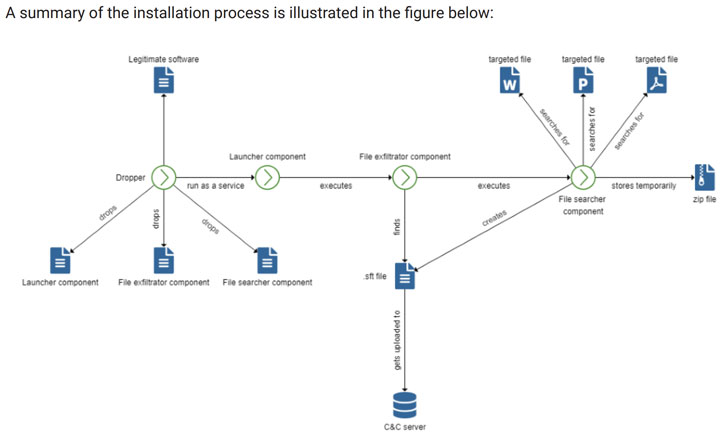
that loops through every drive and looks for files with specific
extensions (e.g., Microsoft Office documents) to be exfiltrated in
the form of a ZIP archive.
This ZIP file is then split into multiple hidden “.sft”
encrypted files, sent to the C&C server, and ultimately deleted
from the disk to cover any tracks of the exfiltration.
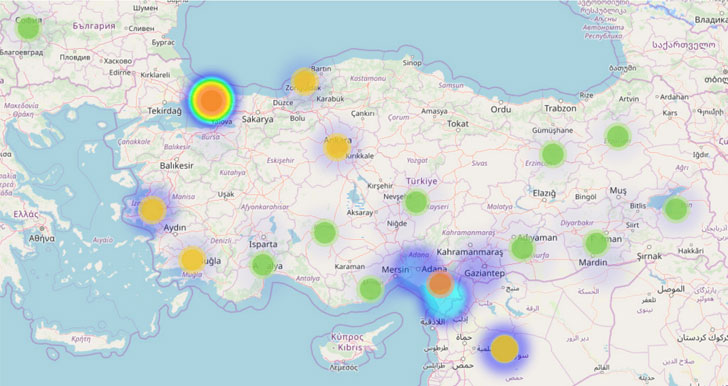
Expanding Beyond Syria and Turkey
Although Syria and Turkey may be their recurring targets, the
threat actor behind StrongPity appears to be expanding their
victimology to infect users in Colombia, India, Canada, and Vietnam
using tainted versions of Firefox, VPNpro, DriverPack, and
5kPlayer.
researchers yesterday described an evolving malware toolkit
that employs a module called “winprint32.exe” to launch the
document search and transmit the collected files. What’s more, the
fake Firefox installer also checks if either ESET or BitDefender
antivirus software is installed before dropping the malware.
“These characteristics can be interpreted as signs that this
threat actor could in fact be part of an enterprise service for
hire operation,” the researchers said. “We believe this has
hallmarks a professionally packaged solution due to the similarity
of each piece of malware being extremely similar but used across
different targets with minor changes.”
References
- ^
StrongPity
(otx.alienvault.com) - ^
said in a report
(labs.bitdefender.com) - ^
Operation Peace Spring
(en.wikipedia.org) - ^
Promethium
(www.microsoft.com) - ^
October 2016
(securelist.com) - ^
2018 operation
(citizenlab.ca) - ^
spyware campaign
(cybersecurity.att.com) - ^
Cisco Talos researchers
(blog.talosintelligence.com)
Read more http://feedproxy.google.com/~r/TheHackersNews/~3/6trGj-Kh3ac/strongpity-syria-turkey-hackers.html