Mar 27, 2023The Hacker News
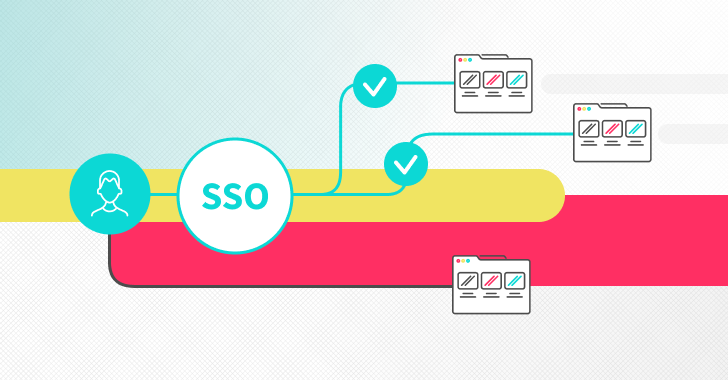
Single sign-on (SSO) is an authentication method that allows
users to authenticate their identity for multiple applications with
just one set of credentials. From a security standpoint, SSO is the
gold standard. It ensures access without forcing users to remember
multiple passwords and can be further secured with MFA.
Furthermore, an estimated 61% of attacks stem from stolen
credentials. By removing usernames and passwords, the attack
surface is reduced as well. SSO helps companies meet strict
compliance regulations by not only enabling businesses to secure
their accounts, but by helping them demonstrate that they’ve taken
the necessary steps to meet regulatory requirements.
While SSO is an important step in securing SaaS apps and their
data, having just SSOs in place to secure the SaaS stack in its
entirety is not enough. SSO alone won’t prevent a threat actor from
accessing a SaaS app. It also won’t protect SaaS apps that are
onboarded without the IT team’s knowledge or approval.
Organizations need to take additional steps to secure valuable
data within their SaaS stack. Here are five use cases where SSO on
its own falls short.
Learn how Adaptive Shield can help you
secure your entire SaaS stack.[1]
Companies Are NOT Enforcing SSO-Only Login
Nearly every SaaS app can integrate into an SSO, and most
organizations enable it. Our research shows that an astounding 95%
allow their employees to log into Salesforce with SSO. However,
fewer than 5% of those companies require SSO login. Rather than use
a proven, highly secure access governance tool, they allow
employees to access their SaaS with a username and password.
SSO is most effective when companies eliminate access with local
credentials. By allowing access with local credentials, companies
with SSO can still be victimized by threat actors who steal
credentials and log in through the front door.
Admins Require Non-SSO Access
Even in organizations that require SSO, administrators need to
be able to log in directly to the application. Most applications
prefer that admins have direct login access with a username and
password so they can respond to an SSO outage or other issues.
This is particularly problematic considering that Admin access
is the most coveted access to threat actors. By capturing that
information, cyber-criminals have full access to the entire app
instance, enabling them to create new user accounts, download data,
or encrypt data and hold it for ransom. Companies that rely solely
on SSO for SaaS security can be blindsided by SaaS infiltrations
into admin accounts using a username and password credentials.
SSO Can’t Help with Over-Permissioned or Malicious Third-Party
Applications
Third-party apps integrate with hub applications to provide
additional functionality or improve processes. The majority of
these integrations are harmless, and improve employee productivity.
However, as noted in the 2023 SaaS to SaaS Access report, 39% of
apps that connect to Microsoft 365 request scopes that enable them
to write, read, and delete files and emails.
Occasionally, some connected apps might be malicious and take
advantage of the scoped permissions to steal or encrypt sensitive
information from within the application.
SSOs have no visibility into third-party applications, their
permission scopes, or their functionality. They have no way to
alert security teams or app owners if a third-party application is
putting the company at risk.
Learn more about third-party app risk in the
latest SaaS-to-SaaS Access Report[2]
SSOs Should Work with a SaaS Security Posture Management
Solution (SSPM)
SaaS Security is at its strongest when done in coordination with
an SSO. An SSO solution, together with an SSPM solution, allows a
holistic Identity and Access Governance, such as de-provisioning
users — SSO handles access control and is an integral part of
Identity and Access Management. SaaS Security Posture Management
solutions, like Adaptive Shield, also go beyond access control,
with additional layers of protection in areas where SSOs are
vulnerable, as well as identifying misconfigurations, recognizing
connected third-party applications, identifying device hygiene
issues, and data loss management.
Found this article interesting? Follow us on Twitter [4]
and LinkedIn[5]
to read more exclusive content we post.
References
- ^
Learn
how Adaptive Shield can help you secure your entire SaaS stack.
(www.adaptive-shield.com) - ^
Learn
more about third-party app risk in the latest SaaS-to-SaaS Access
Report (www.adaptive-shield.com) - ^
Get a
15-minute demo how you can secure your SaaS stack
(www.adaptive-shield.com) - ^
Twitter
(twitter.com) - ^
LinkedIn
(www.linkedin.com)
Read more https://thehackernews.com/2023/03/where-sso-falls-short-in-protecting-saas.html