Dec 20, 2022Ravie Lakshmanan

The threat actors behind the Windows banking malware known as
Casbaneiro has been attributed as behind a novel Android
trojan called BrasDex that has been observed
targeting Brazilian users as part of an ongoing multi-platform
campaign.
BrasDex features a “complex keylogging system designed to abuse
Accessibility Services to extract credentials specifically from a
set of Brazilian targeted apps, as well as a highly capable
Automated Transfer System (ATS[1]) engine,” ThreatFabric
said[2]
in a report published last week.
The Dutch security firm said that the command-and-control (C2)
infrastructure used in conjunction with BrasDex is also being used
to control Casbaneiro[3], which is known to
strike banks and cryptocurrency services in Brazil and Mexico.
The hybrid Android and Windows malware
campaign[4] is estimated to have
resulted in thousands of infections to date.
BrasDex, which masquerades as a banking app for Banco Santander,
is also emblematic of a new trend that involves abusing Android’s
Accessibility APIs to log keystrokes entered by the victims, moving
away from the traditional method of overlay attacks to steal
credentials and other personal data.
It’s also engineered to capture account balance information,
subsequently using it to take over infected devices and initiate
fraudulent transactions in a programmatic manner.
Another notable aspect of BrasDex is its singular focus on the
PIX payments platform, which allows banking customers in Brazil to
make money transfers simply using their email addresses or phone
numbers.

The ATS system in BrasDex is explicitly designed to abuse PIX
technology to make fraudulent transfers.
This is not the first time the instant payment ecosystem has
been targeted by bad actors. In September 2021, Check Point
detailed two Android malware families named PixStealer and MalRhino[5]
that tricked users into transferring their entire account balances
to an actor-controlled one.
ThreatFabric’s investigation into BrasDex also allowed it to
gain access to the C2 panel used by the criminal operators to keep
track of the infected devices and retrieve data logs exfiltrated
from the Android phones.
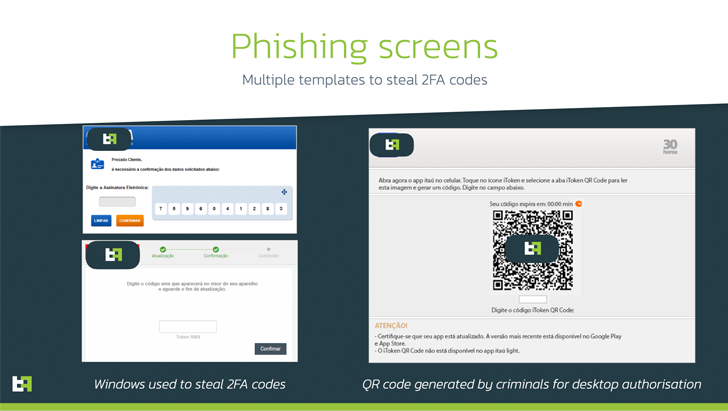
The C2 panel, as it happens, is also being utilized to keep tabs
on a different malware campaign which compromises Windows machines
to deploy Casbaneiro, a Delphi-based financial trojan.
This attack chain employs package delivery-themed phishing lures
purporting to be from Correios, a state-owned postal service, to
dupe recipients into executing the malware following a multi-staged
process.
Casbaneiro’s features run the typical backdoor gamut that allows
it to seize control of banking accounts, take screenshots, perform
keylogging, hijack clipboard data, and even function as a clipper malware[6]
to hijack crypto transactions.
“Being independent and full-fledged malware families, BrasDex
and Casbaneiro form a very dangerous pair, allowing the actor
behind them to target both Android and Windows users on a large
scale,” ThreatFabric said.
“The BrasDex case shows the necessity of fraud detection and
prevention mechanisms in place on customers devices: Fraudulent
payments made automatically with the help of ATS engines appear
legitimate to bank backends and fraud scoring engines, as they are
made through the same device that is usually used by
customers.”
Found this article interesting? Follow us on Twitter [7]
and LinkedIn[8]
to read more exclusive content we post.
References
- ^
ATS
(thehackernews.com) - ^
said
(www.threatfabric.com) - ^
Casbaneiro
(www.welivesecurity.com) - ^
hybrid
Android and Windows malware campaign
(thehackernews.com) - ^
PixStealer and MalRhino
(thehackernews.com) - ^
clipper
malware (thehackernews.com) - ^
Twitter
(twitter.com) - ^
LinkedIn
(www.linkedin.com)
Read more https://thehackernews.com/2022/12/beware-cybercriminals-launch-new.html