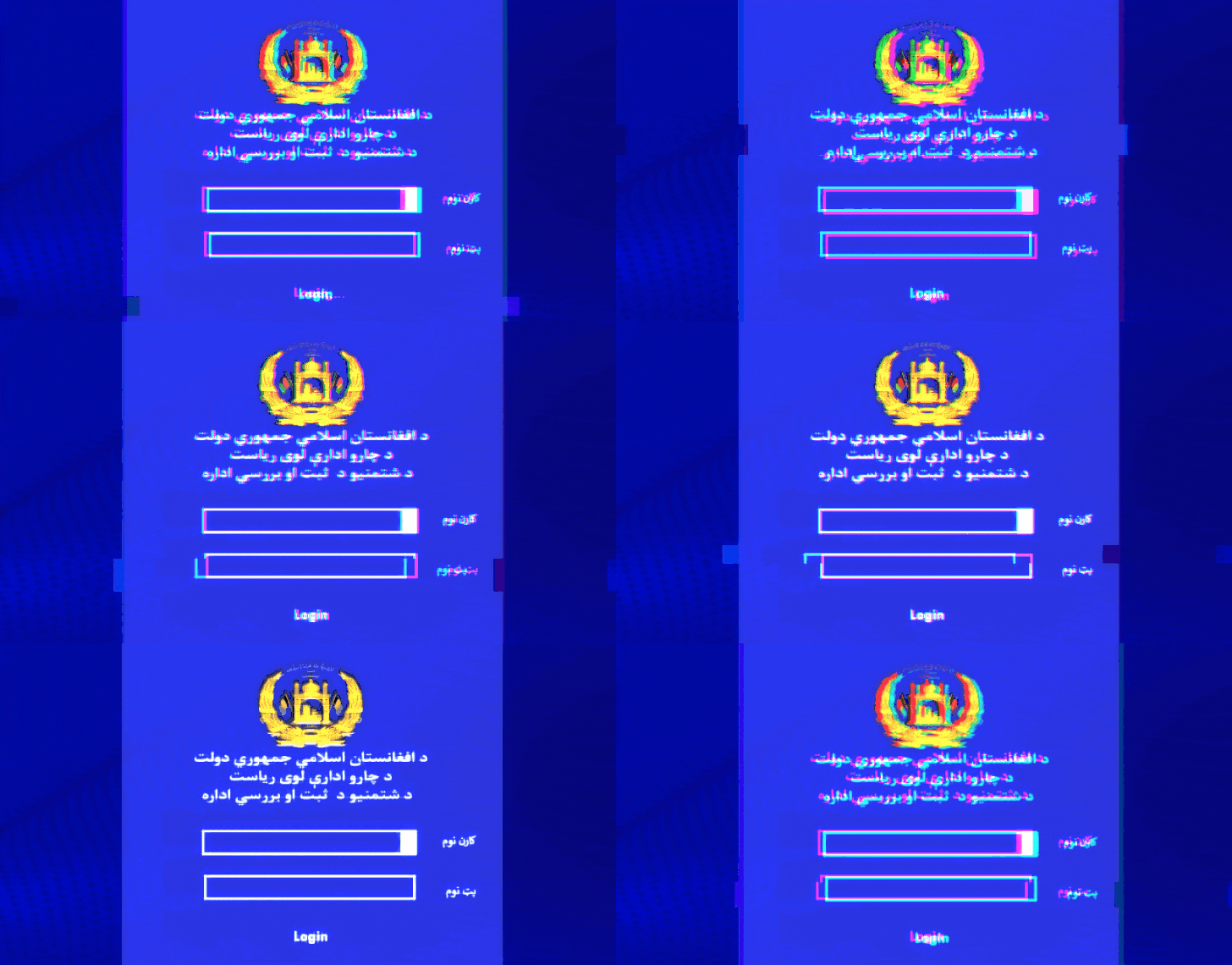
A Pakistani threat actor successfully socially engineered a
number of ministries in Afghanistan and a shared government
computer in India to steal sensitive Google, Twitter, and Facebook
credentials from its targets and stealthily obtain access to
government portals.
Malwarebytes’ latest findings go into detail about the new
tactics and tools adopted by the APT group known as
SideCopy, which is so-called because of its
attempts to mimic the infection chains associated with another
group tracked as SideWinder[1]
and mislead attribution.
“The lures used by SideCopy APT are usually archive files that
have embedded one of these files: LNK, Microsoft Publisher or
Trojanized Applications,” Malwarebytes researcher Hossein Jazi
said[2], adding the embedded
files are tailored to target government and military officials
based in Afghanistan and India.
The revelation comes close on the heels of disclosures[3]
that Meta took steps to block malicious activities carried out by
the group on its platform by using romantic lures to compromise
individuals with ties to the Afghan government, military, and law
enforcement in Kabul.
Some of the prominent attacks were waged against personnel
associated with the Administration Office of the President (AOP) of
Afghanistan as well as the Ministry of Foreign affairs, Ministry of
Finance, and the National Procurement Authority, resulting in the
theft of social media passwords and password-protected documents.
SideCopy also broke into a shared computer in India and harvested
credentials from government and education services.
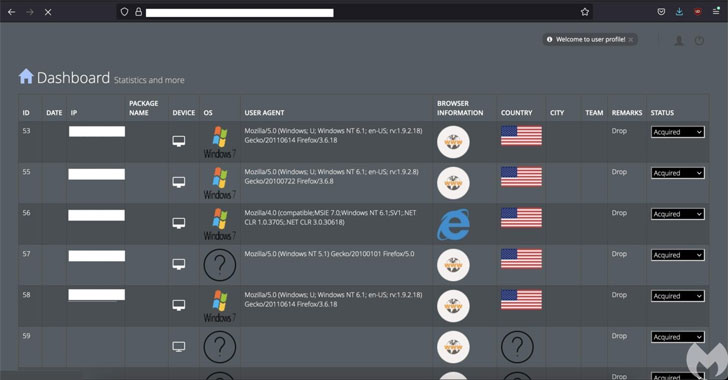
In addition, the actor is said to have siphoned several
Microsoft Office documents, including names, numbers, and email
addresses of officials and databases containing information related
to identity cards, diplomatic visas, and asset registrations from
the Afghani government websites, all of which are expected to be
used as future decoys or to fuel further attacks against the
individuals themselves.
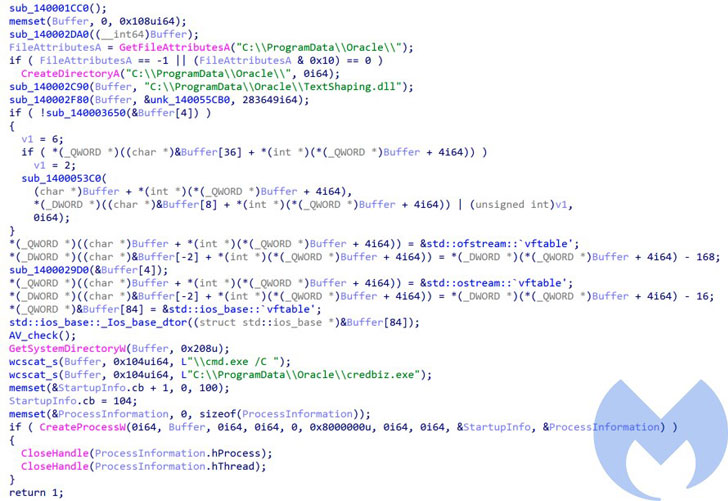
The cyber espionage campaign observed by Malwarebytes involves
the target opening the lure document, leading to the execution of a
loader that’s used to drop a next-stage remote access trojan called
ActionRAT, which is capable of uploading files, executing commands
received from a server, and even download more payloads.
Also dropped by the loader is a new information stealer dubbed
AuTo Stealer, which is programmed to collect Microsoft Office
files, PDF documents, text files, database files, and images before
exfiltrating the information to its server over HTTP or TCP.
This is far from the first time SideCopy APT’s tactics have come
to light. In September 2020, cybersecurity firm Quick Heal revealed[4]
specifics about an espionage attack aimed at Indian defense units
and armed forces personnel at least since 2019 with an aim to steal
sensitive information.
Then earlier this July, Cisco Talos researchers exposed[5]
the hacking group’s myriad infection chains delivering bespoke and
commodity remote access trojans such as CetaRAT, Allakore, and
njRAT in what they called an expansion of malware campaigns
targeting entities in India.
References
- ^
SideWinder
(malpedia.caad.fkie.fraunhofer.de) - ^
said
(blog.malwarebytes.com) - ^
disclosures
(thehackernews.com) - ^
revealed
(thehackernews.com) - ^
exposed
(thehackernews.com)
Read more https://thehackernews.com/2021/12/researchers-detail-how-pakistani.html