
A modified version of the WhatsApp messaging app for Android has
been trojanized to serve malicious payloads, display full-screen
ads, and sign up device owners for unwanted premium subscriptions
without their knowledge.
“The Trojan Triada snuck into one of these modified versions of
the messenger called FMWhatsApp 16.80.0 together with the
advertising software development kit (SDK),” researchers from
Russian cybersecurity firm Kaspersky said[1]
in a technical write-up published Tuesday. “This is similar to
what happened with APKPure[2], where the only
malicious code that was embedded in the app was a payload
downloader.”
Modified versions of legitimate Android apps — aka Modding — are
designed to perform functions not originally conceived or intended
by the app developers, and FMWhatsApp allows users to customize the
app with different themes, personalize icons, and hide features
like last seen, and even deactivate video calling features.
The tampered variant of the app detected by Kaspersky comes
equipped with capabilities to gather unique device identifiers,
which is sent to a remote server that responds back with a link to
a payload that’s subsequently downloaded, decrypted, and launched
by the Triada trojan.
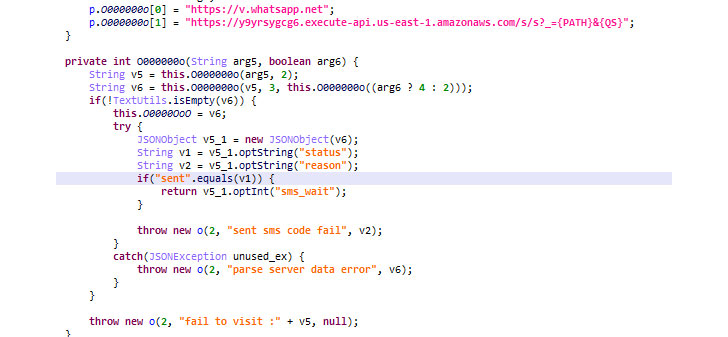
The payload, for its part, can be employed to carry out a wide
range of malicious activities ranging from downloading additional
modules and displaying full-screen ads to stealthily subscribing
the victims to premium services and signing into WhatsApp accounts
on the device. Even worse, the attackers can hijack and take
control of the WhatsApp accounts to carry out social engineering
attacks or distribute spam messages, thus propagating the malware
to other devices.
“It’s worth highlighting that FMWhatsapp users grant the app
permission to read their SMS messages, which means that the Trojan
and all the further malicious modules it loads also gain access to
them,” the researchers said. “This allows attackers to
automatically sign the victim up for premium subscriptions, even if
a confirmation code is required to complete the process.”
References
- ^
said
(securelist.com) - ^
what
happened with APKPure (thehackernews.com)
Read more http://feedproxy.google.com/~r/TheHackersNews/~3/yCE2AXvZTBc/modified-version-of-whatsapp-for.html