
In yet another instance of software supply chain attack,
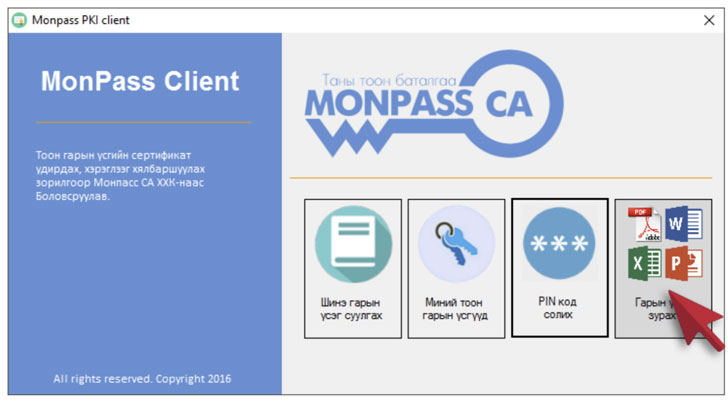
unidentified hackers breached the website of MonPass[1], one of Mongolia’s major
certificate authorities, to backdoor its installer software with
Cobalt Strike binaries.
The trojanized client was available for download between
February 8, 2021, and March 3, 2021, said Czech cybersecurity
software company Avast in a report[2]
published Thursday.
In addition, a public webserver hosted by MonPass was
infiltrated potentially as many as eight separate times, with the
researchers uncovering eight different web shells and backdoors on
the compromised server.
Avast’s investigation into the incident began after it
discovered the backdoored installer and the implant on one of its
customers’ systems.
“The malicious installer is an unsigned [Portable Executable]
file,” the researchers said. “It starts by downloading the
legitimate version of the installer from the MonPass official
website. This legitimate version is dropped to the
‘C:\Users\Public\’ folder and executed under a new process. This
guarantees that the installer behaves as expected, meaning that a
regular user is unlikely to notice anything suspicious.”

The modus operandi is also notable for the use of steganography
to transfer shellcode to the victim machine, with the installer
downloading a bitmap image (.BMP) file from a remote server to
extract and deploy an encrypted Cobalt Strike beacon payload.
MonPass was notified of the incident on April 22, after which
the certificate authority took steps to address their compromised
server and notify those who downloaded the backdoored client.
The incident marks the second time software provided by a
certificate authority has been compromised to infect targets with
malicious backdoors. In December 2020, ESET disclosed a campaign
called “Operation SignSight[3],” wherein a digital
signature toolkit from the Vietnam Government Certification
Authority (VGCA) was tampered to include spyware capable of
amassing system information and installing additional malware.
The development also comes as Proofpoint, earlier this week,
revealed[4]
the abuse of Cobalt Strike penetration testing tool in threat actor
campaigns has shot through the roof, jumping 161% year-over-year
from 2019 to 2020.
“Cobalt Strike is becoming increasingly popular among threat
actors as an initial access payload, not just a second-stage tool
threat actors use once access is achieved, with criminal threat
actors making up the bulk of attributed Cobalt Strike campaigns in
2020,” Proofpoint researchers said.