
high-severity security vulnerability in Amazon’s Ring Video
Doorbell Pro devices that could allow nearby attackers to steal
your WiFi password and launch a variety of cyberattacks using MitM
against other devices connected to the same network.
In case you don’t own one of these, Amazon’s Ring Video
Doorbell is a smart wireless home security doorbell camera that
lets you see, hear and speak to anyone on your property from
anywhere in the World.
The smart doorbell needs to be connected to your WiFi network,
allowing you to remotely access the device from a smartphone app to
perform all tasks wirelessly.
While setting up the device for the very first time and share your
WiFi password with it, you need to enable the configuration mode
from the doorbell.
Entering into the configuration mode turns on a built-in,
unprotected wireless access point, allowing the RING smartphone app
installed on your device to automatically connect to the
doorbell.
However, researchers told The Hacker News that besides using an
access point with no password, the initial communication between
the Ring app and the doorbell, i.e., when you share your home’s
WiFi password with the doorbell, is performed insecurely through
plain HTTP.

wireless access point, while the setup in the process, and steal
your WiFi password using a man-in-the-middle attack.
Since this attack can only be performed during the “one-time
initial configuration” of the device, you might be wondering how an
attacker can leverage this loophole after the device has already
been configured.
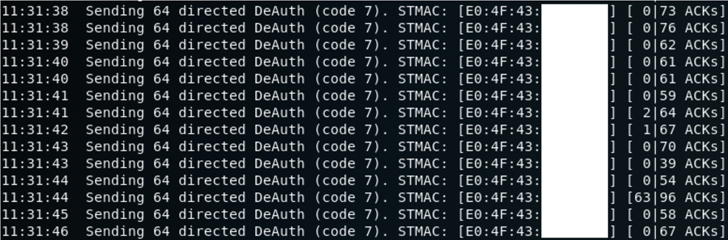
de-authentication messages to the device, an attacker can trick the
user into believing that the device is malfunctioning, so the user
reconfigures it.
“Attackers can trigger the reconfiguration of the Ring Video
Doorbell Pro. One way to do this is to continuously send
deauthentication packets, so that the device is dropped from the
wireless network. At this point, the App loses connectivity and
tells the user to reconfigure the device,” the researchers told The
Hacker News.
“The live view button becomes greyed out and, when clicked, the app
will suggest restarting the router or pressing the setup button
twice on the doorbell. Pressing the button twice will trigger the
device to try to reconnect to the network – an action that will
fail. The last resort is to try and reconfigure the device,”
Bitdefender said in a blog
post[1].
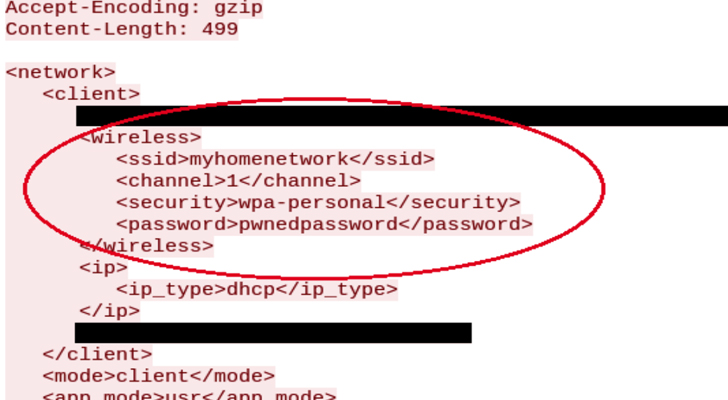
credentials, the attacker sniffing the traffic would capture the
password in plaintext, as shown in the screenshot.
Once in possession of a user’s WiFi password, an attacker can
launch various network-based attacks, including:
- Interact with all devices within the household network;
- Intercept network traffic and run man-in-the-middle
attacks - Access all local storage (NAS, for example) and subsequently
access private photos, videos and other types of information, - Exploit all vulnerabilities existing in the devices connected
to the local network and get full access to each device; that may
lead to reading emails and private conversations, - Get access to security cameras and steal video recordings.
Bitdefender discovered this vulnerability in Ring Video Doorbell
Pro devices in June this year and responsibly reported it to
Amazon, but got no update from the company.
vulnerability report in August and marked it as a duplicate without
saying whether a third party already reported this issue.
However, after some communication with the vendor, an automatic
fix for the vulnerability was partially issued on 5th
September.
“However, to be on the safe side Ring Video Doorbell Pro users
should make sure they have the latest update installed. If so,
they’re safe.”
A similar security
vulnerability[2]
was discovered and patched in the Ring Video Doorbell devices in
early 2016 that was also exposing the owner’s WiFi network password
to attackers.
References
- ^
blog post
(labs.bitdefender.com) - ^
similar security vulnerability
(thehackernews.com)
Read more http://feedproxy.google.com/~r/TheHackersNews/~3/5zn1i_-jKuk/ring-doorbell-wifi-password.html