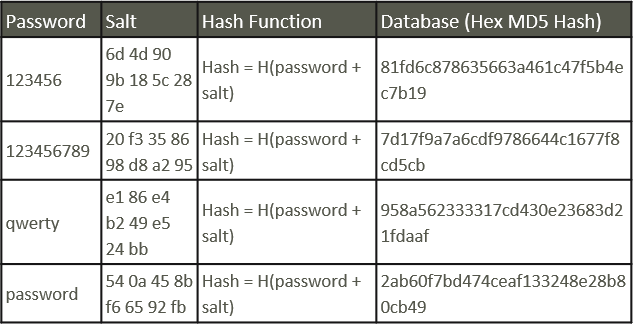
Adding a salt to the password before hashing strengthens security. By then iterating the hash of the salted password in a process known as ‘key stretching’, attacks can be made much more computationally expensive. There are various key stretching algorithms such as pbkdf2, bcrypt and scrypt.
Cryptographic security is an important part of keeping your data safe and secure. When it comes to cryptographic security, there are two main methods of protection: salting and key stretching. In this article, we’ll explain the differences between the two, and what you need to know about each one in order to ensure your data is secure. We’ll also discuss the advantages and disadvantages of each method, and how you can use them to protect your data. By the end of this article, you’ll have a better understanding of salting and key stretching, and how they can help you keep your data safe.
What is Salting and Key Stretching?
Salting and Key Stretching are two important security measures used to protect user data. Salting is a technique used to add random data to a user’s password before it is hashed. This random data, known as a salt, is unique to each user and is stored in the database along with the hashed password. When a user attempts to log in, the salt is retrieved from the database and added to the password before it is hashed. This makes it much more difficult for an attacker to crack the password because the same password will have a different hash each time it is used.
Key stretching is a technique used to make it more difficult for an attacker to crack a user’s password. It works by taking a user’s password and running it through a hashing algorithm multiple times. This makes it much more difficult for an attacker to crack the password because the same password will have a different hash each time it is used.
Together, salting and key stretching are important security measures used to protect user data. By adding random data to a user’s password before it is hashed and running it through a hashing algorithm multiple times, it makes it much more difficult for an attacker to crack the password. This helps to ensure that user data is kept safe and secure.
Benefits of Salting and Key Stretching for Cryptographic Security
Cryptographic security is a key component of data security, and salting and key stretching are two important methods used to protect data from malicious actors. Salting and key stretching are both used to increase the complexity of cryptographic keys, making them more difficult to guess or crack.
Salting is a method of adding random data to a cryptographic key before it is used. This random data, known as a salt, is added to the key to make it more difficult for an attacker to guess or crack the key. Salting is a simple and effective way to increase the security of a cryptographic key.
Key stretching is a method of increasing the complexity of a cryptographic key by applying a mathematical algorithm to it. This algorithm is designed to make the key more difficult to guess or crack by increasing the amount of time and computing power required to do so. Key stretching is a powerful tool for increasing the security of cryptographic keys.
The combination of salting and key stretching is a powerful way to increase the security of cryptographic keys. By adding random data to the key and then applying a mathematical algorithm to it, the complexity of the key is increased, making it more difficult for an attacker to guess or crack the key. This combination of techniques is an effective way to protect data from malicious actors.
How Salting and Key Stretching Work Together
Salting and key stretching are two important security measures used to protect data from malicious actors. Salting is a process of adding random data to a user’s password before it is hashed, making it harder for attackers to guess the password. Key stretching is a process of applying a cryptographic hash function to a user’s password multiple times, making it even more difficult for attackers to guess the password.
When a user creates an account, the system will generate a random string of characters, known as a salt, and add it to the user’s password before it is hashed. This makes it much harder for attackers to guess the user’s password, as the salt will be different for each user. The salt is then stored in the system’s database, so that when the user enters their password, the system can add the salt to the password before it is hashed.
Once the user’s password has been salted, the system will then apply a cryptographic hash function to the salted password multiple times. This process is known as key stretching, and it makes it even more difficult for attackers to guess the user’s password. The more times the hash function is applied, the more secure the user’s password will be.
By combining salting and key stretching, the system can make it much more difficult for attackers to guess a user’s password. This is an important security measure, as it helps to protect user data from malicious actors.
Implementing Salting and Key Stretching in Your Security System
Salting and key stretching are two important security measures that can be implemented in any security system. Salting is a technique used to add random data to a user’s password before it is hashed. This random data, known as a salt, is unique to each user and is stored in the system. When a user enters their password, the salt is added to the password before it is hashed. This makes it much more difficult for an attacker to guess a user’s password, as the salt makes the hash value unique to each user.
Key stretching is a technique used to increase the amount of time it takes to generate a hash value. This is done by running the hash algorithm multiple times, with each iteration taking a longer amount of time. This makes it much more difficult for an attacker to guess a user’s password, as it takes a much longer amount of time to generate the hash value.
When implementing salting and key stretching in a security system, it is important to ensure that the salt and key stretching parameters are properly configured. The salt should be long enough to make it difficult for an attacker to guess, and the key stretching parameters should be set to a value that makes it difficult for an attacker to guess the password in a reasonable amount of time.
In addition, it is important to ensure that the salt and key stretching parameters are kept secure. If an attacker were to gain access to the salt or key stretching parameters, they could use them to guess a user’s password in a much shorter amount of time.
By implementing salting and key stretching in a security system, organizations can greatly increase the security of their system and make it much more difficult for an attacker to guess a user’s password.
Common Pitfalls to Avoid When Using Salting and Key Stretching
When it comes to protecting sensitive data, salting and key stretching are two of the most important security measures to consider. Salting and key stretching are both methods of encryption that can help protect data from malicious actors. However, there are some common pitfalls to avoid when using these methods.
The first pitfall to avoid is not using a strong enough salt. A salt is a random string of characters that is added to a password before it is hashed. The purpose of the salt is to make it more difficult for attackers to guess the password by using a dictionary attack. If the salt is not strong enough, it can be easily guessed by an attacker and the password can be compromised.
The second pitfall to avoid is not using a strong enough key stretching algorithm. Key stretching is a method of encryption that takes a password and runs it through a hashing algorithm multiple times. This makes it more difficult for an attacker to guess the password by using a brute force attack. If the key stretching algorithm is not strong enough, it can be easily cracked by an attacker and the password can be compromised.
The third pitfall to avoid is not using a unique salt for each user. If the same salt is used for multiple users, it can be easily guessed by an attacker and the passwords of all the users can be compromised. It is important to use a unique salt for each user to ensure that their passwords are secure.
The fourth pitfall to avoid is not using a secure key stretching algorithm. There are many different key stretching algorithms available, but some of them are not secure. It is important to use a secure key stretching algorithm to ensure that the passwords are not easily cracked by an attacker.
Finally, it is important to remember that salting and key stretching are not foolproof methods of encryption. Even with these methods in place, it is still possible for an attacker to guess the password and gain access to the data. It is important to use other security measures, such as two-factor authentication, to ensure that the data is secure.
By avoiding these common pitfalls when using salting and key stretching, organizations can ensure that their data is secure and protected from malicious actors.
In conclusion, salting and key stretching are two important cryptographic security measures that can help protect your data from malicious attacks. Salting adds random data to a password before it is hashed, making it harder for attackers to guess the original password. Key stretching is a process that increases the amount of time it takes to generate a key, making it more difficult for attackers to brute-force their way into a system. Both of these measures are essential for protecting your data and should be implemented in any cryptographic security system.
Excerpt
Cryptographic security is an important part of data security. Salting and key stretching are two methods used to protect data. Salting adds random data to a password before it is hashed, while key stretching uses an algorithm to make a password more complex. Both methods help to protect data from malicious actors.