
cybersecurity concerns. These social engineering attacks have been
rising over the years, with the most recent report from the
Anti-Phishing Working Group coalition identifying over 266,000
active spoofed websites, which is nearly double the number detected
during Q4 2018.
Hackers have evolved their methods, from regular phishing
attacks to spear phishing, where they use email messages disguised
as coming from legitimate sources to dupe specific individuals.
This is why the global spear phishing protection software market
is estimated to reach $1.8 billion by 2025.
However, conventional defenses can still fall short due to one
particular weakness in the security perimeter – the human factor.
Indeed, some 33 percent of
2019’s data breaches involved humans falling victim to social
engineering attacks. And given how sophisticated
and creative the
phishing perpetrators have been getting, it’s easy to see how even
the most tech-savvy among us can become victims.
[2][3][4]
“Typically, information security departments have two problems:
technology and human factors,” says Mika Aalto, the CEO of phishing
training software company Hoxhunt. “One can have the best
technology protecting their assets, but if an employee falls into a
social engineering trap, it could jeopardize the efforts of keeping
the organization safe from cybercriminals.”
The Rising Complexity of Spear Phishing
Targeting specific people with messages cleverly disguised to
appear as legitimate, spear-phishing attacks trick users into
opening attachments to execute malware, or clicking links that lead
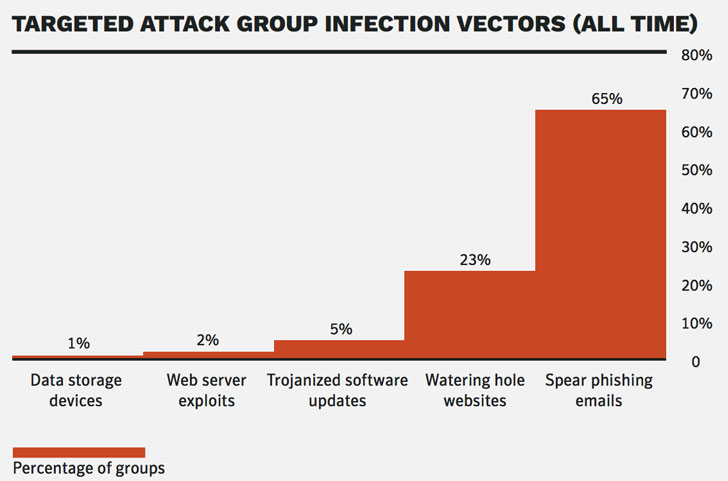
to bogus websites designed to steal information. According to a
Symantec report, 65
percent of all targeted attacks have involved spear-phishing,
making it by far the most common form of attack.
their spear-phishing campaigns and whatever other tactics they
might want to try on for size. Massive botnets are now available
either directly or for hire that would allow them to distribute
scams to millions of potential targets.
Attackers are now also leveraging artificial intelligence (AI)
to launch more potent attacks. They now use language processing,
data scraping, and automation to instantly create realistic emails
that are highly personalized and even use today’s common vocabulary
and syntax.
This increasing sophistication enables spear-phishing emails and
messages to circumvent conventional defenses like spam filters.
Humans as the Weak Link in Cybersecurity
Organizations are investing heavily on enterprise-grade security
solutions to cover most potential vectors of attack such as
endpoint security tools, firewalls, spam filters, and attack
simulation and testing platforms. But regardless of these
increasing investments, many infrastructures continue to be
vulnerable due to human fallibility.
According to Kaspersky, a software vendor, negligence of staff
is the second most
likely[7] cause of a data breach,
second only to malware. For example, some employees tend to
overlook the importance of updating their workstations’ operating
systems and software.
This exposes their organization’s infrastructure to hackers who
can easily exploit unpatched vulnerabilities. Employees also
continue to fall for social engineering and phishing attacks by
clicking on suspicious emails or following the instructions of a
fraudulent request.
Since spear-phishing emails can now get past spam filters,
organizations have become all the more exposed, and all team
members need to maintain high levels of vigilance.
This is why Aalto sees phishing prevention as a matter of
interaction and not just education. “Traditional cybersecurity
training methods, such as phishing simulations, do not work because
they solely focus on awareness,” he says. “Instead, training should
emphasize the importance of engagement.
Success highly relies on continuous learning: in an ideal world,
employees frequently receive and engage with up-to-date training
that prepares them for sophisticated social engineering attacks
both at the workplace and in their private lives.”
And without this type of preparedness, the consequences can be
severe. In late 2019, Japanese media corporation Nikkei fell victim
to a phishing scam when an employee transferred approximately $29
million[8] to a cybercriminal’s
bank account. The scammer posed as a management executive of Nikkei
and gave fraudulent instructions to an employee to make the
transfer.
Strengthening the Human Factor
The widespread adoption of security tools can create a false sense
of security in employees. They may be led to believe that every
email or message that isn’t sent to the spam folder is safe to
open.
That’s why automated employee training solutions are so potent
when it comes to helping companies avoid falling victim to phishing
attacks. Hoxhunt, for instance, can run simulated phishing
campaigns that are personalized based on the user’s language and
location. These emails resemble the current threats in the
industry.
The platform also uses AI to gather information about the
organization and its members to tailor the training based on the
needs of each of its users. When a user fails to report a simulated
attack, they are sent bite-sized cybersecurity information and tips
on how to detect threats.
In addition, employees are rewarded by the system when they
report phishing emails. Staff members can also track their progress
and compare it with that of their peers via a leaderboard.
By promoting awareness as well as engagement, this approach
ensures that employees are equipped with the right skills and
knowledge that enable them to deal with these latest threats.
Developing the Right Mindset
The rise of spear-phishing campaigns and the growing incidents of
data breaches should concern us all. Relying on conventional,
tech-based security solutions to defend against various threats is
not enough, especially since human error continues to be a key risk
factor.
It’s high time humans are considered an important cybersecurity
element. However, addressing the human element is no easy feat, as
it requires a change in every person’s mindset.
“Only continuous learning leads to sustained behavior change
that is essential to ensure that employees can defend the
organization’s assets,” Aalto concludes. “Focusing on positive
reinforcement in cybersecurity training will guarantee stronger
defenses.”
References
- ^
the most recent report
(apwg.org) - ^
33 percent
(enterprise.verizon.com) - ^
sophisticated
(thehackernews.com) - ^
creative
(thehackernews.com) - ^
Hoxhunt
(www.hoxhunt.com) - ^
Symantec report
(www.symantec.com) - ^
second most likely
(www.kaspersky.com) - ^
approximately $29 million
(www.teiss.co.uk)
Read more http://feedproxy.google.com/~r/TheHackersNews/~3/kXbZdOZ6950/spear-phishing-cybersecurity.html