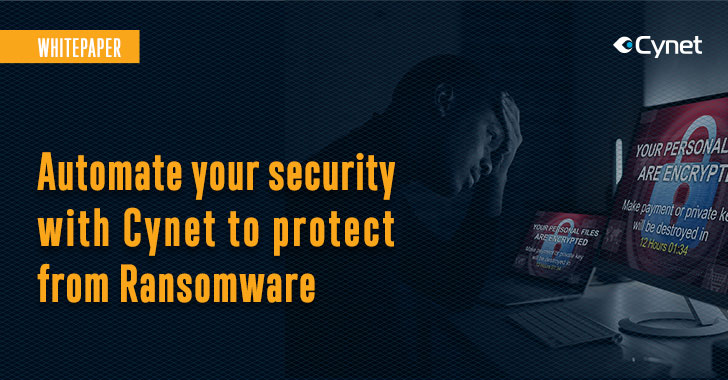
It seems like every new day brings with it a new ransomware news
item – new attacks, methods, horror stories, and data being
leaked.
Ransomware attacks are on the rise, and they’ve become a major
issue for organizations across industries. A recent report
estimated that by 2031, ransomware attacks would cost the world
over $260 billion.
A new whitepaper from XDR provider Cynet demonstrates how the
company’s platform can help organizations mitigate the impact of
ransomware (download here[1]).
Today, attackers have shown themselves to be less interested in
ignoring the most vulnerable sectors, such as health care providers
and hospitals. With a parallel increase in the number of variants –
Wastedlocker, FTCode, Tycooon, TrickBot, REvil, and many others –
it’s becoming harder to defend against the growing threat of
ransomware.
Ransomware operates by using a variety of infection and
encryption techniques to steal or barricade companies’ files behind
hard paywalls. Even though many of the most common techniques have
become public and organizations can defend against them, new,
unknown methods can arrive without notice.
SMEs are at risk
The whitepaper by Cynet explains how the XDR platform works to
protect users from ransomware attacks. It also notes that small and
medium enterprises, especially, face similar risks to large
corporations, but with a much leaner budget and fewer resources.
Moreover, an industry-wide skills shortage means they may not
always be able to fill necessary positions to keep themselves
defended.
According to the whitepaper, the first step to defend against
ransomware is to prevent it from infecting an environment in the
first place. That’s not always possible, and if ransomware does
manage to breach an endpoint, it’s critical to have a full view of
the environment and be able to detect the infection and kill all
related ransomware processes.
Moreover, it’s crucial to isolate infected machines. In short,
the optimal response is prevention, rapid detection, containment,
and removal.
Consolidating defenses in a single, unified
platform
Cynet breaks down how its platform relies on a variety of
prevention, detection, and remediation layers that protect its
customers from ransomware attacks.
The company’s approach attempts to match and adapt to the
complexities of dealing with ransomware:
- Detection is difficult since attackers are constantly changing
the techniques attackers use to deploy ransomware. - Speed is of the essence when dealing with ransomware, since it
will always move to lock machines and files, complicating the
remediation process. - Because ransomware doesn’t immediately strike, and can remain
hidden for long periods, defenses need full visibility across their
environment to root out any traces of it.
Cynet is constantly fielding calls to assist with ransomware
attacks, and it has developed a strong toolkit of incident response
tools. However, many companies only learn about the impact of
ransomware and the importance of preemptive defenses after they’ve
been infected.
Prevention and detection
Cynet’s solution starts with multiple preventions and detection
techniques, including common next-generation antivirus (NGAV), and
adds in real-time memory protection to detect ransomware behaviors
from unknown variants, critical component filtering to prevent
ransomware from harvesting credentials and spreading, real-time
file filtering to prevent ransomware from altering existing files
and deception technology to lure ransomware into accessing decoy
hosts and files.
Investigation and Remediation
While most ransomware protection solution providers focus almost
exclusively on prevention and detection, Cynet also places
considerable emphasis on quickly and thoroughly responding to
ransomware attacks post-detection.
Importantly, Cynet emphasizes that the prevention and detection
of an attack instance are critical, but only the first step.
Companies must assume that the malicious artifact identified is
only the tip of an iceberg.
Cynet automatically triggers an automated investigation
following each endpoint, user, or network alert, to disclose its
root cause and scope and apply required remediation actions across
the environment. Because Cynet is an XDR solution, it can apply a
very broad range of remediation actions directly from its platform
across endpoints, networks, users, and files.
They also provide automated remediation playbooks, which are
very valuable for stringing multiple remediation actions together
to respond to ransomware threats.
Final Thoughts
After speaking with several representatives from companies that
have had to dig themselves out of a widespread ransomware
infection, you definitely do not want to be in that situation.
Every single one wished they had better protections in place so
they could have avoided the excruciating experience.
Having a broad arsenal of prevention, detection, and response
tools are critical to prevent your company from becoming the next
ransomware victim.
References
- ^
download
here (info.cynet.com) - ^
Download
the whitepaper here (info.cynet.com)