
Threat actors behind the infamous TrickBot[1]
malware have been linked to a new ransomware strain named “Diavol,”
according to the latest research.
Diavol and Conti ransomware payloads were deployed on different
systems in a case of an unsuccessful attack targeting one of its
customers earlier this month, researchers from Fortinet’s
FortiGuard Labs said last week.
TrickBot, a banking Trojan first detected in 2016, has been
traditionally a Windows-based crimeware solution, employing
different modules to perform a wide range of malicious activities
on target networks, including credential theft and conduct
ransomware attacks.
Despite efforts by law enforcement to neutralize the bot
network, the ever-evolving malware has proven to be a resilient threat[2], what with the
Russia-based operators — dubbed “Wizard Spider[3]” quickly adapting new
tools to carry out further attacks.
Diavol is said to have been deployed in the wild in one incident
to date. The source of intrusion remains unknown as yet. What’s
clear, though, is that the payload’s source code shares
similarities with that of Conti, even as its ransom note has been
found to reuse some language from Egregor ransomware.
“As part of a rather unique encryption procedure, Diavol
operates using user-mode Asynchronous Procedure Calls (APCs)
without a symmetric encryption algorithm,” the researchers said[4]. “Usually, ransomware
authors aim to complete the encryption operation in the shortest
amount of time. Asymmetric encryption algorithms are not the
obvious choice as they [are] significantly slower than symmetric
algorithms.”
Another aspect of ransomware that stands out is its reliance on
an anti-analysis technique to obfuscate its code in the form of
bitmap images, from where the routines are loaded into a buffer
with execute permissions.
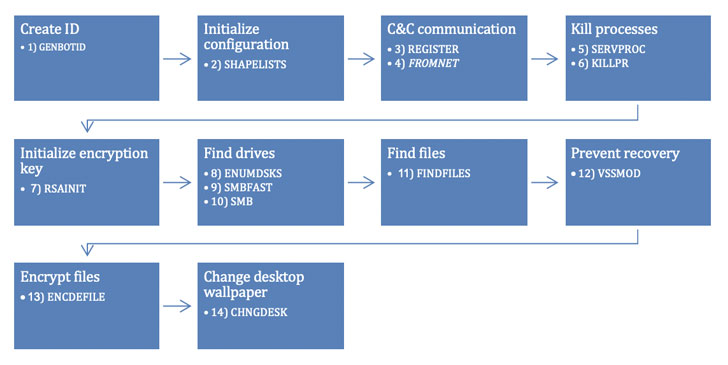
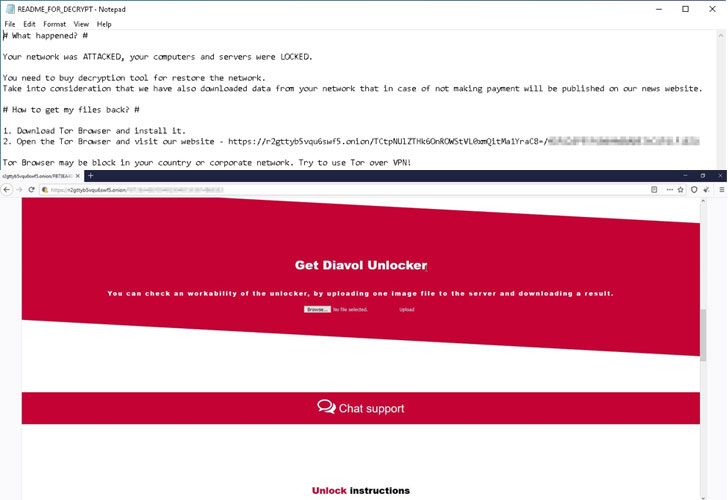
Prior to locking files and changing the desktop wallpaper with a
ransom message, some of the major functions carried out by Diavol
include registering the victim device with a remote server,
terminating running processes, finding local drives and files in
the system to encrypt, and preventing recovery by deleting shadow
copies.
Wizard Spider’s nascent ransomware effort also coincides with
“new developments to the TrickBot webinject module,” as detailed[5]
by Kryptos Logic Threat Intelligence team, indicating that the
financially motivated cybercrime group is still actively retooling
its malware arsenal.
“TrickBot has brought back their bank fraud module, which has
been updated to support Zeus-style webinjects,” cybersecurity
researcher Marcus Hutchins tweeted[6]. “This could suggest
they are resuming their bank fraud operation, and plan to expand
access to those unfamiliar with their internal webinject
format.”