of multiple high severity vulnerabilities he discovered in
WhatsApp, which, if exploited, could have allowed remote attackers
to compromise the security of billions of users in different ways.
When combined together, the reported issues could have even
enabled hackers to remotely steal files from the Windows or Mac
computer of a victim using the WhatsApp desktop app by merely
sending a specially crafted message.
Discovered by PerimeterX researcher Gal Weizman and tracked as
CVE-2019-18426, the flaws specifically resided in WhatsApp
Web, a browser version of the world’s most popular messaging
application that also powers its Electron-based cross-platform apps
for desktop operating systems.
In a blog
post[1] published today, Weizman
revealed that WhatsApp Web was vulnerable to a potentially
dangerous open-redirect flaw that led to persistent cross-site
scripting attacks, which could have been triggered by sending a
specially crafted message to the targeted WhatsApp users.
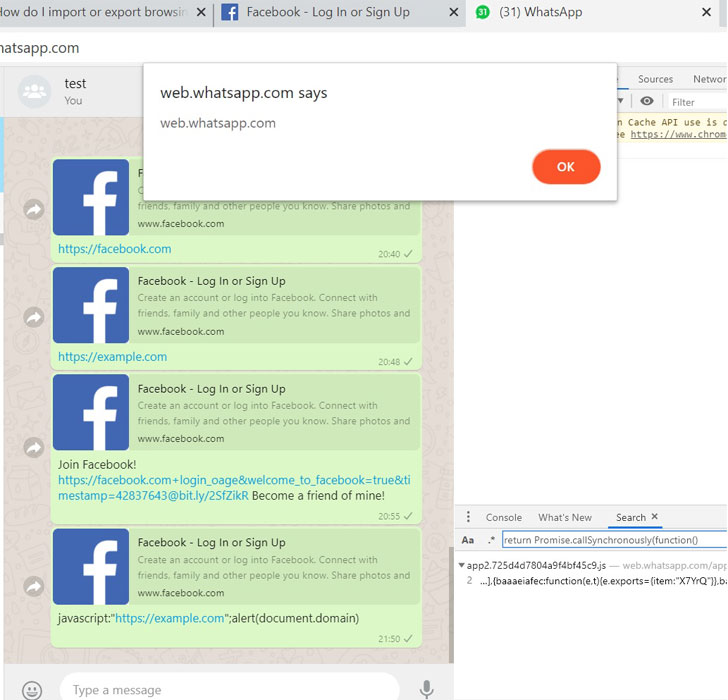
over the browser, the flaw could have allowed attackers to execute
arbitrary code in the context of WhatsApp’s web domain.
Whereas, when viewed through the vulnerable desktop application,
the malicious code runs on the recipients’ systems in the context
of the vulnerable application.
Moreover, the misconfigured content security policy on the WhatsApp
web domain also allowed the researcher to load XSS payloads of any
length using an iframe from a separate attacker-controlled website
on the Internet.
“If the CSP rules were well configured, the power gained by this
XSS would have been much smaller. Being able to bypass the CSP
configuration allows an attacker to steal valuable information from
the victim, load external payloads easily, and much more,” the
researcher said.
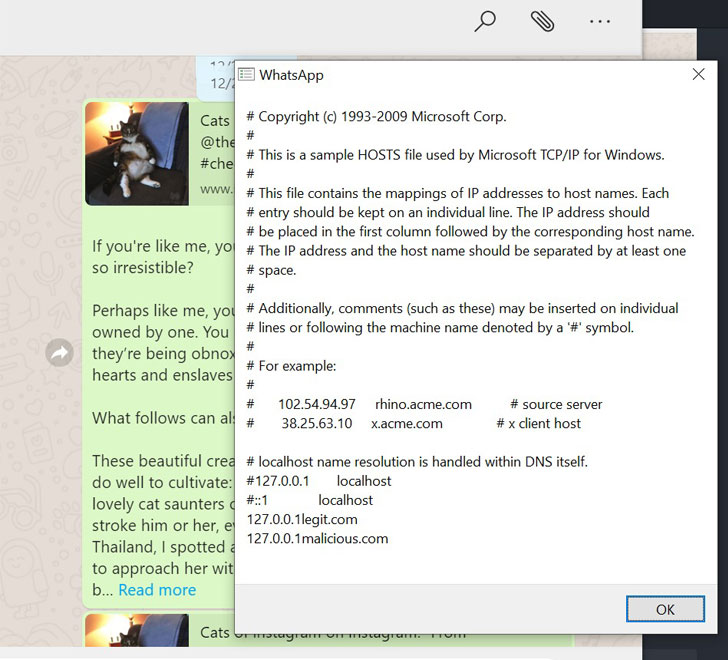
file read attack over WhatsApp by accessing the content of the
hosts file from a victim’s computer.
Besides this, the open-redirect flaw could have had also been
used to manipulate URL banners, a preview of the domain WhatsApp
displays to the recipients when they receive a message containing
links, and trick users into falling for phishing attacks.
Weizman responsibly reported these issues to the Facebook
security team last year, who then patched the
flaws, released an updated version of its desktop application,
and also rewarded Weizman with $12,500 under the company’s bug
bounty program.
[2]
References
- ^
blog post
(www.perimeterx.com) - ^
patched the flaws
(www.facebook.com)
Read more http://feedproxy.google.com/~r/TheHackersNews/~3/hVYLkzU91p8/hack-whatsapp-web.html