An Android banking trojan designed to steal credentials and SMS
messages has been observed sneaking past Google Play Store
protections to target users of more than 400 banking and financial
apps from Russia, China, and the U.S.
“TeaBot RAT capabilities are achieved via the device screen’s
live streaming (requested on-demand) plus the abuse of
Accessibility Services for remote interaction and key-logging,”
Cleafy researchers said[1]
in a report. “This enables Threat Actors (TAs) to perform ATO
(Account Takeover) directly from the compromised phone, also known
as ‘On-device fraud.'”
Also known by the name Anatsa, TeaBot first emerged[2]
in May 2021, camouflaging its malicious functions by posing as
seemingly innocuous PDF document and QR code scanner apps that are
distributed via the official Google Play Store instead of
third-party apps stores or via fraudulent websites.
These apps, also known as dropper applications, act as a conduit
to deliver a second-stage payload that retrieves the malware strain
to take control of the infected devices. In November 2021, Dutch
security firm ThreatFabric disclosed[3]
that it had identified six Anatsa droppers on the Play Store since
June last year.
Then earlier this January, Bitdefender researchers identified[4]
TeaBot lurking in the official Android app marketplace as a “QR
Code Reader – Scanner App,” gaining more than 100,000 downloads
within a span of a month before it was taken down.
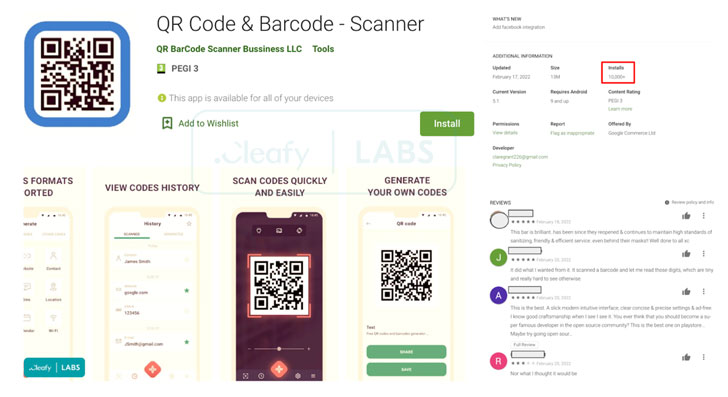
The latest version of TeaBot dropper spotted by Cleafy on
February 21, 2022, is also a QR code reader app named “QR Code &
Barcode – Scanner” which has been downloaded roughly 10,000 times
from the Play Store.
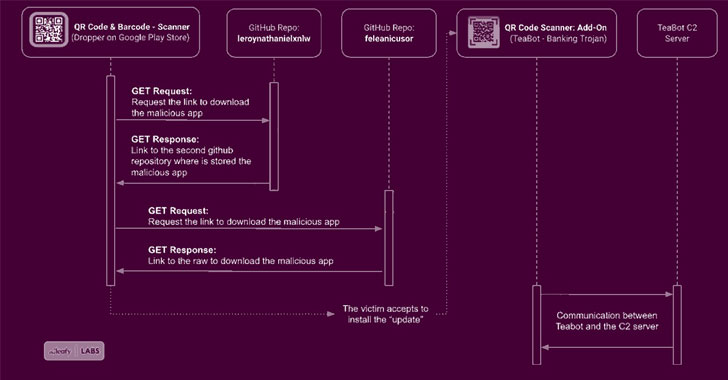
Once installed the modus operandi is the same: prompt users to
accept a fake add-on update, which, in turn, leads to the
installation of a second app hosted on GitHub that actually
contains the TeaBot malware. It’s, however, worth noting that users
need to allow installs from unknown sources for this attack chain
to be successful.
The last phase of the infection involves the banking trojan
seeking Accessibility Services permissions to capture sensitive
information like login credentials and two-factor authentication
codes with the goal of taking over the accounts to carry out
on-device fraud.
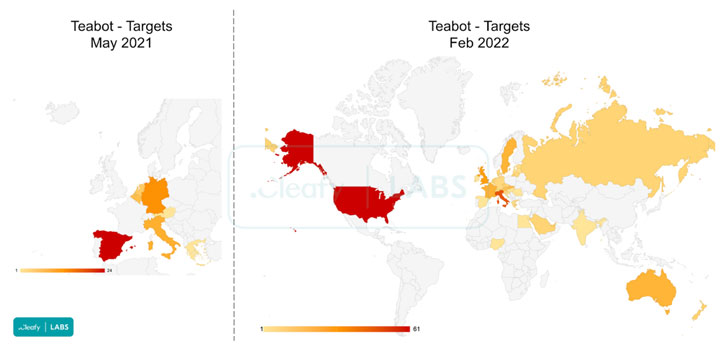
“In less than a year, the number of applications targeted by
TeaBot have grown more than 500%, going from 60 targets to over
400,” the researchers said, adding the malware now strikes several
apps related to personal banking, insurance, crypto wallets, and
crypto exchanges.
References
Read more https://thehackernews.com/2022/03/teabot-android-banking-malware-spreads.html