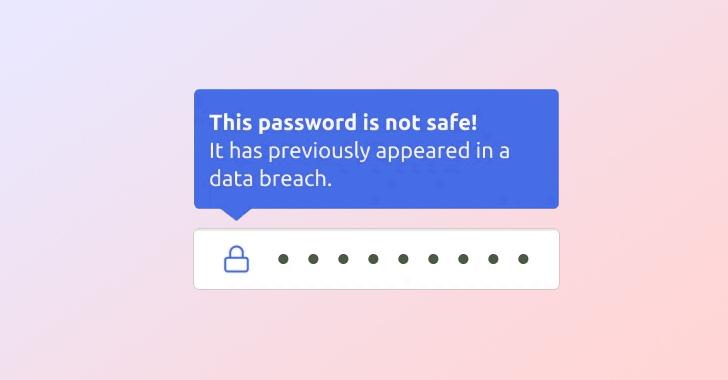
A recent report revealed that ecommerce provider, Shopify uses particularly weak password
policies[1] on the customer-facing
portion of its Website. According to the report, Shopify’s requires
its customers to use a password that is at least five characters in
length and that does not begin or end with a space.
According to the report, Specops researchers analyzed a list of
a billion passwords that were known to have been breached and found
that 99.7% of those passwords adhere to Shopify’s requirements.
While this is not meant to suggest that Shopify customers’
passwords have been breached, the fact that so many known breached
passwords adhere to Shopify’s minimum password requirements does
underscore the dangers associated with using weak passwords.
The danger of weak passwords in your Active Directory
A recent study by Hive Systems[2] echoes the dangers of
using weak passwords. The study examines the amount of time that
would be required to brute force crack passwords of various lengths
and with varying levels of complexity. According to Hive Systems’
infographic, a five-character password can be cracked
instantaneously, regardless of complexity. Given the ease with
which shorter passwords can be cracked using brute force,
organizations should ideally require complex passwords that are at
least 12 characters in length.
Even if you were to put aside the security implications
associated with using a five-character password, there is a
potentially bigger problem – regulatory compliance.
It’s tempting to think of regulatory compliance as the sort of
thing that only large companies have to worry about. As such, many
small, independent sellers who open Shopify accounts may be
blissfully unaware of the regulatory requirements associated with
doing so. However, the payment card industry requires any business
that accepts credit card payments to adhere to the
Official PCI Security Standards[3].
Avoiding the PCI requirements with a 3rd party payment
system
One of the nice things about using Shopify or a similar
ecommerce platform is that retailers do not have to operate their
own payment card gateways. Instead, Shopify handles the processing
of transactions on their customer’s behalf. This outsourcing of the
payment process shields ecommerce business owners from many of the
PCI requirements.
For example, PCI standards require merchants to protect stored
card holder data. However, when an ecommerce business outsources
its payment processing, it will not typically be in possession of
customer’s credit card data. As such, the business owner can
effectively avoid the requirement to protect cardholder data if
they are never in possession of that data in the first place.
One PCI requirement that might be more problematic however, is
the requirement to identify and authenticate
access to system components[4]
(Requirement 8). Although the PCI security standards do not specify
a required password length, the PCI DSS Quick Reference Guide
states on page 19 that “Every user should have a strong password
for authentication.” Given this statement, it would be difficult
for an ecommerce retailer to justify using a five-character
password.
Start beefing up IT security internally
This, of course, raises the question of what ecommerce companies
can be doing to improve their overall password security. Perhaps
the most critical recommendation would be to recognize that the
minimum password requirements associated with an ecommerce portal
might be inadequate. From a security and compliance standpoint, it
is usually advisable to use a password that is longer and more
complex than what is minimally required.
Another thing that ecommerce retailers should do is to take a
serious look at what can be done to improve password security on
their own networks. This is especially true if any customer data is
stored or processed on your network. According to a 2019 study[5], 60% of small companies
close within 6 months of being hacked. As such, it is extremely
important to do what you can to prevent a security incident and a
big part of that involves making sure that your passwords are
secure.
The Windows operating system contains account policy settings
that can control password length and complexity requirements. While
such controls are undeniably important, Specops Password Policy can help
organizations to build even stronger password policies[6] than what is possible
using only the native tools that are built into Windows.
One of the most compelling capabilities offered by Specops
Password Policy is its ability to compare the passwords used within
an organization against a database of billions of passwords that
are known to have been compromised. That way, if a user is found to
be using a compromised password, the password can be changed before
it becomes a problem.
Specops Password Policy also allows organizations to create a
list of banned words or phrases that should not be included in
passwords. For example, an administrator might create a policy to
prevent users from using your company name as a part of their
password.
Additionally, organizations can use Specops Password Policy to
block techniques that users commonly use to skirt password
complexity requirements. This might include using consecutive
repeating characters (such as 99999) or replacing letters with
similarly looking symbols (such as $ instead of s).
The bottom line is that Specops Password Policy can help your
organization to create a password policy that is vastly more
secure, thereby making it more difficult for cybercriminals to gain
access to your user accounts. You can test out Specops Password Policy in
your Active Directory for free, anytime[7].
References
- ^
Shopify
uses particularly weak password policies
(specopssoft.com) - ^
A recent
study by Hive Systems (www.hivesystems.io) - ^
adhere
to the Official PCI Security Standards
(www.pcisecuritystandards.org) - ^
the
requirement to identify and authenticate access to system
components
(listings.pcisecuritystandards.org) - ^
a 2019
study (cybersecurityventures.com) - ^
Specops
Password Policy can help organizations to build even stronger
password policies (specopssoft.com) - ^
You can
test out Specops Password Policy in your Active Directory for free,
anytime (specopssoft.com)
Read more https://thehackernews.com/2022/09/shopify-fails-to-prevent-known-breached.html