
recently disclosed very dangerous vulnerability in
SMBv3 protocol[1]
that could let attackers launch wormable malware, which can
propagate itself from one vulnerable computer to another
automatically.
The vulnerability, tracked as CVE-2020-0796, in question
is a remote code execution flaw that affects Windows 10 version
1903 and 1909, and Windows Server version 1903 and 1909.
Server Message Block (SMB), which runs over TCP port 445, is a
network protocol that has been designed to enable file sharing,
network browsing, printing services, and interprocess communication
over a network.
The latest vulnerability, for which a patch update is now available
on the Microsoft website, exists in the way SMBv3 protocol handles
requests with compression headers, making it possible for an
unauthenticated, remote attacker to execute malicious code on
target servers or clients.
Compression headers is a feature that was added to the affected
protocol of Windows 10 and Windows Server operating systems in May
2019.
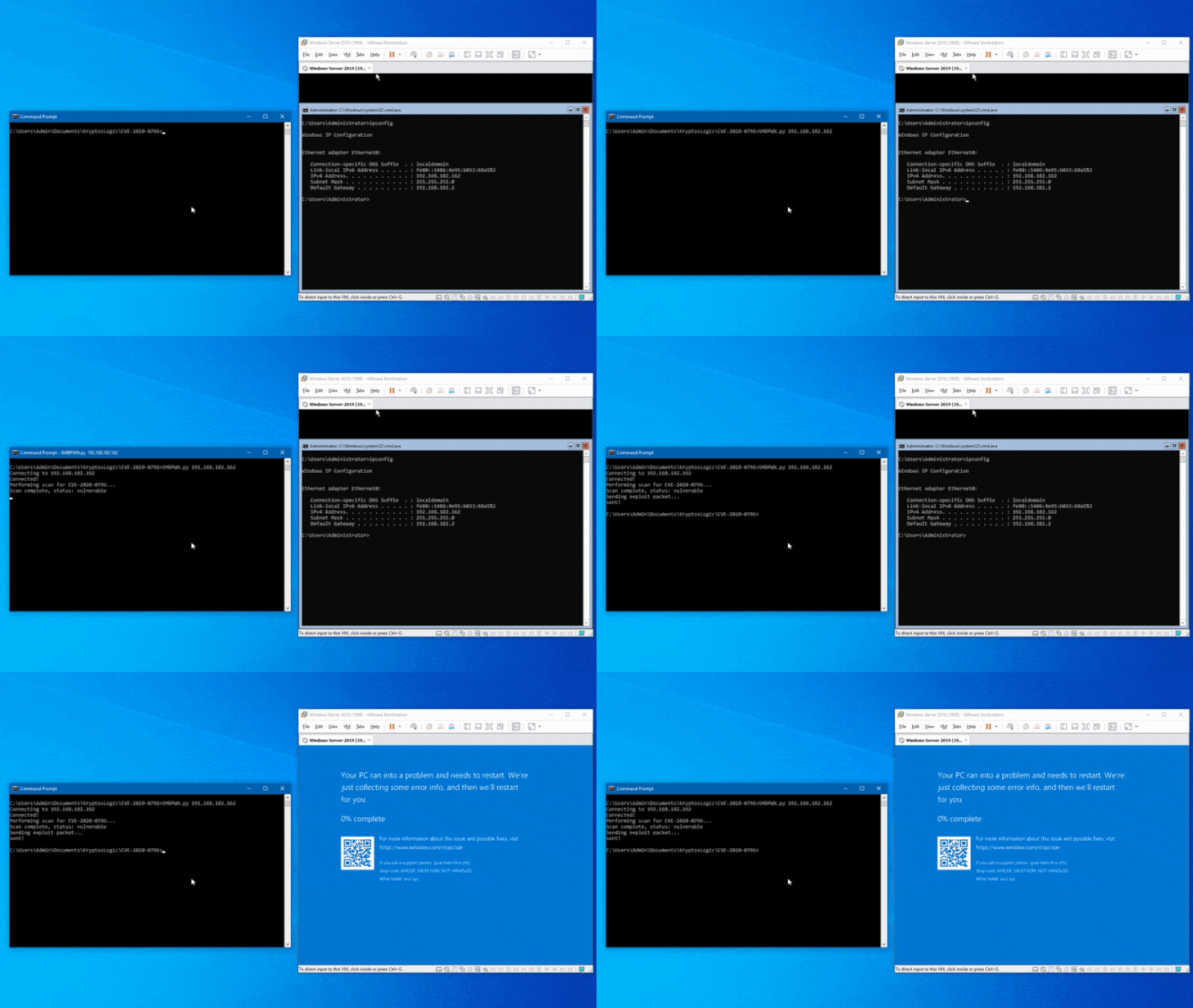
attacker could send a specially crafted packet to a targeted SMBv3
server. To exploit the vulnerability against a client, an
unauthenticated attacker would need to configure a malicious SMBv3
server and convince a user to connect to it,” Microsoft said in the
advisory[2].
At the time of writing, there is only one known PoC exploit[3]
that exists for this critical remotely exploitable flaw, but
reverse engineering new patches could now also help others find
possible real-life attack vectors.
Since a patch for the wormable SMBv3 flaw is now available to
download for affected versions of Windows, it’s highly recommended
for home users and businesses to install updates as soon as
possible, rather than merely relying on the mitigation.
References
- ^
vulnerability in SMBv3 protocol
(thehackernews.com) - ^
advisory
(portal.msrc.microsoft.com) - ^
PoC
exploit (smb%20exploit)
Read more http://feedproxy.google.com/~r/TheHackersNews/~3/GMJQcPS83NM/patch-wormable-smb-vulnerability.html