
Hundreds of databases on Amazon Relational Database Service
(Amazon RDS) are exposing personal identifiable information (PII),
new findings from Mitiga, a cloud incident response company,
show.
“Leaking PII in this manner provides a potential treasure trove
for threat actors – either during the reconnaissance phase of the
cyber kill chain or extortionware/ransomware campaigns,”
researchers Ariel Szarf, Doron Karmi, and Lionel Saposnik said in a
report[1]
shared with The Hacker News.
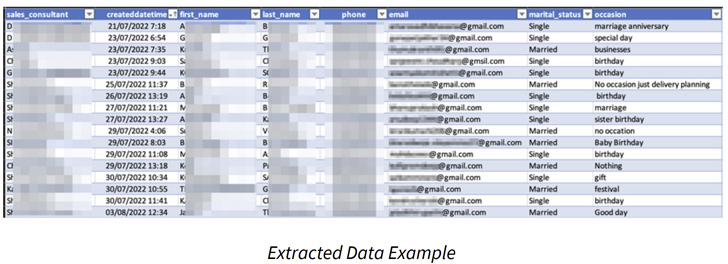
This includes names, email addresses, phone numbers, dates of
birth, marital status, car rental information, and even company
logins.
Amazon RDS is a web service[2]
that makes it possible to set up relational databases in the Amazon
Web Services (AWS) cloud. It offers support for different database
engines such as MariaDB, MySQL, Oracle, PostgreSQL, and SQL
Server.
The root cause of the leaks stems from a feature called public
RDS snapshots[3], which allows for
creating a backup of the entire database environment running in the
cloud and can be accessed by all AWS accounts.
“Make sure when sharing a snapshot as public that none of your
private information is included in the public snapshot,” Amazon
cautions[4]
in its documentation. “When a snapshot is shared publicly, it gives
all AWS accounts permission both to copy the snapshot and to create
DB instances from it.”
The Israeli company, which carried out the research from
September 21, 2022, to October 20, 2022, said it found 810
snapshots that were publicly shared for varying duration, starting
from a few hours to weeks, making them ripe for abuse by malicious
actors.
Of the 810 snapshots, over 250 of the backups were exposed for
30 days, suggesting that they were likely forgotten.
Based on the nature of the information exposed, adversaries
could either steal the data for financial gain or leverage it to
get a better grasp of a company’s IT environment, which could then
act as a stepping stone for covert intelligence gathering
efforts.
It’s highly recommended that RDS snapshots are not publicly
accessible in order to prevent potential leak or misuse of
sensitive data or any other kind of security threat. It’s also
advised to encrypt snapshots where applicable.
References
- ^
report
(www.mitiga.io) - ^
web
service (docs.aws.amazon.com) - ^
RDS
snapshots (docs.aws.amazon.com) - ^
cautions
(docs.aws.amazon.com)
Read more https://thehackernews.com/2022/11/researchers-discover-hundreds-of-amazon.html