IBM has fixed a high-severity security vulnerability affecting
its Cloud Databases (ICD) for PostgreSQL product that could be
potentially exploited to tamper with internal repositories and run
unauthorized code.
The privilege escalation flaw (CVSS score: 8.8), dubbed
“Hell’s Keychain” by cloud security firm Wiz, has
been described as a “first-of-its-kind supply-chain attack vector
impacting a cloud provider’s infrastructure.”
Successful exploitation of the bug could enable a malicious
actor to remotely execute code in customers’ environments and even
read or modify data stored in the PostgreSQL database.
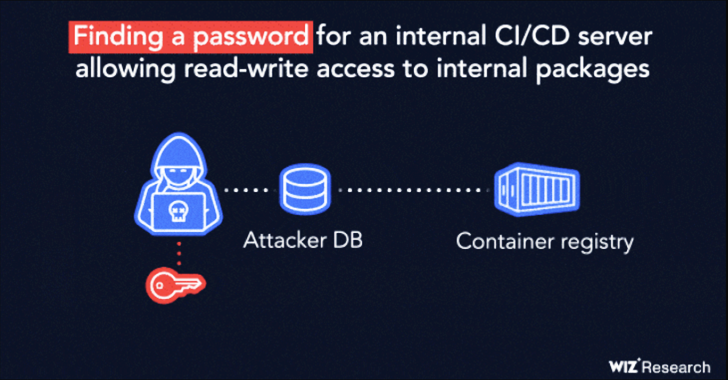
“The vulnerability consists of a chain of three exposed secrets
(Kubernetes service account token, private container registry
password, CI/CD server credentials) coupled with overly permissive
network access to internal build servers,” Wiz researchers Ronen
Shustin and Shir Tamari said[1].
Hell’s Keychain commences with an SQL injection flaw in ICD that
grants an attacker superuser (aka “ibm”) privileges, which is then
used to execute arbitrary commands on the underlying virtual
machine hosting the database instance.
This capability is weaponized to access a Kubernetes API token
file, allowing for broader post-exploitation efforts that involve
pulling container images from IBM’s private container registry,
which stores images related to ICD for PostgreSQL, and scanning
those images for additional secrets.

“Container images typically hold proprietary source code and
binary artifacts that are the company’s intellectual property,” the
researchers explained. “They can also contain information that an
attacker could leverage to find additional vulnerabilities and
perform lateral movement within the service’s internal
environment.”
Wiz said it was able to extract internal artifact repository and
FTP credentials from the image manifest files, effectively
permitting unfettered read-write access to trusted repositories and
IBM build servers.
An attack of this kind could have severe ramifications, as it
enables the adversary to overwrite arbitrary files that are used in
the build process of the PostgreSQL image, which would then be
installed on every database instance.
The American technology giant, in an independent advisory[2], said that all IBM Cloud
Databases for PostgreSQL instances were potentially impacted by the
bug, but noted that it found no evidence of malicious activity.
It further stated that the fixes have been automatically applied
to customer instances and that no further action is required. The
mitigations were rolled out on August 22 and September 3, 2022.
“These vulnerabilities could have been exploited by a malicious
actor as part of an extensive exploit chain culminating in a
supply-chain attack on the platform,” the researchers said.
To mitigate such threats, it’s recommended that organizations
monitor their cloud environments for scattered credentials, enforce
network controls to prevent access to production servers, and
safeguard against container registry scraping.
Found this article interesting? Follow us on Twitter [3]
and LinkedIn[4]
to read more exclusive content we post.
References
Read more https://thehackernews.com/2022/12/researchers-disclose-supply-chain-flaw.html