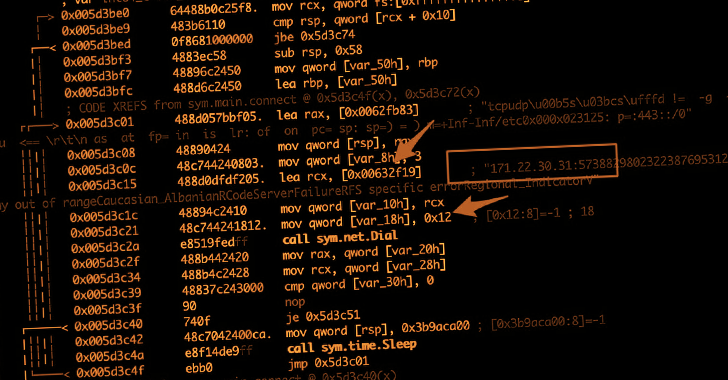
An ongoing analysis into an up-and-coming cryptocurrency mining
botnet known as KmsdBot has led to it being
accidentally taken down.
KmsdBot, as christened by the Akamai Security Intelligence
Response Team (SIRT), came to light mid-November 2022 for its
ability to brute-force systems[1]
with weak SSH credentials.
The botnet strikes both Windows and Linux devices spanning a
wide range of microarchitectures with the primary goal of deploying
mining software and corralling the compromised hosts into a DDoS
bot.
Some of the major targets included gaming firms, technology
companies, and luxury car manufacturers.
Akamai researcher Larry W. Cashdollar, in a new update,
explained how commands sent to the bot to understand its
functionality in a controlled environment inadvertently neutralized
the malware.
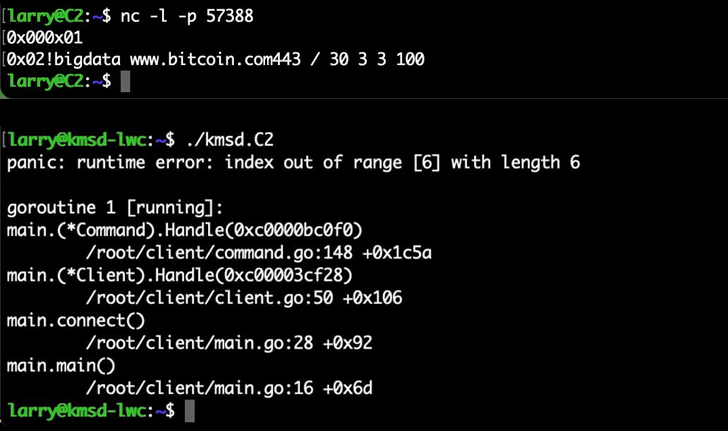
“Interestingly, after one single improperly formatted command,
the bot stopped sending commands,” Cashdollar said[2]. “It’s not every day you
come across a botnet that the threat actors themselves crash their
own handiwork.”
This, in turn, was made possible due to the lack of an
error-checking mechanism built into the source code to validate the
received commands.
Specifically, an instruction issued without a space between the
target website and the port caused the entire Go binary running on
the infected machine to crash and stop interacting with its
command-and-control server, effectively killing the botnet.
The fact that KmsdBot doesn’t have a persistence mechanism also
means that the malware operator will have to re-infect the machines
again and re-build the infrastructure from scratch.
“This botnet has been going after some very large luxury brands
and gaming companies, and yet, with one failed command it cannot
continue,” Cashdollar concluded. “This is a strong example of the
fickle nature of technology and how even the exploiter can be
exploited by it.”
Found this article interesting? Follow us on Twitter [3]
and LinkedIn[4]
to read more exclusive content we post.
References
Read more https://thehackernews.com/2022/12/researchers-accidentally-crashed.html