
A North Korean threat actor has been discovered taking advantage
of two exploits in Internet Explorer to infect victims with a
custom implant as part of a strategic web compromise (SWC)
targeting a South Korean online newspaper.
Cybersecurity firm Volexity attributed[1]
the attacks to a threat actor it tracks as InkySquid, and more
widely known by the monikers ScarCruft and APT37. Daily NK, the
publication in question, is said to have hosted the malicious code
from at least late March 2021 until early June 2021.
The “clever disguise of exploit code amongst legitimate code”
and the use of custom malware enables the attackers to avoid
detection, Volexity researchers said.
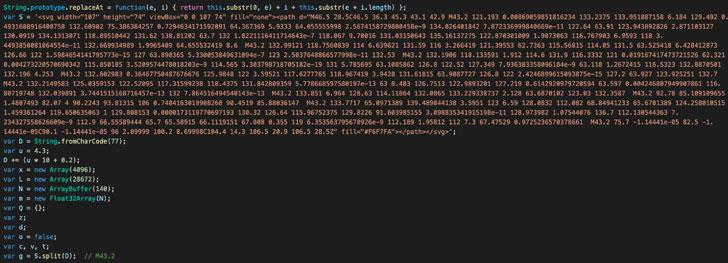
The attacks involved tampering with the jQuery JavaScript
libraries hosted on the website to serve additional obfuscated
JavaScript code from a remote URL, using it to leverage exploits
for two Internet Explorer flaws that were patched by Microsoft in
August 2020[2]
and March 2021[3]. Successful exploitation
resulted in the deployment of a Cobalt Strike stager and novel
backdoor called BLUELIGHT.
- CVE-2020-1380[4]
(CVSS score: 7.5) – Scripting Engine Memory Corruption
Vulnerability - CVE-2021-26411[5]
(CVSS score: 8.8) – Internet Explorer Memory Corruption
Vulnerability
It’s worth noting that both the flaws have been actively
exploited in the wild, with the latter put to use by North Korean
hackers to compromise security researchers working on vulnerability
research and development in a campaign that came to light earlier
this January.
In a separate set of attacks[6]
disclosed last month, an unidentified threat actor was found
exploiting the same flaw to deliver a fully-featured VBA-based
remote access trojan (RAT) on compromised Windows systems.
BLUELIGHT is used as a secondary payload following the
successful delivery of Cobalt Strike, functioning as a
full-featured remote access tool that provides complete access to a
compromised system.
In addition to gathering system metadata and information about
installed antivirus products, the malware is capable of executing
shellcode, harvesting cookies and passwords from Internet Explorer,
Microsoft Edge, and Google Chrome browsers, collecting files and
downloading arbitrary executables, the results of which are
exfiltrated to a remote server.
“While SWCs are not as popular as they once were, they continue
to be a weapon in the arsenal of many attackers,” the researchers
noted. “The use of recently patched exploits for Internet Explorer
and Microsoft Edge will only work against a limited audience.”
References
- ^
attributed
(www.volexity.com) - ^
August
2020 (thehackernews.com) - ^
March
2021 (thehackernews.com) - ^
CVE-2020-1380
(msrc.microsoft.com) - ^
CVE-2021-26411
(msrc.microsoft.com) - ^
separate
set of attacks (thehackernews.com)