
A number of malicious samples have been created for the Windows
Subsystem for Linux (WSL) with the goal of compromising Windows
machines, highlighting a sneaky method that allows the operators to
stay under the radar and thwart detection by popular anti-malware
engines.
The “distinct tradecraft” marks the first instance where a
threat actor has been found abusing WSL to install subsequent
payloads.
“These files acted as loaders running a payload that was either
embedded within the sample or retrieved from a remote server and
was then injected into a running process using Windows API calls,”
researchers from Lumen Black Lotus Labs said[1]
in a report published on Thursday.
Windows Subsystem for Linux, launched in August 2016, is a
compatibility layer[2]
that’s designed to run Linux binary executables (in ELF format)
natively on the Windows platform without the overhead of a
traditional virtual machine or dual-boot setup.
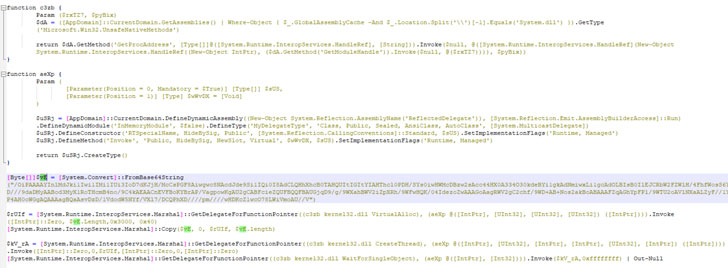
The earliest artifacts date back to May 3, 2021, with a series
of Linux binaries uploaded every two to three weeks till August 22,
2021. Not only are the samples written in Python 3 and converted
into an ELF executable with PyInstaller, but the files are also
orchestrated to download shellcode from a remote
command-and-control server and employ PowerShell to carry out
follow-on activities on the infected host.
This secondary “shellcode” payload is then injected into a
running Windows process using Windows API calls for what Lumen
described as “ELF to Windows binary file execution,” but not before
the sample attempts to terminate suspected antivirus products and
analysis tools running on the machine. What’s more, the use of
standard Python libraries makes some of the variants interoperable
on both Windows and Linux.
“Thus far, we have identified a limited number of samples with
only one publicly routable IP address, indicating that this
activity is quite limited in scope or potentially still in
development,” the researchers said. “As the once distinct
boundaries between operating systems continue to become more
nebulous, threat actors will take advantage of new attack
surfaces.”
References
- ^
said
(blog.lumen.com) - ^
compatibility layer
(docs.microsoft.com)