A previously unknown rootkit has been found setting its sights
on Hewlett-Packard Enterprise’s Integrated Lights-Out (iLO[1]) server management
technology to carry out in-the-wild attacks that tamper with the
firmware modules and completely wipe data off the infected
systems.
The discovery, which is the first instance of real-world malware
in iLO firmware, was documented by Iranian cybersecurity firm
Amnpardaz this week.
“There are numerous aspects of iLO that make it an ideal utopia
for malware and APT groups: Extremely high privileges (above any
level of access in the operating system), very low-level access to
the hardware, being totally out of the sight of the admins, and
security tools, the general lack of knowledge and tools for
inspecting iLO and/or protecting it, the persistence it provides
for the malware to remain even after changing the operating system,
and in particular being always running and never shutting down,”
the researchers said[2].
Besides managing the servers, the fact that iLO modules have
broad access to all the firmware, hardware, software, and operating
system (OS) installed on the servers make them an ideal candidate
to breach organizations using HP servers, while also enabling the
malware to maintain persistence after reboots and survive OS
reinstallations. However, the exact modus operandi used to
infiltrate the network infrastructure and deploy the wiper remains
unknown as yet.
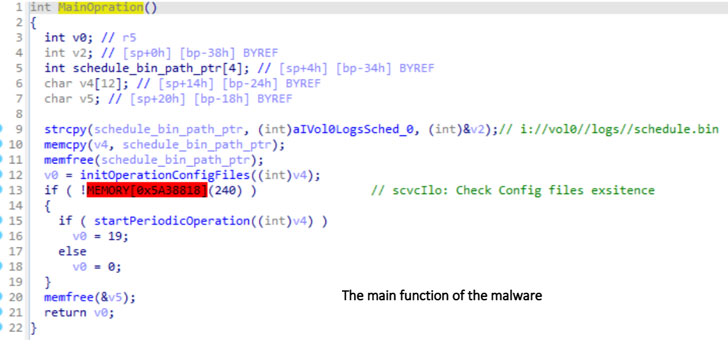
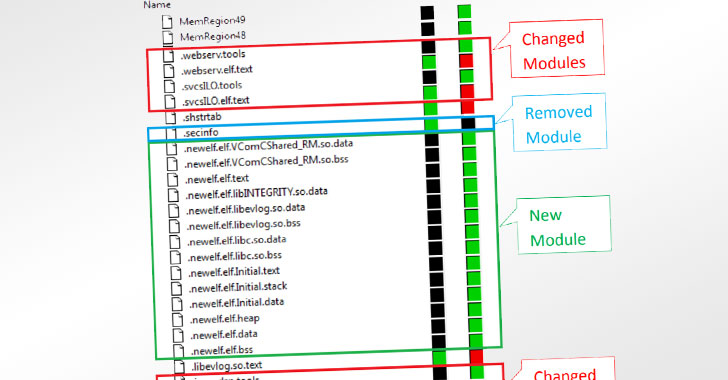
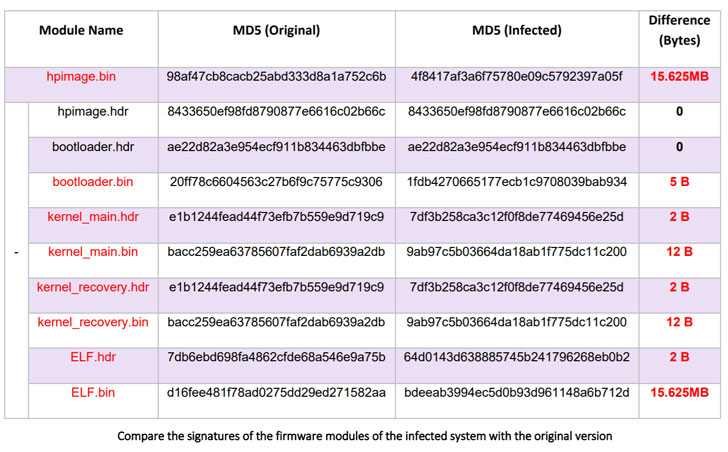
Dubbed iLOBleed, the rootkit has been put to
use in attacks since 2020 with the goal of manipulating a number of
original firmware modules in order to stealthily obstruct updates
to the firmware. Specifically, the modifications made to the
firmware routine simulates the firmware upgrade process — by
purportedly displaying the right firmware version and adding
relevant logs — when in reality no updates are performed.
“This alone shows that the purpose of this malware is to be a
rootkit with maximum stealth and to hide from all security
inspections,” the researchers said. “A malware that, by hiding in
one of the most powerful processing resources (which is always on),
is able to execute any commands received from an attacker, without
ever being detected.”
Although the adversary remains unidentified, Amnpardaz described
the rootkit as likely the work of an advanced persistent threat
(APT), a designation a nation-state or state-sponsored group that
employs continuous, clandestine, and sophisticated hacking
techniques to gain unauthorized access to a system and remain
inside for a prolonged period of time without attracting
attention.
If anything, the development once again brings firmware security
into sharp focus, necessitating that firmware updates shipped by
the manufacturer are promptly applied to mitigate potential risks,
iLO networks are segmented from the operating networks, and that
the firmware is periodically monitored for signs of infection.
“Another important point is that there are methods to access and
infect iLO both through the network and through the host operating
system,” the researchers noted. “This means that even if the iLO
network cable is completely disconnected, there is still the
possibility of infection with the malware. Interestingly, there is
no way to turn off or disable iLO completely in case it is not
needed.”
Read more https://thehackernews.com/2021/12/new-ilobleed-rootkit-targeting-hp.html