
A threat actor presumed to be of Chinese origin has been linked
to a series of 10 attacks targeting Mongolia, Russia, Belarus,
Canada, and the U.S. from January to July 2021 that involve the
deployment of a remote access trojan (RAT) on infected systems,
according to new research.
The intrusions have been attributed to an advanced persistent
threat named APT31 (FireEye), which is tracked by the cybersecurity
community under the monikers Zirconium (Microsoft), Judgement Panda
(CrowdStrike), and Bronze Vinewood (Secureworks).
The group is a “China-nexus cyber espionage actor focused on
obtaining information that can provide the Chinese government and
state-owned enterprises with political, economic, and military
advantages,” according[1]
to FireEye.
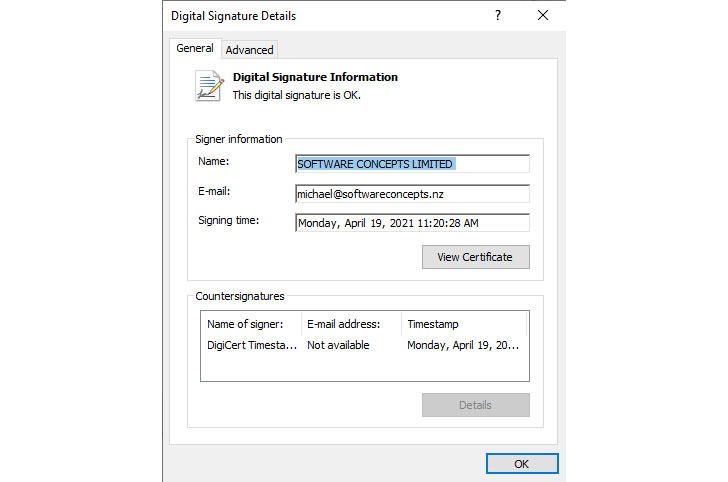
Positive Technologies, in a write-up[2]
published Tuesday, revealed a new malware dropper that was used to
facilitate the attacks, including the retrieval of next-stage
encrypted payloads from a remote command-and-control server, which
are subsequently decoded to execute the backdoor.
The malicious code comes with the capacity to download other
malware, potentially putting affected victims at further risk, as
well as perform file operations, exfiltrate sensitive data, and
even delete itself from the compromised machine.
“The code for processing the [self-delete] command is
particularly intriguing: all the created files and registry keys
are deleted using a bat-file,” Positive Technologies researchers
Denis Kuvshinov and Daniil Koloskov said.
Also worthy of particular note is the malware’s similarities to
that of a trojan named DropboxAES[3]
RAT that was put to use by the same threat group last year and
relied on Dropbox for its command-and-control (C2) communications,
with numerous overlaps found in the techniques and mechanisms used
to inject the attack code, achieve persistence, and the mechanism
employed to delete the espionage tool.
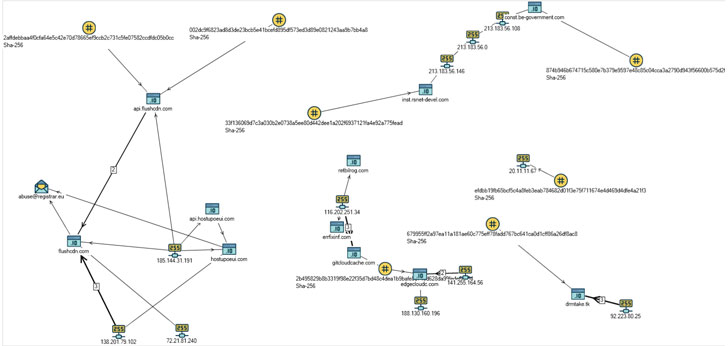
“The revealed similarities with earlier versions of malicious
samples described by researchers, such as in 2020, suggest that the
group is expanding the geography of its interests to countries
where its growing activity can be detected, Russia in particular,”
the researchers concluded.
References
Read more http://feedproxy.google.com/~r/TheHackersNews/~3/SfZ4rX3mo-s/new-chinese-spyware-being-used-in.html