
A malware known for targeting macOS operating system has been
updated once again to add more features to its toolset that allows
it to amass and exfiltrate sensitive data stored in a variety of
apps, including apps such as Google Chrome and Telegram, as part of
further “refinements in its tactics.”
XCSSET was uncovered[1]
in August 2020, when it was found targeting Mac developers using an
unusual means of distribution that involved injecting a malicious
payload into Xcode IDE projects that’s executed at the time of
building project files in Xcode.
The malware comes with numerous capabilities, such as reading
and dumping Safari cookies, injecting malicious JavaScript code
into various websites, stealing information from applications, such
as Notes, WeChat, Skype, Telegram, and encrypting user files.
Earlier this April, XCSSET received an upgrade[2]
that enabled the malware authors to target macOS 11 Big Sur as well
as Macs running on M1 chipset by circumventing new security
policies instituted by Apple in the latest operating system.
“The malware downloads its own open tool from its C2 server that
comes pre-signed with an ad-hoc signature, whereas if it were on
macOS versions 10.15 and lower, it would still use the system’s
built-in open command to run the apps,” Trend Micro researchers
previously noted.
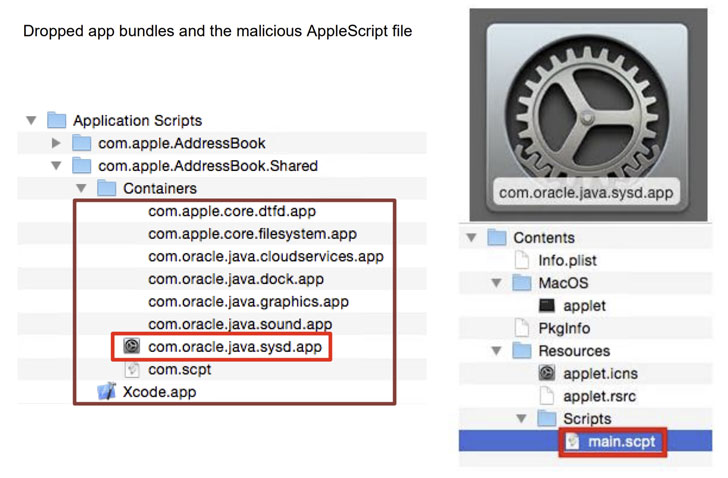
Now according to a new write-up published the cybersecurity firm
on Thursday, it has been discovered that XCSSET runs a malicious
AppleScript file to compress the folder containing Telegram data
(“~/Library/Group Containers/6N38VWS5BX.ru.keepcoder.Telegram”)
into a ZIP archive file, before uploading it to a remote server
under their control, thus enabling the threat actor to log in using
the victim accounts.
With Google Chrome, the malware attempts to steal passwords
stored in the web browser — which are in turn encrypted using a
master password called “safe storage key” — by tricking the user
into granting root privileges via a fraudulent dialog box, abusing
the elevated permissions to run an unauthorized shell command to
retrieve the master key from the iCloud Keychain, following which
the contents are decrypted and transmitted to the server.
Aside from Chrome and Telegram, XCSSET also has the capacity to
plunder valuable information from a variety of apps like Evernote,
Opera, Skype, WeChat, and Apple’s own Contacts and Notes apps by
retrieving said data from their respective sandbox directories.
“The discovery of how it can steal information from various apps
highlights the degree to which the malware aggressively attempts to
steal various kinds of information from affected systems,” the
researchers said.
References
- ^
uncovered
(www.trendmicro.com) - ^
received
an upgrade (thehackernews.com)