
Microsoft on Monday announced the seizure of 42 domains used by
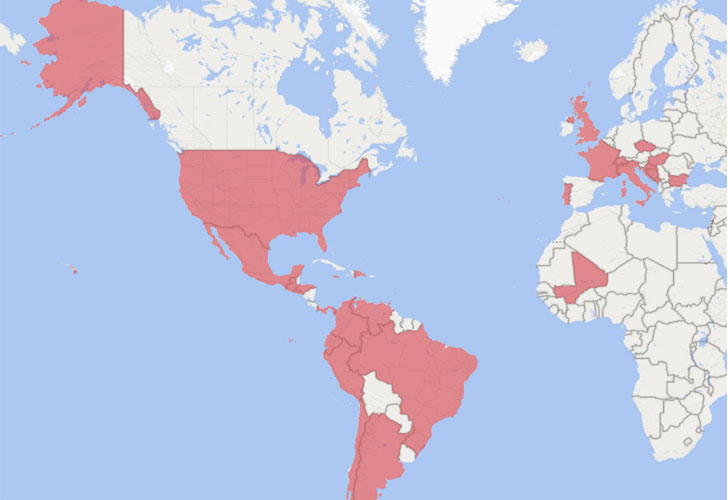
a China-based cyber espionage group that set its sights on
organizations in the U.S. and 28 other countries pursuant to a
legal warrant issued by a federal court in the U.S. state of
Virginia.
The Redmond company attributed the malicious activities to a
group it pursues as Nickel[1], and by the wider
cybersecurity industry under the monikers APT15, Bronze Palace,
Ke3Chang, Mirage, Playful Dragon, and Vixen Panda. The advanced
persistent threat (APT) actor is believed to have been active since
at least 2012.
“Nickel has targeted organizations in both the private and
public sectors, including diplomatic organizations and ministries
of foreign affairs in North America, Central America, South
America, the Caribbean, Europe and Africa,” Microsoft’s Corporate
Vice President for Customer Security and Trust, Tom Burt, said[2]. “There is often a
correlation between Nickel’s targets and China’s geopolitical
interests.”
The rogue infrastructure enabled the hacking crew to maintain
long-term access to the compromised machines and execute attacks
for intelligence gathering purposes targeting unnamed government
agencies, think tanks, and human rights organizations as part of a
digital espionage campaign dating back to September 2019.
Microsoft painted the cyber assaults as “highly sophisticated”
that used a multitude of techniques, including breaching remote
access services and exploiting vulnerabilities in unpatched VPN
appliances as well as Exchange Server and SharePoint systems to
“insert hard-to-detect malware that facilitates intrusion,
surveillance and data theft.”
Upon gaining an initial foothold, Nickel has been found
deploying credential dumping tools and stealers such as Mimikatz
and WDigest to hack into victim accounts, followed by delivering
custom malware that allowed the actor to maintain persistence on
victim networks over extended periods of time and conduct regularly
scheduled exfiltration of files, execute arbitrary shellcode, and
collect emails from Microsoft 365 accounts using compromised
credentials.
The multiple backdoor families used for command and control are
being tracked as Neoichor, Leeson, NumbIdea, NullItch, and
Rokum.
The latest wave of attacks adds to an extensive list of
surveillanceware campaigns mounted by the APT15 group in recent
years. In July 2020, mobile security firm Lookout disclosed[3]
four trojanized legitimate apps — named SilkBean, DoubleAgent,
CarbonSteal, and GoldenEagle — that targeted the Uyghur ethnic
minority and the Tibetan community with the goal of gathering and
transmitting personal user data to adversary-operated
command-and-control servers.
“As China’s influence around the world continues to grow and the
nation establishes bilateral relations with more countries and
extends partnerships in support of China’s Belt and Road
Initiative[4], we assess that
China-based threat actors will continue to target customers in
government, diplomatic, and NGO sectors to gain new insights,
likely in pursuit of economic espionage or traditional intelligence
collection objectives,” Microsoft said[5].
References
Read more https://thehackernews.com/2021/12/microsoft-seizes-42-malicious-web.html