A previously known Windows remote access Trojan (RAT) with
credential-stealing capabilities has now expanded its scope to set
its sights on users of Android devices to further the attacker’s
espionage motives.
“The developers of LodaRAT[1]
have added Android as a targeted platform,” Cisco Talos researchers
said[2]
in a Tuesday analysis. “A new iteration of LodaRAT for Windows has
been identified with improved sound recording capabilities.”
Kasablanca, the group behind the malware, is said to have
deployed the new RAT in an ongoing hybrid campaign targeting
Bangladeshi users, the researchers noted.
The reason why Bangladesh-based organizations have been
specifically singled out for this campaign remains unclear, as is
the identity of the threat actor.
First documented in May 2017 by Proofpoint[3], Loda is an AutoIt
malware typically delivered via phishing lures that’s equipped to
run a wide range of commands designed to record audio, video, and
capture other sensitive information, with recent[4]
variants[5]
aimed at stealing passwords and cookies from browsers.
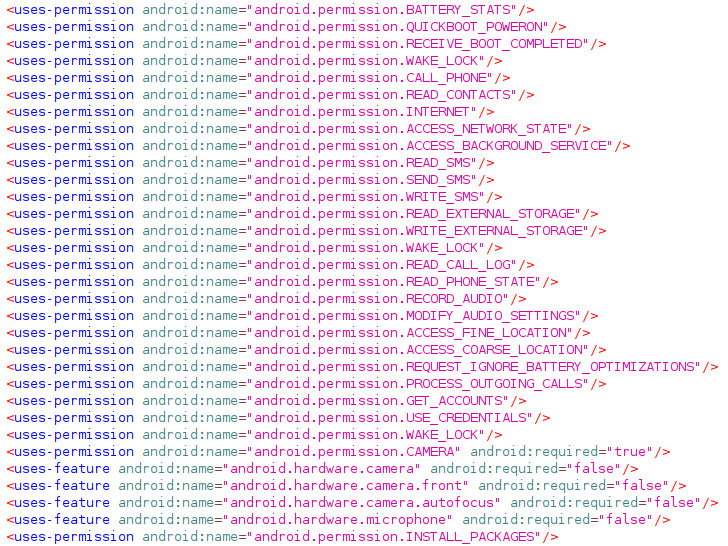
The latest versions — dubbed Loda4Android and Loda4Windows — are
a lot alike in that they come with a full set of data-gathering
features that constitute a stalker application. However, the
Android malware is also different, as it particularly avoids
techniques often used by banking Trojans, like abusing Accessibility APIs[6] to record on-screen
activities.
Besides sharing the same command-and-control (C2) infrastructure
for both Android and Windows, the attacks, which originated in
October 2020, have targeted banks and carrier-grade voice-over-IP
software vendors, with clues pointing to the malware author being
based in Morocco.
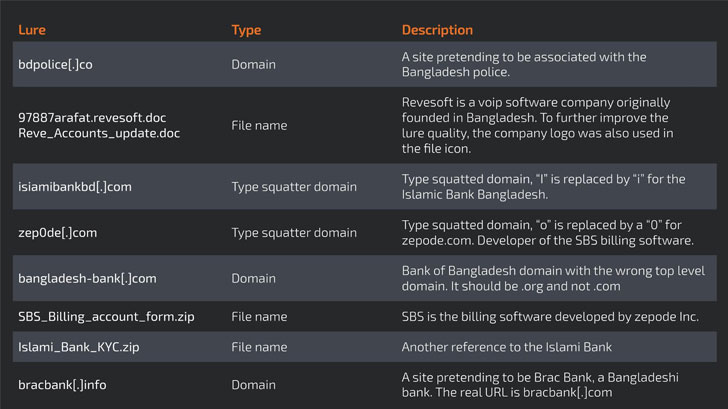
The attackers also made of a myriad number of social engineering
tricks, ranging from typo squatted domains to malicious RTF
documents embedded in emails, that, when opened, triggered an
infection chain that leverages a memory corruption vulnerability in
Microsoft Office (CVE-2017-11882) to download the final
payload.
While the Android version of the malware can take photos and
screenshots, read SMS and call logs, send SMS and perform calls to
specific numbers, and intercept SMS messages or phone calls, its
latest Windows counterpart comes with new commands that enable
remote access to the target machine via Remote Desktop Protocol
(RDP) and “Sound” command that makes use of BASS[7] audio library to capture
audio from a connected microphone.
“The fact that the threat group has evolved into hybrid
campaigns targeting Windows and Android shows a group that is
thriving and evolving,” said researchers with Cisco Talos.
“Along with these improvements, the threat actor has now focused
on specific targets, indicating more mature operational
capabilities. As is the case with earlier versions of Loda, both
versions of this new iteration pose a serious threat, as they can
lead to a significant data breach or heavy financial loss.”
References
Read more http://feedproxy.google.com/~r/TheHackersNews/~3/Yqhdx5Opmdo/lodarat-windows-malware-now-also.html