An Iranian state-sponsored actor has been observed scanning and
attempting to abuse the Log4Shell flaw in publicly-exposed Java
applications to deploy a hitherto undocumented PowerShell-based
modular backdoor dubbed “CharmPower” for follow-on
post-exploitation.
“The actor’s attack setup was obviously rushed, as they used the
basic open-source tool for the exploitation and based their
operations on previous infrastructure, which made the attack easier
to detect and attribute,” researchers from Check Point said[1]
in a report published this week.
The Israeli cybersecurity company linked the attack to a group
known as APT35[2], which is also tracked
using the codenames Charming Kitten, Phosphorus, and TA453, citing
overlaps with toolsets previously identified as infrastructure used
by the threat actor.
Log4Shell[3]
aka CVE-2021-44228 (CVSS score: 10.0) concerns a critical
security vulnerability in the popular Log4j logging library that,
if successfully exploited, could lead to remote execution of
arbitrary code on compromised systems.
The ease of the exploitation coupled with the widespread use of
Log4j library has created a vast pool of targets, even as the
shortcoming has attracted swarms of bad actors, who have seized on
the opportunity to stage a dizzying array of attacks since its
public disclosure last month.
While Microsoft previously pointed out APT35’s efforts to
acquire and modify the Log4j exploit, the latest findings show that
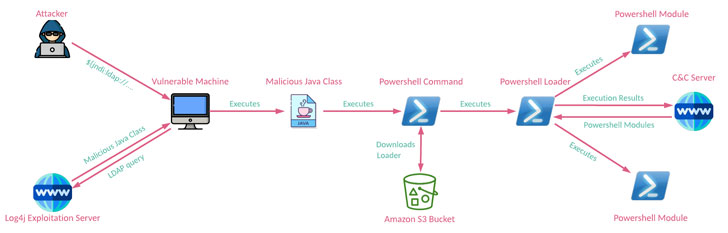
the hacking group has operationalized the flaw to distribute the
PowerShell implant capable of retrieving next-stage modules and
exfiltrating data to a command-and-control (C2) server.
CharmPower’s modules also support a variety of intelligence
gathering functionality, including features to gather system
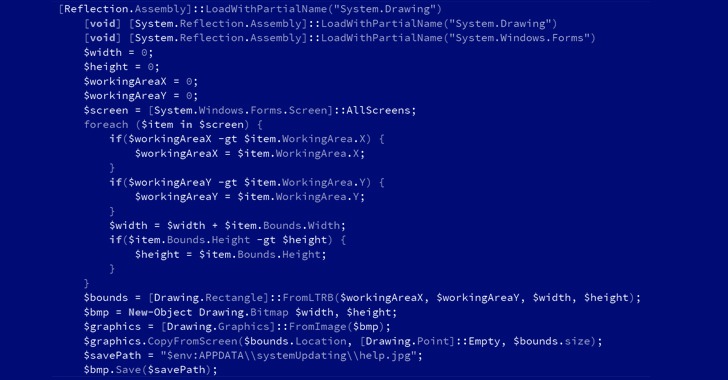
information, list installed applications, take screenshots,
enumerate running processes, execute commands sent from the C2
server, and clean up any signs of evidence created by these
components.
The disclosure comes as Microsoft and the NHS cautioned[4]
that internet-facing systems running VMware Horizon are being
targeted to deploy web shells and a strain of ransomware called
NightSky, with the tech giant connecting the latter to a
China-based operator dubbed DEV-0401, which has also deployed
LockFile, AtomSilo, and Rook ransomware in the past.
What’s more, Hafnium[5], another threat actor
group operating out of China, has also been observed utilizing the
vulnerability to attack virtualization infrastructure to extend
their typical targeting, Microsoft noted[6].
“Judging by their ability to take advantage of the Log4j
vulnerability and by the code pieces of the CharmPower backdoor,
the actors are able to change gears rapidly and actively develop
different implementations for each stage of their attacks,” the
researchers said.
References
Read more https://thehackernews.com/2022/01/iranian-hackers-exploit-log4j.html