- Imagine you were a Secure Asset as an Human Being and you were place on the Earth FOR A ONE TIME Purpose !
Are We A TOTP type of beings ? One Time Passwords with access to this Earth For a Time PEriod JUST ONLY ONCE !
Listen very carefully i shall say this only once ! remember michelle from the Comedy Show Allo Allo ?
We are On earth As Time Based OTP one Time Passwords . When our Time is up Our OTP EXpires !
-
Table of Contents
- Exploring the Benefits of Human TOTP for Security and Authentication
- How Human TOTP Can Help Protect Your Data and Identity
- The Pros and Cons of Using Human TOTP for Authentication
- Understanding the Different Types of Human TOTP Solutions
- Examining the Impact of Human TOTP on Privacy and Security Policies
Exploring the Benefits of Human TOTP for Security and Authentication
Human TOTP (Time-based One-Time Password) is a two-factor authentication system that provides an additional layer of security for users. It is a secure and convenient way to protect user accounts from unauthorized access. This article will explore the benefits of Human TOTP for security and authentication.
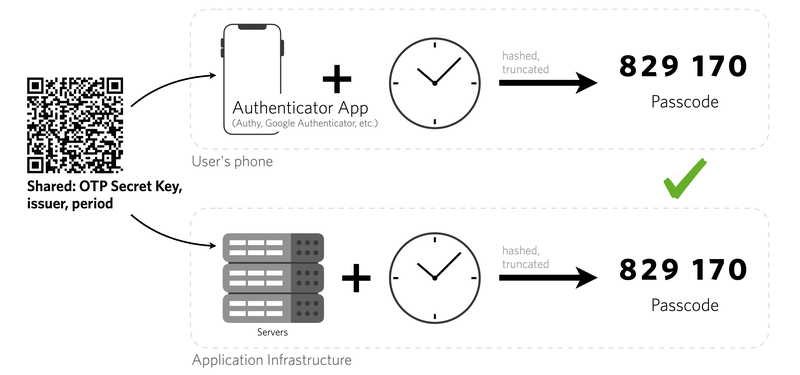
Human TOTP is a two-factor authentication system that requires users to enter a one-time password (OTP) in addition to their username and password. The OTP is generated by a secure server and is valid for a limited amount of time. This ensures that the user is the only one who can access the account, as the OTP is only valid for a short period of time.
One of the main benefits of Human TOTP is that it is more secure than traditional authentication methods. The OTP is generated by a secure server and is only valid for a limited amount of time, making it difficult for hackers to gain access to user accounts. Additionally, Human TOTP is more convenient than other two-factor authentication methods, as users do not need to carry a physical token or device to generate the OTP.
Another benefit of Human TOTP is that it is easy to implement. It requires minimal setup and can be integrated into existing authentication systems. Additionally, Human TOTP is cost-effective, as it does not require additional hardware or software.
Finally, Human TOTP is user-friendly. It is easy to use and understand, making it ideal for users who are not tech-savvy. Additionally, Human TOTP is compatible with a variety of devices, including smartphones, tablets, and computers.
In conclusion, Human TOTP is a secure and convenient two-factor authentication system that provides an additional layer of security for users. It is easy to implement, cost-effective, and user-friendly, making it an ideal solution for organizations looking to improve their security and authentication systems.
How Human TOTP Can Help Protect Your Data and Identity
Human TOTP (Time-based One-Time Password) is an authentication method that provides an extra layer of security for online accounts. It is a two-factor authentication system that requires users to enter a one-time password (OTP) in addition to their username and password. This OTP is generated by a device or application and is valid for a limited amount of time.
Human TOTP is an effective way to protect your data and identity online. It adds an extra layer of security to your accounts by requiring a unique code that changes every time you log in. This code is generated by a device or application and is only valid for a short period of time. This means that even if someone were to gain access to your username and password, they would not be able to access your account without the OTP.
Human TOTP also helps protect your data and identity by making it more difficult for hackers to gain access to your accounts. By requiring a unique code that changes every time you log in, it makes it much harder for hackers to guess or brute-force their way into your account.
Finally, Human TOTP can help protect your data and identity by providing an extra layer of protection against phishing attacks. Phishing attacks are when hackers send emails or messages that appear to be from a legitimate source, but are actually malicious. By requiring a unique code that changes every time you log in, it makes it much harder for hackers to gain access to your accounts through phishing attacks.
Overall, Human TOTP is an effective way to protect your data and identity online. It adds an extra layer of security to your accounts by requiring a unique code that changes every time you log in. This code is generated by a device or application and is only valid for a short period of time. It also makes it more difficult for hackers to gain access to your accounts and provides an extra layer of protection against phishing attacks.
The Pros and Cons of Using Human TOTP for Authentication
The use of Human TOTP (Time-based One-Time Password) for authentication is becoming increasingly popular due to its convenience and security. This authentication method is based on the use of a one-time password (OTP) that is generated by a user’s device and is valid for a limited period of time. In this article, we will discuss the pros and cons of using Human TOTP for authentication.
Pros
One of the main advantages of using Human TOTP for authentication is that it is highly secure. The OTP is generated by the user’s device and is valid for a limited period of time, making it difficult for hackers to gain access to the user’s account. Additionally, the OTP is generated using a secure algorithm, making it virtually impossible to guess or crack.
Another benefit of using Human TOTP for authentication is that it is convenient. The user does not need to remember a complex password or enter it multiple times. Instead, they simply need to enter the OTP generated by their device. This makes it easier for users to access their accounts without having to remember complex passwords.
Cons
One of the main drawbacks of using Human TOTP for authentication is that it can be vulnerable to man-in-the-middle attacks. If a hacker is able to intercept the OTP, they can gain access to the user’s account. Additionally, if the user’s device is lost or stolen, the hacker can gain access to the user’s account.
Another disadvantage of using Human TOTP for authentication is that it can be difficult to implement. The user’s device must be configured correctly in order for the OTP to be generated correctly. Additionally, the user must have access to the device in order to generate the OTP.
In conclusion, Human TOTP for authentication has both advantages and disadvantages. It is highly secure and convenient, but it can be vulnerable to man-in-the-middle attacks and difficult to implement. It is important to weigh the pros and cons before deciding whether or not to use Human TOTP for authentication.
Understanding the Different Types of Human TOTP Solutions
Time-based One-Time Password (TOTP) solutions are an important part of modern security protocols. They are used to authenticate users and protect sensitive data from unauthorized access. TOTP solutions are based on the concept of generating a unique, one-time password that is valid for a limited period of time. This password is then used to gain access to a system or service.
There are several different types of TOTP solutions available. The most common type is the hardware token, which is a physical device that generates a unique code each time it is used. This code is then entered into the system or service to gain access. Hardware tokens are typically used in corporate environments, where they are issued to employees and used to authenticate their access to the company’s network.
Another type of TOTP solution is the software token. This is a software application that runs on a user’s computer or mobile device and generates a unique code each time it is used. This code is then entered into the system or service to gain access. Software tokens are typically used in consumer-facing applications, such as online banking or shopping sites.
Finally, there is the biometric TOTP solution. This type of solution uses biometric data, such as fingerprints or facial recognition, to generate a unique code each time it is used. This code is then entered into the system or service to gain access. Biometric TOTP solutions are typically used in high-security environments, such as government agencies or military installations.
TOTP solutions are an important part of modern security protocols and can help protect sensitive data from unauthorized access. Each type of TOTP solution has its own advantages and disadvantages, so it is important to understand the different types and choose the one that best meets your needs.
Examining the Impact of Human TOTP on Privacy and Security Policies
The use of two-factor authentication (2FA) has become increasingly popular in recent years as a way to protect user accounts from unauthorized access. One of the most common forms of 2FA is the use of a time-based one-time password (TOTP), which is a code generated by a device or application that is valid for a limited amount of time. While TOTP can be a powerful tool for protecting user accounts, it also has implications for privacy and security policies.
In terms of privacy, TOTP can be used to track user activity. For example, if a user is required to enter a TOTP code each time they log in to an account, the system can record the time and location of each login. This information can then be used to build a profile of the user’s activity, which could be used for marketing or other purposes. To protect user privacy, organizations should ensure that any data collected through TOTP is used only for the purpose for which it was intended and is not shared with third parties.
In terms of security, TOTP can be vulnerable to attack if the code is not generated securely. For example, if the code is generated on a device that is not secure, it could be intercepted by an attacker. To protect against this type of attack, organizations should ensure that the TOTP code is generated on a secure device and that the code is not stored in plaintext.
Finally, organizations should ensure that their security policies are up to date and that they are regularly reviewed and updated to reflect any changes in technology or user behavior. This will help ensure that the organization’s security policies are effective in protecting user accounts from unauthorized access.
In conclusion, the use of TOTP can be a powerful tool for protecting user accounts, but it also has implications for privacy and security policies. Organizations should ensure that any data collected through TOTP is used only for the purpose for which it was intended and is not shared with third parties. They should also ensure that the TOTP code is generated on a secure device and that the code is not stored in plaintext. Finally, organizations should ensure that their security policies are up to date and regularly reviewed and updated.