Feb 24, 2023The Hacker News
The use of AI in cybersecurity is growing rapidly and is having
a significant impact on threat detection, incident response, fraud
detection, and vulnerability management. According to a report by
Juniper Research, the use of AI for fraud detection and prevention
is expected to save businesses $11 billion annually by 2023. But
how to integrate AI into business cybersecurity infrastructure
without being exposed to hackers?
In terms of detecting and responding to security threats in a
more efficient and effective manner, AI has been helping businesses
in lots of ways.
- Firstly, it can analyze large amounts of data and identify
patterns or anomalies much faster and with greater accuracy than
humans. AI detects and responds to security threats in real-time,
reducing the time it takes to identify and remediate security
incidents. - The algorithms can learn from past incidents and adapt to new
threats as they emerge. With it, cybersecurity systems can become
smarter and more effective over time, reducing the risk of future
security incidents. - In addition to that, AI can automate many of the repetitive and
time-consuming tasks associated with cybersecurity, such as threat
monitoring and incident response. It frees up cybersecurity
professionals to focus on more complex tasks that require human
expertise, such as threat analysis and risk assessment. - AI can be used to scale cybersecurity operations to meet the
growing demand for security services. It is particularly important
as the number of devices and systems connected to the internet
continues to grow. - Its algorithms can proactively identify vulnerabilities and
potential security threats before they are exploited. It helps
organizations to stay one step ahead of attackers and prevent
security incidents before they occur.
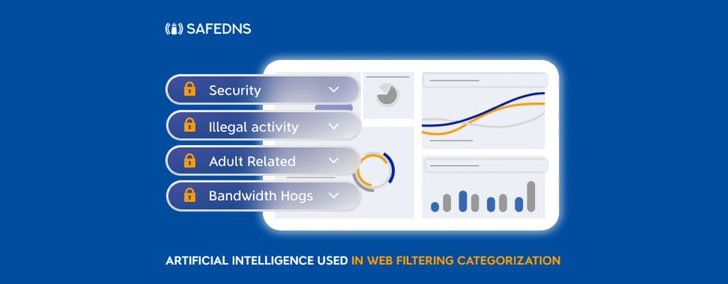
Artificial Intelligence is also widely used in web filtering to
help organizations and individuals protect against malicious
websites and content on the internet – just like SafeDNS does[1]. Its AI algorithms
analyze and classify web content in real-time, which allows web
filtering software to quickly identify and block websites that
contain harmful content, such as malware, phishing scams, and
inappropriate material. These algorithms can also learn and adapt
to new threats over time, making web filtering more effective and
efficient.
AI also helps personalize web filtering, allowing individuals
and organizations to customize their web filtering settings based
on their specific needs and preferences. For example, AI can be
used to learn an individual’s browsing habits and preferences, and
then adjust web filtering settings accordingly.
However, deploying AI in business cybersecurity can be a complex
and challenging process, and there are many potential pitfalls to
avoid to ensure that AI is effectively integrated into your
cybersecurity strategy. Here are some tips to make the process
secure.
Define clear goals and objectives
Before deploying AI in your cybersecurity strategy, it is
important to clearly define your goals and objectives. This will
help you to focus your efforts and ensure that your AI solution is
aligned with your business needs.
Understand the limitations of AI
While AI can be a powerful tool in cybersecurity, it is not a
panacea. It is important to understand the limitations of AI and
the potential risks associated with its use, such as bias and false
positives.
Invest in training and education
Deploying AI in cybersecurity requires a skilled workforce that
understands how to work with AI and interpret its outputs. Invest
in training and education for your cybersecurity team to ensure
that they are equipped with the knowledge and skills needed to
effectively deploy and manage AI solutions.
Test and validate your AI solution
Before deploying your AI solution in a production environment,
it is important to thoroughly test and validate it in a controlled
environment. This will help to identify any issues or weaknesses
and ensure that your AI solution is functioning as intended.
What if there are no resources, both human, and financial, to
ensure all these tips are followed? Lean on a trustful vendor.
SafeDNS already uses AI in Threat Protection via web filtering.
Special offer for The Hacker News readers: 10% off for business
with promocode “Business_hackernews”. Insert it here[2]
& try out AI for your cybersecurity today.
Found this article interesting? Follow us on Twitter [3]
and LinkedIn[4]
to read more exclusive content we post.
References
- ^
SafeDNS
does (safedns.com) - ^
Insert
it here (safedns.com) - ^
Twitter
(twitter.com) - ^
LinkedIn
(www.linkedin.com)
Read more https://thehackernews.com/2023/02/how-to-use-ai-in-cybersecurity-and.html