Contemporary organizations understand the importance of data and
its impact on improving interactions with customers, offering
quality products or services, and building loyalty.
Data is fundamental to business success. It allows companies to
make the right decisions at the right time and deliver the
high-quality, personalized products and services that customers
expect.
There is a challenge, though.
Businesses are collecting more data than ever before, and new
technologies have accelerated this process dramatically. As a
result, organizations have significant volumes of data, making it
hard to manage, protect, and get value from it.
Here is where Governance, Risk, and Compliance (GRC) comes in.
GRC enables companies to define and implement the best practices,
procedures, and governance to ensure the data is clean, safe, and
reliable across the board.
More importantly, organizations can use GRC platforms like
StandardFusion[1]
to create an organizational culture around security. The objective
is to encourage everyone to understand how their actions affect the
business’s success.
Now, the big question is:
Are organizations getting value from their data?
To answer that, first, it’s important to understand the
following two concepts.
Data quality
Data quality represents how reliable the information serves an
organization’s specific needs — mainly supporting
decision-making.
Some of these needs might be:
- Operations – Where and how can we be more efficient?
- Resource distribution – Do we have any excess? Where? And
why? - Planning – How likely is this scenario to occur? What can we do
about it? - Management – What methods are working? What processes need
improvement?
From a GRC standpoint, companies can achieve data quality by
creating rules and policies so the entire organization can use that
data in the same ways. These policies could, for example, define
how to label, transfer, process, and maintain information.
Data Integrity
Data integrity focuses on the trustworthiness of the information
in terms of its physical and logical validity. Some of the key
characteristics to ensure the usability of data are:
- Consistency
- Accuracy
- Validity
- Truthfulness
GRC’s goal for data integrity is to keep the information
reliable by eliminating unwanted changes between updates or
modifications. It is all about the data’s accuracy, availability,
and trust.
How GRC empowers organizations achieve high-quality data
Organizations that want to leverage their data to generate value
must ensure the information they collect is helpful and truthful.
The following are the key characteristics of high-quality data:
- Completeness: The expected data to make decisions is
present. - Uniqueness: There is no duplication of data.
- Timeliness: The data is up-to-date and available to use when
needed. - Validity: The information has the proper format and matches the
requirements. - Accuracy: The data describes the object correctly in a
real-world context. - Consistency: The data must be the same across multiple
databases
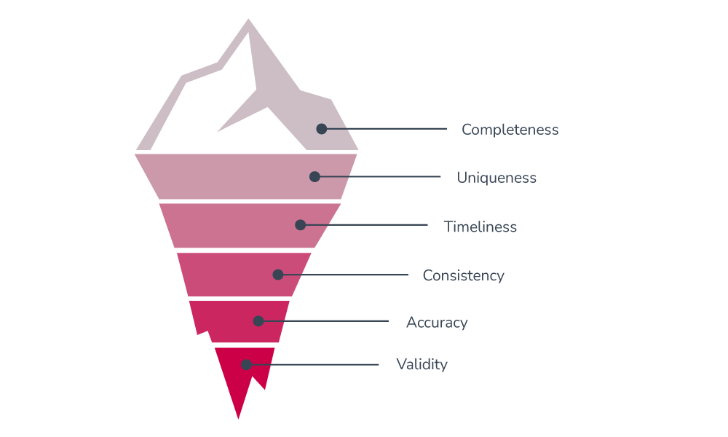
A powerful way to make sure the company’s data maintains these
six characteristics is by leveraging the power of GRC.
Why?
Because GRC empowers organizations to set standards,
regulations, and security controls to avoid mistakes, standardize
tasks and guide personnel when collecting and dealing with vital
information.
GRC helps organizations answer the following questions:
- How is the company ensuring that data is available for internal
decision and for the clients? - Is everyone taking the proper steps to collect and process
data? - Have redundancies been removed?
- Is the organization prepared for unexpected
events?[2] - Does the organization have a backup system?
- Are the key processes standardized?
Overall, GRC aims to build shared attitudes and actions towards
security.
Why every organization needs high-quality data and how GRC
helps
Unless the data companies collect is high-quality and
trustworthy, there’s no value in it — it becomes a liability and a
risk for the organization.
Modern companies recognize data as an essential asset that
impacts their bottom line. Furthermore, they understand that poor
data quality can damage credibility, reduce sales, and minimize
growth.
In today’s world, organizations are aiming to be data-driven.
However, becoming a data-driven organization is tough without a GRC
program.
How so?
Governance, Risk, and Compliance enable organizations to protect
and manage data quality by creating standardized, controlled, and
repeatable processes. This is key because every piece of data an
organization process has an associated risk.
By understanding these risks, companies can implement the
necessary controls and policies for handling and extracting data
correctly so that every department can access the same quality
information.
Organizations without structured data can’t provide any value,
and they face the following risks:
- Missed opportunities: Many leads are lost because of incomplete
or inaccurate data. Also, incorrect data means wrong insights,
resulting in missing critical business opportunities. - Lost revenue: According to 2021 Gartner’s
research[3], the average financial
impact of poor data quality on organizations is $12.9 million
annually. - Poor customer experience: When data quality is poor,
organizations can’t identify customers’ pain points and
preferences. As a result, the offer of products or services doesn’t
match customers’ needs and expectations. - Lack of compliance: In some industries where regulations
control relationships or customer transactions, maintaining
good-quality data can be the difference between compliance and
fines of millions of dollars. GRC is vital to keep compliance in
the loop as new regulations evolve worldwide. - Increased expenses: A few years ago, IBM’s research showed that
businesses lost 3.1 trillion dollars in the US alone. How? Spending
time to find the correct data, fixing errors, and just hunting for
information and confirmed sources. - Misanalysis: Around 84% of CEOs are concerned about the
quality of data[4]
they are deciding on. Wrong data will lead to bad decisions and
ultimately damage operations, finances, HR, and every area within
the company. - Reputational damage: In today’s world, customers spend a lot of
their time reading reviews before making a decision. For instance,
if a company fails to satisfy its customers, everyone will
know. - Reduced efficiency: Poor data quality forces employees to do
manual data quality checks, losing time and money.
To sum up:
Having the right processes to manipulate data will prevent
organizations from missing business opportunities, damaging their
reputation, and doing unnecessary repetitive tasks.
How GRC supports data-driven business and what are the key
benefits of clean data
Data-driven businesses embrace the use of data (and its
analysis) to get insights that can improve the organization. The
efficient management of big data through GRC tools helps identify
new business opportunities, strengthen customer experiences, grow
sales, improve operations, and more.
For example, GRC helps data-driven businesses by allowing them
to create and manage the right policies to process and protect the
company’s data.
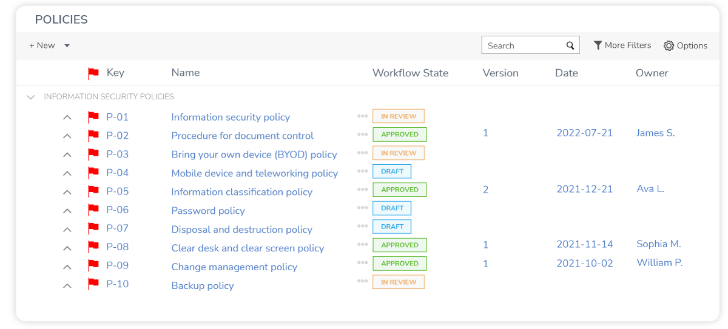
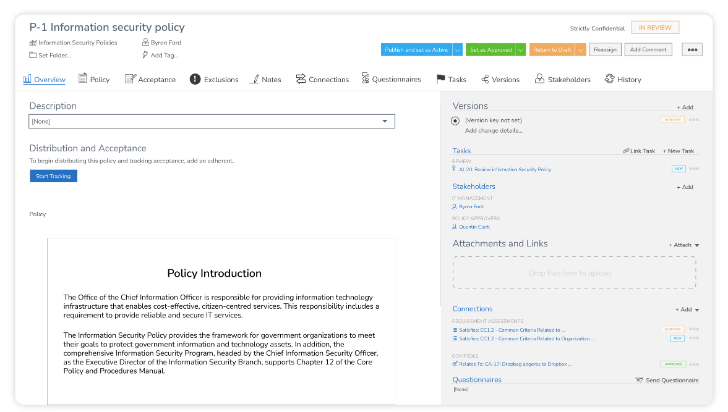
More importantly, organizations can also control individual
policies to ensure they have been distributed and acknowledged
accordingly.
In terms of benefits, although clean data has numerous
“easy-to-identify” benefits, many others are not easily identified.
Trusting data not just improves efficiency and results; it also
helps with fundamental, vital factors that affect business
performance and success.
What are these factors?
Fundamental benefits:
- Profits/Revenue
- Internal communication
- Employees confidence to share information
- Company’s reputation
- Trust
Operational benefits:
- Efficiency
- Business outcome
- Privacy issues
- Customer satisfaction
- Better audience-targeting
How GRC protect the value of businesses and their data
In this contemporary world, companies should be measured not
only via existing financial measurements but also by the amount of
monetizable data they can capture, consume, store and use. More
importantly, how the data helps the organization’s internal
processes to be faster and more agile.
When people think of high-quality data and big data, they
usually associate these two with big organizations, especially
technology and social media platforms. However, big quality data
gives organizations of any size plenty of benefits.
Data quality and integrity help organizations to:
- Understand their clients
- Enhance business operations
- Understand industry best practices
- Identify the best partnership options
- Strengthen business culture
- Deliver better results
- Make more money
Using the right GRC platform helps companies create and control
the policies and practices to ensure their data is valid,
consistent, accurate, and complete — allowing them to get all these
benefits.
The key to using GRC tools is that businesses can produce what
customers expect on a greater scale and with higher precision and
velocity.
Now, what does this have to do with value?
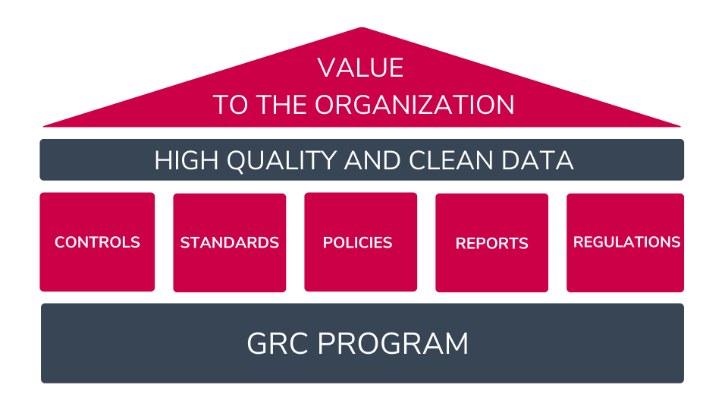
By protecting the value of data, organizations are protecting
their overall worth. Indeed, GRC empowers companies to create a
culture of value, giving everyone education and agency so they can
make better decisions.
Also, GRC helps companies tell better security stories. These
stories aim to build trust with customers and partners, enter new
markets, and shorten sale cycles.
To summarize:
A better understanding of customers and processes — through data
— will lead to better products and services, enhanced experiences,
and long-lasting relationships with customers. All these represent
growth and more revenue for companies.
What happens when a company’s data is not safe? Can it damage
their value?
Trust is a vital component of any interaction (business or
personal) and, as such, is mandatory for organizations to protect
it — without trust, there is no business.
When data is not protected, the chances of breaches are higher,
causing direct and indirect costs.
Direct costs are:
- Fines
- Lawsuits
- Stolen information
- Compensations
- Potential business loss
Indirect costs are:
- Reputation/Trust
- PR activities
- Lost revenue from downtime
- New and better protection
Often, reputation damages can cause long-term harm to
organizations, making it hard for them to acquire and maintain
business. In fact, reputation loss is the company’s biggest worry,
followed by financial costs, system damage, and downtime.
So, what does all this mean?
It’s not just about collecting data; it is also about how
companies reduce risks and leverage and protect the data they have.
GRC integrates data security, helping organizations be better
prepared against unauthorized access, corruption, or theft.
Moreover, GRC tools can help elevate data security by
controlling policies, regulations, and predictable issues within
the organization.
The bottom line?
When companies can’t get or maintain customers because of a lack
of trust, the organization’s value will be significantly lower — or
even zero. Unfortunately, this is even more true for small and
medium size companies.
How to use GRC to achieve and maintain high-quality data?
Many organizations have trouble managing their data, which,
unfortunately, leads to poor decisions and a lack of trust from
employees and customers.
Moreover, although companies know how costly wrong information
is, many are not working on ensuring quality data through the right
processes and controls. In fact, Harward Business Review[5]
said that 47% of newly created data records have at least one
critical error.
Why is that?
Because there is a lack of focus on the right processes and
systems that need to be in place to ensure quality data.
What do poor processes cause?
- Human errors
- Wrong data handling
- Inaccurate formatting
- Different sets of data for various departments
- Unawareness of risks
- Incorrect data input or extraction
Fortunately, GRC’s primary goal is to develop the right policies
and procedures to ensure everyone in the organization appropriately
manages the data.
GRC aims to create a data structure based on the proper
governance that will dictate how people organize and handle the
company’s information. As a result, GRC will empower companies to
be able to extract value from their data.
That is not everything.
Governance, Risk, and Compliance allow organizations to
understand the risks associated with data handling and guide
managers to create and distribute the policies that will support
any data-related activity.
The following are some of the ways GRC is used to achieve and
maintain high-quality data:
- Data governance: Data governance is more than setting rules and
telling people what to do. Instead, it is a collection of
processes, roles, policies, standards, and metrics that will lead
to a cultural change to ensure effective management of information
throughout the organization. - Education: Achieving good data quality is not easy. It requires
a deep understanding of data quality principles, processes, and
technologies. GRC facilitates the education process by allowing the
organization to seamlessly implement, share, and communicate its
policies and standards to every department. - Everyone is involved: Everyone must understand the
organization’s goal for data quality and the different processes
and approaches that will be implemented. GRC focuses on cultural
change. - Be aware of threats: When managing data, each process has risks
associated with it. The mission of GRC is for the organization to
recognize and deal with potential threats effectively. When
companies are aware of risks, they can implement the necessary
controls and rules to protect the data. - One single source of truth: A single source of truth ensures
everyone in the organization makes decisions based on the same
consistent and accurate data. GRC can help by defining the
governance over data usage and manipulation. Furthermore, GRC makes
it easy to communicate policies, see who the policy creator is, and
ensure employees are acting according to the standards.
Get a free consultation with
StandardFusion[6]
to learn more about how GRC and data governance can boost your
organization’s value.
References
- ^
organizations can use GRC platforms
like StandardFusion
(www.standardfusion.com) - ^
Is the
organization prepared for unexpected events?
(www.standardfusion.com) - ^
According to 2021 Gartner’s
research (www.gartner.com) - ^
Around
84% of CEOs are concerned about the quality of data
(www.forbes.com) - ^
Harward
Business Review (hbr.org) - ^
Get a
free consultation with StandardFusion
(www.standardfusion.com)
Read more https://thehackernews.com/2022/09/how-grc-protects-value-of-organizations.html