
Threat actors have been distributing malicious applications
under the guise of seemingly harmless shopping apps to target
customers of eight Malaysian banks since at least November
2021.
The attacks involved setting up fraudulent but
legitimate-looking websites to trick users into downloading the
apps, Slovak cybersecurity firm ESET said in a report shared with
The Hacker News.
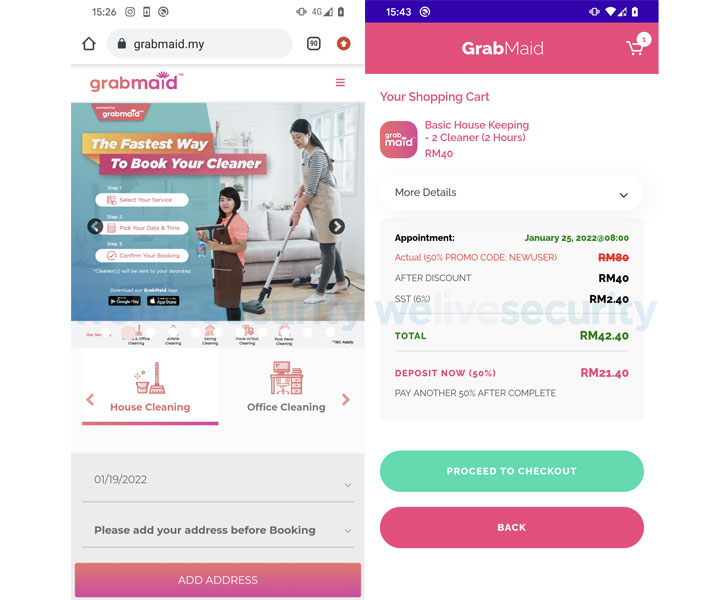
The copycat websites impersonated cleaning services such as
Maid4u, Grabmaid, Maria’s Cleaning, Maid4u, YourMaid, Maideasy and
MaidACall and a pet store named PetsMore, all of which are aimed at
users in Malaysia.
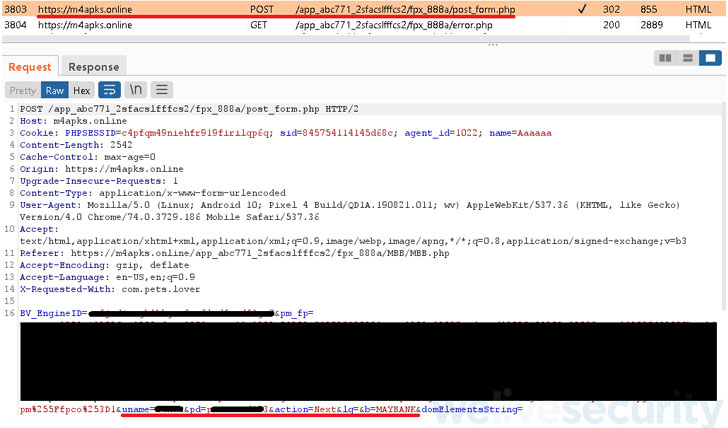
“The threat actors use these fake e-shop applications to phish
for banking credentials,” ESET said[1]. “The apps also forward
all SMS messages received by the victim to the malware operators in
case they contain 2FA codes sent by the bank.”
The targeted banks include Maybank, Affin Bank, Public Bank
Berhad, CIMB bank, BSN, RHB, Bank Islam Malaysia, and Hong Leong
Bank.
The websites, distributed through Facebook ads, urge visitors to
download what the attackers claim to be are Android apps available
on the Google Play Store, but in reality, redirect them to rogue
servers under their control.
It’s worth noting here that the attack hinges on the
prerequisite that the potential victims enable the non-default
“Install unknown apps” option on their devices for it to succeed.
What’s more, five of the abused services don’t even have an app on
Google Play.
Once launched, the apps prompt the users to sign in to their
accounts, allowing them to place fake orders, following which
options are presented to complete the checkout process by including
a fund transfer from their bank accounts.
“After picking the direct transfer option, victims are presented
[with] a fake FPX payment page and asked to choose their bank out
of the eight Malaysian banks provided, and then enter their
credentials,” ESET malware researcher Lukáš Štefanko said.
The ultimate goal of the campaign is to steal the banking
credentials entered by the users and exfiltrate it to the
attacker-controlled server, while displaying an error message that
the entered user ID or password is invalid.
In addition, the fake apps are engineered to access and transmit
all SMS messages received by the users to the remote server in the
event the bank accounts are secured by two-factor
authentication.
“While the campaign targets Malaysia exclusively for now, it
might expand to other countries and banks later on,” Štefanko said.
“At this time, the attackers are after banking credentials, but
they may also enable the theft of credit card information in the
future.”
Read more https://thehackernews.com/2022/04/hackers-distributing-fake-shopping-apps.html