Vulnerable internet-facing Microsoft SQL (MS SQL) Servers are
being targeted by threat actors as part of a new campaign to deploy
the Cobalt Strike adversary simulation tool on compromised
hosts.
“Attacks that target MS SQL servers include attacks to the
environment where its vulnerability has not been patched, brute
forcing, and dictionary attack[1]
against poorly managed servers,” South Korean cybersecurity company
AhnLab Security Emergency Response Center (ASEC) said[2] in a report published
Monday.
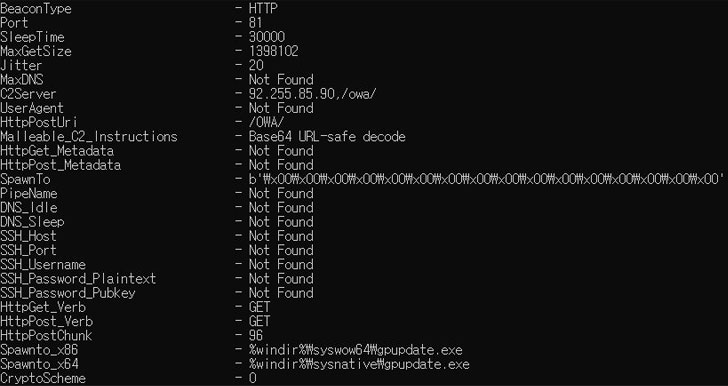
Cobalt Strike is a commercial, full-featured penetration testing framework[3] that allows an attacker
to deploy an agent named “Beacon” on the victim machine, granting
the operator remote access to the system. Although billed as a red
team threat simulation platform, cracked versions[4]
of the software have been actively used[5]
by a wide range of threat actors.
Intrusions observed by ASEC involve the unidentified actor
scanning port 1433 to check for exposed MS SQL servers to perform
brute force or dictionary attacks against the system administrator
account, i.e., “sa” account[6], to attempt a log
in.
That’s not to say that servers not left accessible over the
internet aren’t vulnerable, what with the threat actor behind
LemonDuck malware[7]
scanning the same port to laterally move across the network.
“Managing admin account credentials so that they’re vulnerable
to brute forcing and dictionary attacks as above or failing to
change the credentials periodically may make the MS-SQL server the
main target of attackers,” the researchers said.
Upon successfully gaining a foothold, the next phase of the
attack works by spawning a Windows command shell via the MS SQL
“sqlservr.exe[8]” process to download the
next-stage payload that houses the encoded Cobalt Strike binary on
to the system.
The attacks ultimately culminate with the malware decoding the
Cobalt Strike executable, followed by injecting it into the
legitimate Microsoft Build Engine (MSBuild[9]) process, which has been
previously abused[10] by malicious actors to
filelessly deliver remote access trojans and password-stealing
malware on targeted Windows systems.
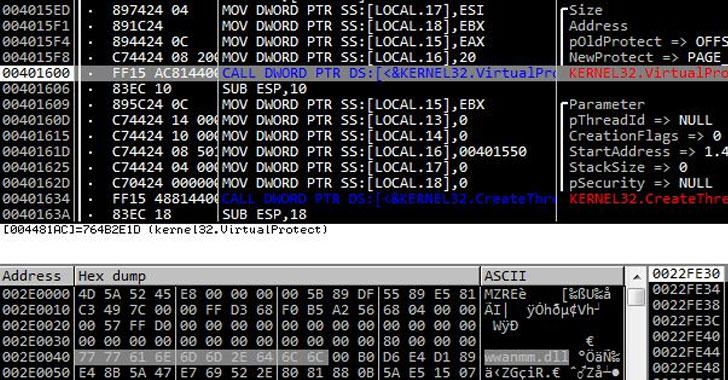
Furthermore, the Cobalt Strike that’s executed in MSBuild.exe
comes with additional configurations to evade detection of security
software. It achieves this by loading “wwanmm.dll,” a Windows
library for WWan Media Manager, then writing and running the Beacon
in the memory area of the DLL.
“As the beacon that receives the attacker’s command and performs
the malicious behavior does not exist in a suspicious memory area
and instead operates in the normal module wwanmm.dll, it can bypass
memory-based detection,” the researchers noted.
References
- ^
dictionary attack
(en.wikipedia.org) - ^
said
(asec.ahnlab.com) - ^
penetration testing framework
(www.mandiant.com) - ^
cracked
versions (thehackernews.com) - ^
actively
used (thehackernews.com) - ^
“sa”
account (docs.microsoft.com) - ^
LemonDuck malware
(thehackernews.com) - ^
sqlservr.exe
(docs.microsoft.com) - ^
MSBuild
(docs.microsoft.com) - ^
previously abused
(thehackernews.com)
Read more https://thehackernews.com/2022/02/hackers-backdoor-unpatched-microsoft.html