Apr 05, 2023Ravie Lakshmanan

A North Korean government-backed threat actor has been linked to
attacks targeting government and military personnel, think tanks,
policy makers, academics, and researchers in South Korea and the
U.S.
Google’s Threat Analysis Group (TAG) is tracking[1]
the cluster under the name ARCHIPELAGO, which it
said is a subset of another threat group tracked by Mandiant under
the name APT43[2].
The tech giant said it began monitoring the group in 2012,
adding it has “observed the group target individuals with expertise
in North Korea policy issues such as sanctions, human rights, and
non-proliferation issues.”
The priorities of APT43, and by extension ARCHIPELAGO, are said
to align with North Korea’s Reconnaissance General Bureau (RGB),
the primary foreign intelligence service, suggesting overlaps with
a group broadly known as Kimsuky[3].
Attack chains mounted by ARCHIPELAGO involve the use of phishing
emails containing malicious links that, when clicked by the
recipients, redirect to fake login pages that are designed to
harvest credentials.
These messages purport to be from media outlets and think tanks
and seek to entice targets under the pretext of requesting for
interviews or additional information about North Korea.
“ARCHIPELAGO invests time and effort to build a rapport with
targets, often corresponding with them by email over several days
or weeks before finally sending a malicious link or file,” TAG
said.
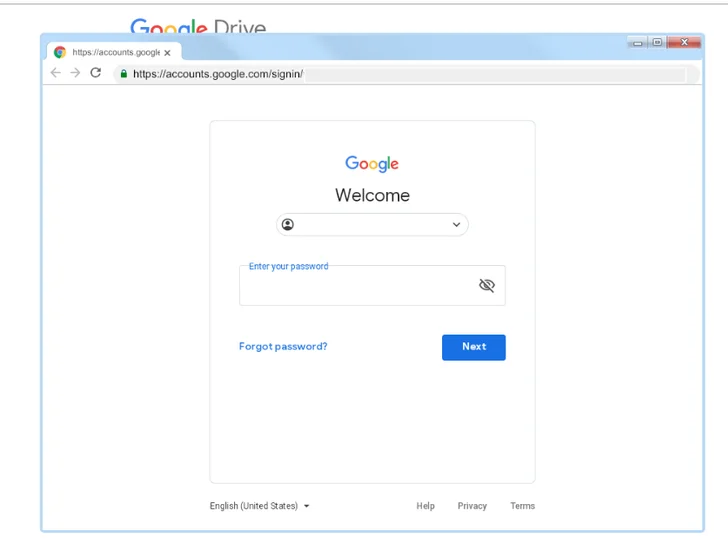
The threat actor is also known to employ the
browser-in-the-browser (BitB[4]) technique to render
rogue login pages inside an actual window to steal credentials.
What’s more, the phishing messages have posed as Google account
security alerts to activate the infection, with the adversarial
collective hosting malware payloads[5]
like BabyShark[6]
on Google Drive in the form of blank files or ISO optical disc
images.
UPCOMING WEBINAR
Learn to Secure the Identity Perimeter – Proven Strategies
Improve your business security with our upcoming expert-led
cybersecurity webinar: Explore Identity Perimeter strategies!
Don’t Miss Out – Save Your Seat![7]
Another notable technique adopted by ARCHIPELAGO is the use of
fraudulent Google Chrome extensions to harvest sensitive data, as
evidenced in prior campaigns dubbed Stolen Pencil and SharpTongue[8].
The development comes as AhnLab Security Emergency Response
Center (ASEC) detailed Kimsuky’s use of Alternate Data
Stream[9] (ADS) and weaponized Microsoft
Word files[10] to deliver info-stealer
malware.
Found this article interesting? Follow us on Twitter [11] and LinkedIn[12] to read more exclusive
content we post.
References
- ^
tracking
(blog.google) - ^
APT43
(thehackernews.com) - ^
Kimsuky
(thehackernews.com) - ^
BitB
(thehackernews.com) - ^
malware
payloads (thehackernews.com) - ^
BabyShark
(www.huntress.com) - ^
Don’t
Miss Out – Save Your Seat! (thehacker.news) - ^
Stolen
Pencil and SharpTongue (thehackernews.com) - ^
Alternate Data Stream
(asec.ahnlab.com) - ^
weaponized Microsoft Word files
(asec.ahnlab.com) - ^
Twitter
(twitter.com) - ^
LinkedIn
(www.linkedin.com)
Read more https://thehackernews.com/2023/04/google-tag-warns-of-north-korean-linked.html