announced[1]
the successful takedown of one of the largest wide-spread
RETADUP botnet malware and how it remotely disinfected more
than 850,000 computers worldwide with the help of researchers.
Earlier this year, security researchers at Avast antivirus firm,
who were actively monitoring the activities of RETADUP botnet,
discovered a design flaw in the malware’s C&C protocol that
could have been exploited to remove the malware from victims’
computer without executing any extra code.
However, to do that, the plan required researchers to have
control over the malware’s C&C server, which was hosted with a
hosting provider located in the Ile-de-France region in
north-central France.
Therefore, the researchers contacted the Cybercrime Fighting
Center (C3N) of the French National Gendarmerie at the end of March
this year, shared their findings, and proposed a secret plan to put
an end to the RETADUP virus and protect victims.
According to the proposed plan, the French authorities took control
over the RETADUP C&C server in July and replaced it with a
prepared disinfection server that abused the design flaw in its
protocol and commanded the connected instances of the RETADUP
malware on infected computers to self-destruct.
“In the very first second of its activity, several thousand bots
connected to it in order to fetch commands from the server. The
disinfection server responded to them and disinfected them, abusing
the C&C protocol design flaw,” the researchers explain in a
blog
post[2] published today.
“At the time of publishing this article, the collaboration has
neutralized over 850,000 unique infections of RETADUP.”
Nollet[3], head of the National
Criminal Intelligence Service at Gendarmerie Nationale, the
authorities will keep the disinfection server online for a few more
months as some infected computers have not yet made a connection
with the police controlled C&C server—some have been offline
since July while others have network problems.

parts of the RETARD’s C&C infrastructure in the United States.
The FBI then took them down on July 8, leaving the malware authors
with no control over the bots.
“Since it was the C&C server’s responsibility to give mining
jobs to the bots, none of the bots received any new mining jobs to
execute after this takedown,” the researchers say. “This meant that
they could no longer drain the computing power of their victims and
that the malware authors no longer received any monetary gain from
mining.”
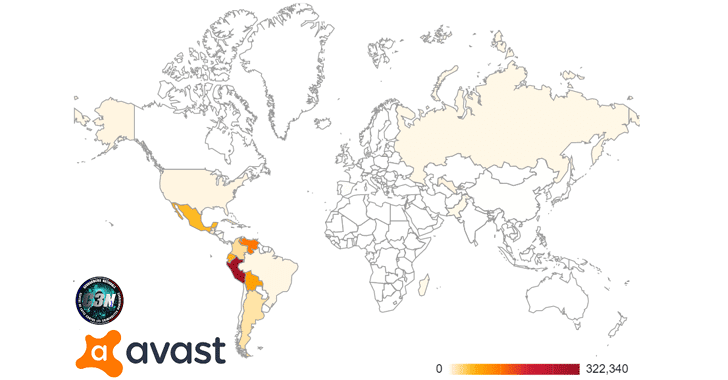
America, RETADUP is a multi-functional Windows malware that is
capable of mining cryptocurrency using the computing power of
infected machines, DDoSing targeted infrastructure utilizing the
bandwidth of the victims, and gathering information for
espionage.
There are several variants of RETADUP, some of which have been
either written in Autoit or using AutoHotkey. The malware has been
designed to achieve persistence on Windows computers, install
additional malware payloads on infected machines and also
periodically perform other attempts to spread itself.
RETADUP, in some cases, has also been found spreading the Stop
ransomware and the Arkei password stealer.
“The C&C server also contained a .NET controller for an AutoIt
RAT called HoudRat. Looking at samples of HoudRat, it is clear that
HoudRat is just a more feature-rich and less prevalent variant of
Retadup,” the researchers learned after analyzing the seized
C&C server.
“HoudRat is capable of executing arbitrary commands, logging
keystrokes, taking screenshots, stealing passwords, downloading
arbitrary files, and more.”
neutralized over 850,000 unique infections of Retadup, with most
victims being from Spanish-speaking countries in Latin
America.
References
Read more http://feedproxy.google.com/~r/TheHackersNews/~3/EOT8sC3m8GY/retadup-botnet-malware.html