As many as five vulnerabilities have been uncovered in Ovarro’s
TBox remote terminal units (RTUs) that, if left unpatched, could
open the door for escalating attacks against critical
infrastructures, like remote code execution and
denial-of-service.
“Successful exploitation of these vulnerabilities could result
in remote code execution, which may cause a denial-of-service
condition,” the U.S. Cybersecurity and Infrastructure Security
Agency (CISA) said[1]
in an advisory published on March 23.
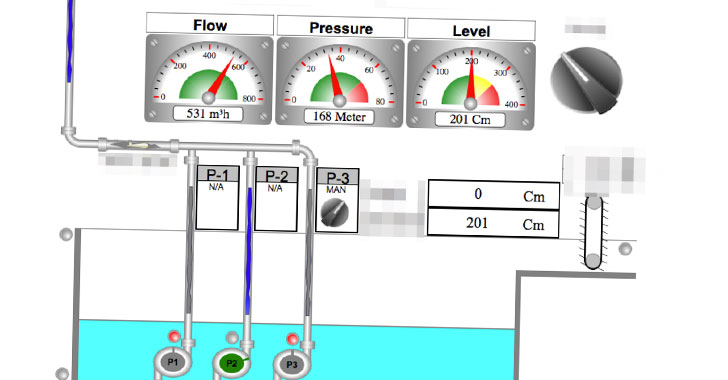
TBox is an “all-in-one” solution for automation and control
systems for supervisory control and data acquisition (SCADA[2]) applications, with its
telemetry software used for remote control and monitoring of assets
in a number of critical infrastructure sectors, such as water,
power, oil and gas, transportation, and process industries. TBox
devices can be programmed using a software suite called TWinSoft,
which allows for the creation of interactive web pages, where users
will be able to monitor and control their site assets.
The flaws were detected and reported to CISA by Uri Katz, a
security researcher for operational technology security company
Claroty. They affect multiple products, including TBox LT2, TBox
MS-CPU32, TBox MS-CPU32-S2, TBox MS-RM2, TBox TG2, and all versions
of TWinSoft prior to 12.4 and TBox Firmware before 1.46.
Claroty found that of all the internet-accessible TBox RTUs that
were found online, nearly 62.5% of the devices required no
authentication, thus potentially enabling attackers to exploit the
HTTP service and take control of the units. Most of the devices are
said to be located in Canada, Germany, Thailand, and the U.S.
Further investigation into the remote terminal units revealed
multiple vulnerabilities in its proprietary Modbus protocol used
for communications that could be leveraged to run malicious code in
TBox (CVE-2021-22646), crash a TBox system (CVE-2021-22642), and
even decrypt the login password (CVE-2021-22640) by capturing the
network traffic between the RTU and the software.
A fourth flaw discovered in Modbus file access functions granted
an attacker elevated permissions to read, alter, or delete a
configuration file (CVE-2021-22648), while CVE-2021-22644 made it
possible to extract the hard-coded cryptographic key.
As a proof-of-concept, the researchers chained three of the
above flaws — CVE-2021-22648, CVE-2021-22644, and CVE-2021-22646 —
to access the configuration file, extract and decode the hard-coded
key, and ultimately deploy a malicious update package in the
RTU.
Given the prevalence of TBox RTUs in critical infrastructure,
the research demonstrates the dangers involved in exposing such
devices directly on the Internet, thereby posing a threat to the
integrity of automation processes[3] and public safety[4]
alike.
“Connecting unprotected critical infrastructure components to
the internet carries with it unacceptable risks that industrial
enterprises must make themselves aware of,” Claroty’s Katz and
Sharon Brizinov noted[5].
“That may sound like an obvious statement, but it’s becoming
increasingly clear that many organizations aren’t heeding the
warnings from researchers about exposing misconfigured web-based
interfaces online and mitigating control system software and
firmware vulnerabilities in a timely fashion.”
References
- ^
said
(us-cert.cisa.gov) - ^
SCADA
(en.wikipedia.org) - ^
integrity of automation processes
(thehackernews.com) - ^
public
safety (www.claroty.com) - ^
noted
(www.claroty.com)